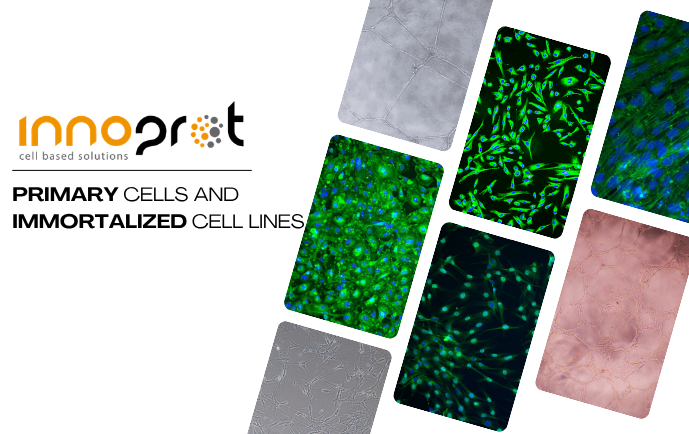
When working with cell-based assays, choosing the right cellular model is one of the first and most important decisions researchers face. The real challenge is knowing which differences matter for the question you are trying to answer.
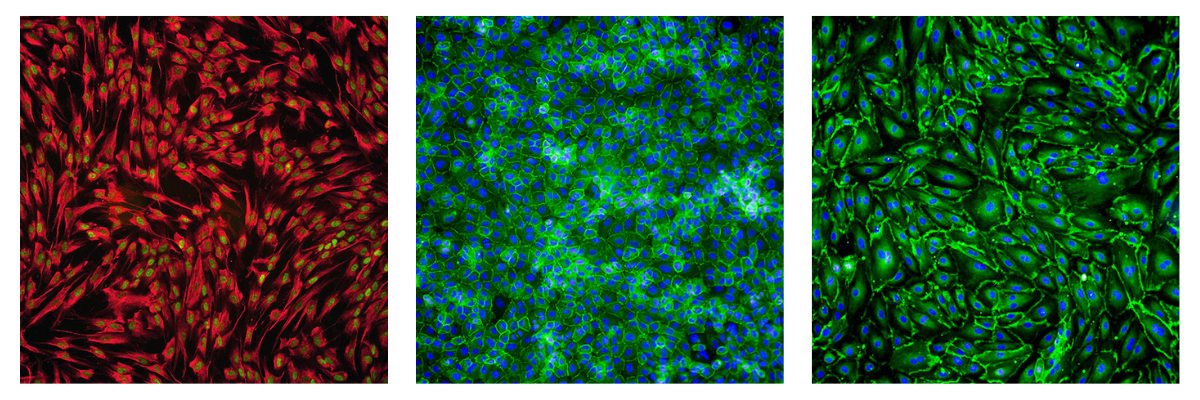
Primary cells closely reflect the biology of the tissue they originate from, but they can also be challenging to work with due to their limited lifespan, donor-to-donor variability, and more demanding culture conditions.
Immortalized cell lines offer a valuable alternative.
Their ability to proliferate for extended periods makes them easier to expand, maintain, and use repeatedly. This provides important advantages for assay development, drug discovery, screening, and other applications where reproducibility, scalability, and experimental consistency are essential.
However, immortalization can also introduce genetic and phenotypic changes. Depending on the cell line and the immortalization process, characteristics such as receptor expression, signaling pathways, metabolism, or differentiation potential may differ from those of primary cells. Therefore, immortalized cells should not always be considered a direct replacement for primary cells.
Primary cells, on the other hand, can provide greater physiological relevance and are particularly valuable when studying tissue-specific responses, differentiation, disease mechanisms, or cellular functions that depend on a more native phenotype. Their main limitations are their finite lifespan, variability, and more complex handling.
So, which model is better?
It depends on the biological question. Immortalized cells are particularly useful when robustness, reproducibility, and scalability are priorities, while primary cells can provide an important step toward confirming results in a more physiologically relevant system. In many research workflows, using both models can provide the most comprehensive approach—from assay development and screening to biological validation.
At Innoprot, we have extensive experience working with both primary cells and immortalized cell lines, and this has given us a practical understanding of the strengths and limitations of each model. We work with our own range of primary cells and immortalized cell lines, covering different tissues and species and supporting a wide variety of research applications. This experience allows us to develop and select cellular models according to the specific biological question, balancing physiological relevance, reproducibility, scalability, and experimental control.
The right cell model can make the difference.

次のステップへ進む
Explore Suppliers
関連する専門知識を持つ信頼できるパートナーを探す
Review Capabilities
サービス、経験、実績を比較する
Start Your Project
つながり、協業を始める
スポンサー