In this webinar, Dr. Joy Wu reviews the pathophysiology of bone loss with aging, in particular the imbalance between bone formation by osteoblasts and bone resorption by osteoclasts, and discusses potential therapeutic approaches.
Dr. Wu begins this webinar with a review of the functions of the skeleton, including its lesser known roles in the endocrine system and hematopoiesis. The most common disease affecting bone is osteoporosis; approximately 50% of women and 25% of men over the age of 50 will have an osteoporotic fracture at some point in their lives. Bone density typically peaks in the mid to late 20s, and then declines progressively with age, with a more rapid drop in women that is associated with menopause. Consequently, the risk of osteopenia, an intermediate risk of bone loss, and osteoporosis also increase progressively with age. One method used to assess bone density is dual energy X-ray absorptiometry (DXA), in which bone density is measured at the spine and hip. This data can then be compared with age-matched controls to obtain a score that can be used to determine whether treatment is recommended. Osteoporotic fractures are commonly seen in the vertebrae, wrist, hip, and pelvis, but the proportions vary with age, with forearm and wrist fractures most common in individuals in their 50s while hip fractures increase in frequency with age.
"To understand how we might intervene to treat osteoporosis, we need to understand a little about the underlying bone physiology."
Osteoblasts are of mesenchymal origin, and are bone-forming cells, while their action is opposed by osteoclasts, of hematopoietic origin, that break down or resorb bone. The activity of these cells in bone formation and resorption pathways are coupled. Age-related bone loss is associated with hormonal changes (such as decreasing estrogen levels), the reduced osteogenic potential of mesenchymal stem cells, inflammation, cellular senescence, and sarcopenia. For example, cellular senescence, in which cells stop progressing through the cell cycle, increases with age and may be triggered by a number of different cues. Several recent studies have demonstrated the potential for treatments targeting senescent cells to reduce their number in association with increased bone density.
". . . ultimately to cure osteoporosis we will need to promote bone formation . . ."
Dr. Wu summarizes current approaches used in her clinic to treat osteoporosis; the most widely used treatments are intended to block bone breakdown and include estrogen receptor modulators, bisphosphonates, and denosumab. However, to reverse the damage caused by osteoporosis, strategies to promote bone formation, such as teriparatide, abaloparatide, and romosuzumab, are also required.
The Wu lab has been particularly interested in the mechanism of action of teriparatide and abaloparatide, both of which are parathyroid hormone (PTH) receptor (PTH1R) agonists. Although teriparatide was the first approved anabolic treatment for osteoporosis and has been in use for more than 15 years, the mechanisms of PTH1R signaling are still not completely understood. For example, intermittent and continuous treatments have differing effects, the anabolic benefits wane over time, interactions have been observed with other pathways and treatments, and daily self-injections are required; a series of studies are presented highlighting these complex interactions.
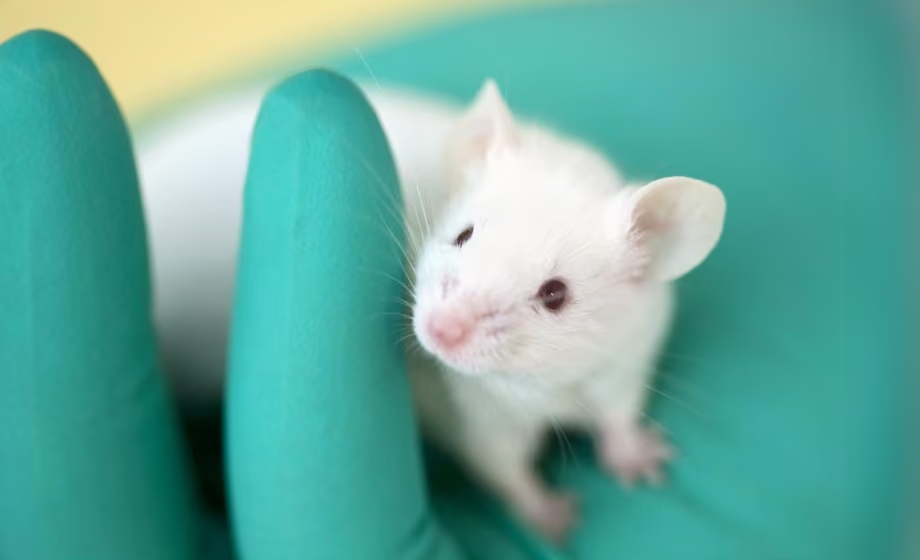
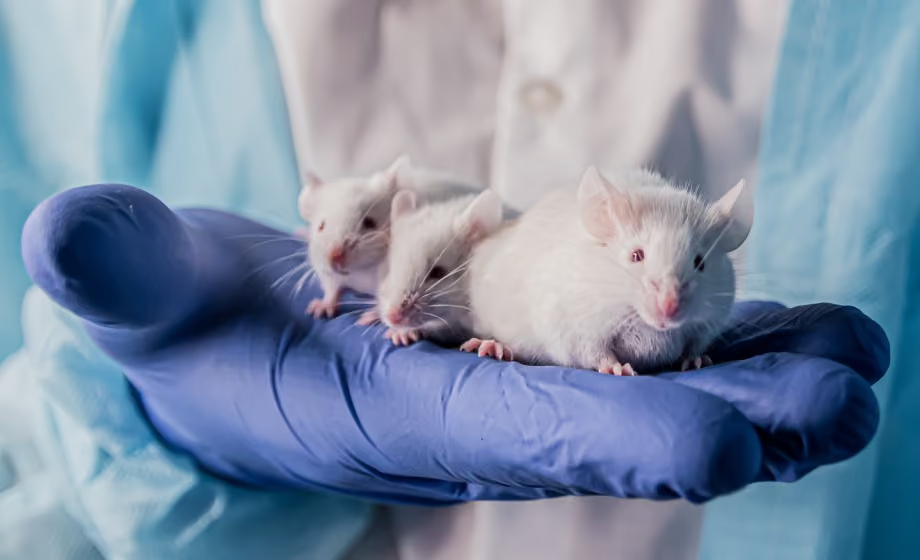
Dr. Wu's group has employed mouse models to further elucidate the mechanisms involved in PTH1R signaling, including mice lacking PTH1R receptors or downstream G subunit alpha (Gs…ë) in osteoprogenitors. Mice without Gs…ë or PTH1R both have severe osteoporosis, and a series of experiments demonstrating the underlying mechanisms are presented. Collectively, the results suggest that mesenchymal progenitor commitment to osteoblast differentiation is regulated by Gs…ë signaling.
"Wnt signaling favors osteoblast commitment and inhibits adipocyte commitment."
An additional pathway implicated in osteoblast differentiation is Wnt signaling, and can be inhibited by sclerostin; romosuzumab, introduced previously as a treatment promoting bone formation, is a monoclonal antibody that targets sclerostin. PTH is a known inhibitor of sclerostin, and Dr. Wu's lab is currently investigating the relationship between PTH and Wnt signaling and their respective roles in osteoblast differentiation.
". . . if we had an unlimited source of osteoblasts, we could study disease mechanisms in vitro, we could perform high throughput screening for novel therapeutic compounds, and importantly we could work on cell-based regenerative therapies for all sorts of orthopaedic injuries."
In the final portion of the webinar, Dr. Wu discusses new stem cell-based approaches to treat osteoporosis. A number of potential stem cell sources of osteoblasts exist, such as bone marrow mesenchymal stem cells, embryonic stem cells, induced pluripotent stem cells, and direct reprogramming. Ablation and replacement of existing bone cells with stem cells is challenging, however, methods to overcome this obstacle are presented. The results of these experiments demonstrate that pluripotent stem cells can rescue skeletogenesis and the bone marrow hematopoietic niche. Although, an important consideration is that pluripotent stem cells can form teratomas when injected in vivo. Therefore, Dr. Wu's group has developed methods to differentiate stem cells into mature osteoblasts in vitro prior to injection, and this method holds promise for skeletal regenerative medicine.
Webinar Highlights
- An introduction to age-related bone loss
- A summary of bone physiology
- A review of treatment options for osteoporosis
- Signaling pathways involved in osteoblast differentiation
- Stem cell-based sources of osteoblasts and their potential applications
Featuring Insights from

Joy Wu
MD, PhD
Dr. Wu is a physician-scientist in endocrinology and directs a basic and translational research program that focuses on skeletal development, the bone marrow microenvironment, and stem cell therapies for bone. Her clinical practice focuses on metabolic bone diseases such as osteoporosis and optimizing bone health in cancer survivors.
In Partnership with

American Physiological Society
Founded in 1887, the American Physiological Society is a global leader in expanding knowledge related to biological function. We connect a multidisciplinary community of nearly 10,000 scientists and educators from around the world, driving collaboration and spotlighting scientific discoveries in physiology and related disciplines. Our members are advancing treatments and cures for everything from cancer and heart disease, to obesity and addiction. They are also deepening our insight into living organisms generally, helping us to better understand how things like climate change are affecting the world around us.