Webinar Summary
- Understanding the concepts of the epigenetic clock
- Discussing in vivo epigenetic reprogramming and cellular reprogramming
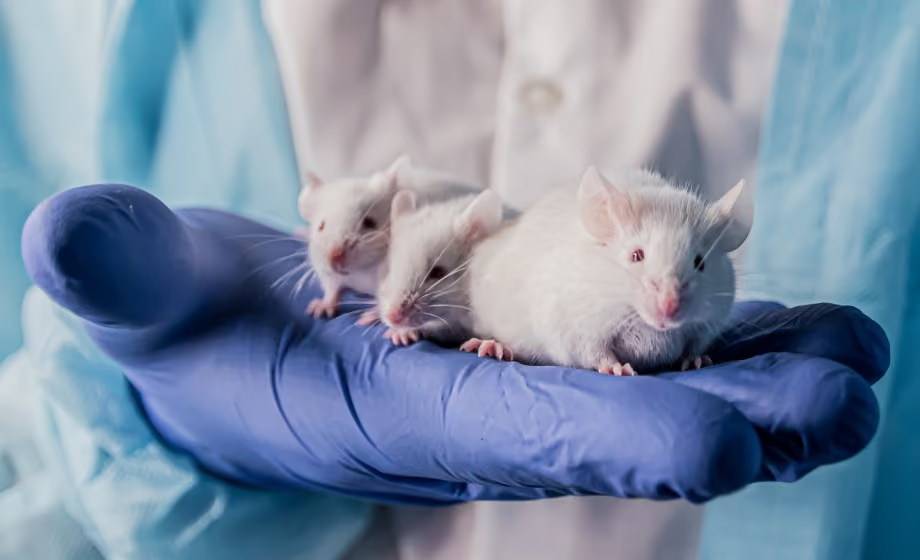
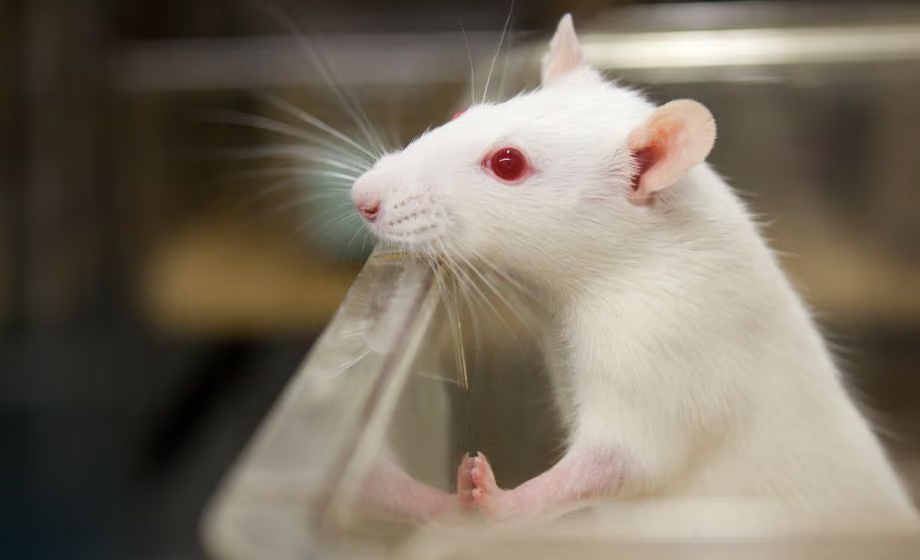
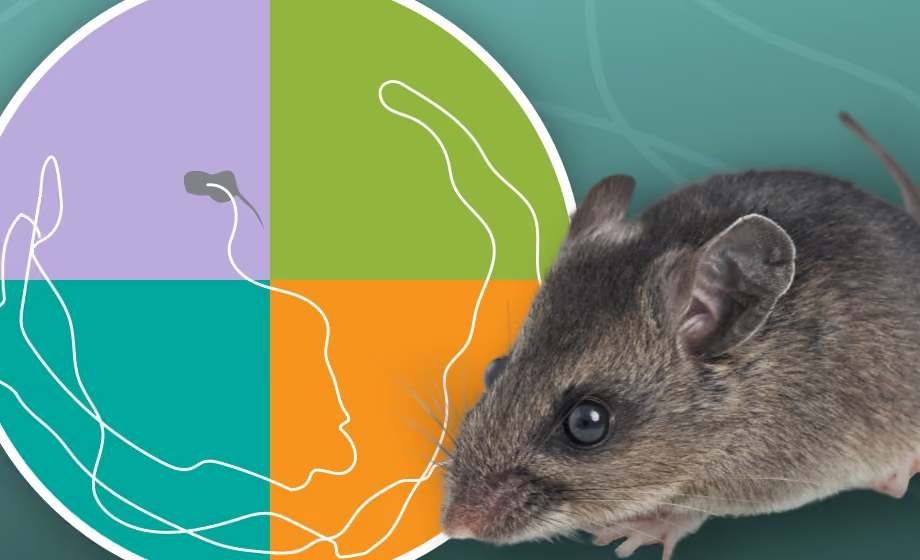
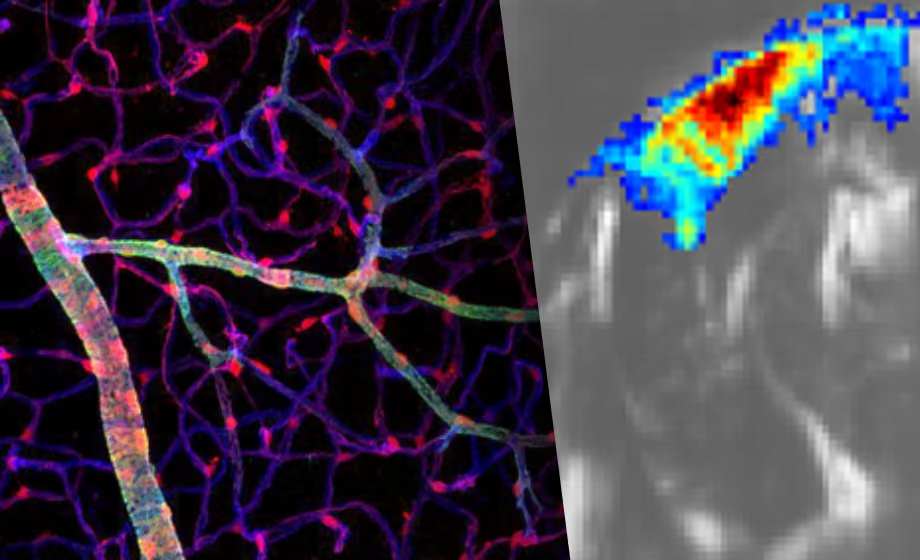
Can aging be reversed? Scientists from Harvard Medical School were able to reverse vision loss stemming from diverse causes, such as optic nerve injury, glaucoma, and the normal aging process. The team of Bruce R. Ksander, PhD reported that in vivo epigenetic reprogramming using three of the four "Yamanaka Factors" (Oct4, Sox2, and Klf4, "OSK" for short) reversed the epigenetic age of retinal ganglion cells (RGCs) in old mice based on transcriptome and DNA methylome analyses. This led to a significant improvement in visual physiology as assessed by pERG (pattern electroretinogram) and enhanced visual acuity as assessed by OMR (optomotor reflex). In addition, OSK epigenetic reprogramming restored axon regeneration following an optic nerve crush injury and improved visual function by pERG and OMR in mice with microbead-induced glaucoma (Lu, et al, Nature, 2020). This data, presented in this Journal Club, implies that the DNA methylation clock is not just a correlate of age, but a regulator of it, which also implies that old tissues retain a faithful record of youthful epigenetic information. This record can be accessed to restore or enhance tissue function and allow age reversal.
Featuring Insights from

Bruce R. Ksander
PhD
Dr. Bruce Ksander received his Ph.D. in Immunology from the University of Illinois, and his postdoctoral training was at the University of Miami Medical School and the Bascom Palmer Eye Institute in Miami Florida where he studied corneal transplants and intraocular tumors. For the past thirty years, Dr. Ksander has been at the Schepens Eye Institute of Mass Eye & Ear and an Associate Professor in the Department of Ophthalmology at Harvard Medical School where he conducts research in cellular rejuvenation of the retina and cornea.
Sponsored by