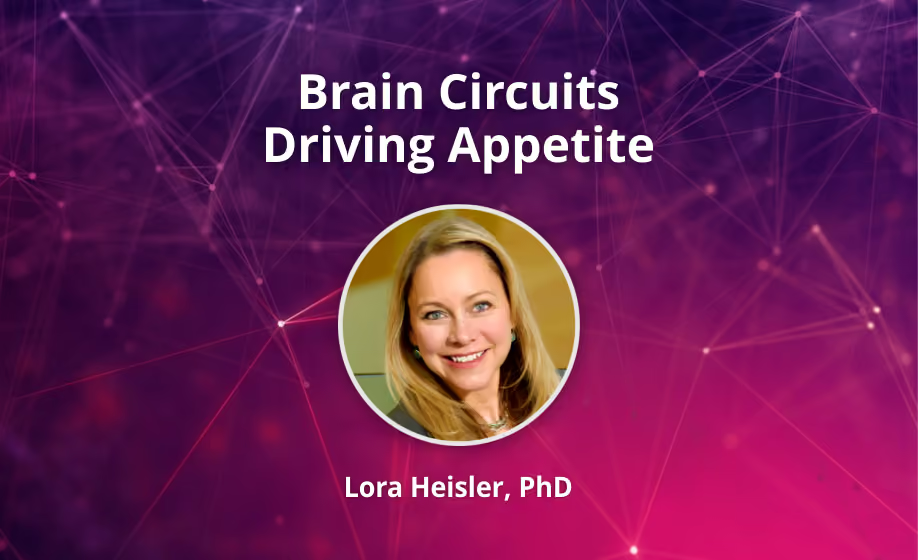
Lora Heisler, PhD discusses the unique brain circuits that are controllers of body weight, reviews how our genes impact our waistline and explains how obesity medications leverage basic neurobiology to reduce hunger and decrease body weight.
In many western countries, nearly a quarter of us meet the criteria for clinical obesity and more than half of us are overweight. This is a medical concern because obesity is a serious risk factor for many major chronic illnesses, such as heart disease, type 2 diabetes and cancer, and as a result, obesity is associated with reduced lifespan by almost a decade. The rapid escalation in the prevalence of obesity and the paucity of obesity medications underscores the necessity of an understanding of the basic neurobiology underlying body weight.
During this webinar, Professor Heisler will discuss brain circuits that are the main known controllers of body weight, such as those activated by the adipocyte hormone leptin. She will review how our genes impact our waistline and will discuss crucial genes such as those in the melanocortin system. Professor Heisler will discuss how obesity medications capitalize on this basic neurobiology to promote satiety, reduce hunger and decrease body weight.
Featuring Insights from

Lora Heisler
PhD
Professor Heisler investigates brain circuits regulating energy homeostasis in an effort to identify new targets amenable to obesity and type 2 diabetes medications. She received her PhD from Tufts University in 1997 and following held postdoctoral positions at the University of California, San Francisco and Beth Israel Deaconess Medical Center, Harvard Medical School. In 2001, Professor Heisler was promoted to Instructor and set up her laboratory at Harvard Medical School. She then relocated her group to the University of Cambridge, UK in 2004 where they worked until 2013. In 2013, the Heisler group moved to the Rowett Institute to take advantage of the Institute’s strengths in obesity research, ranging from molecules to man. Professor Heisler was the recipient of the 2018 Outstanding Scientific Achievement Award (OSAA) from the American Diabetes Association for her research identifying a new type of medication to improve type 2 diabetes. This prestigious award recognizes diabetes research that demonstrates particular independence of thought and originality.
In Partnership with
American Physiological Society
Founded in 1887, the American Physiological Society is a global leader in expanding knowledge related to biological function. We connect a multidisciplinary community of nearly 10,000 scientists and educators from around the world, driving collaboration and spotlighting scientific discoveries in physiology and related disciplines. Our members are advancing treatments and cures for everything from cancer and heart disease, to obesity and addiction. They are also deepening our insight into living organisms generally, helping us to better understand how things like climate change are affecting the world around us.