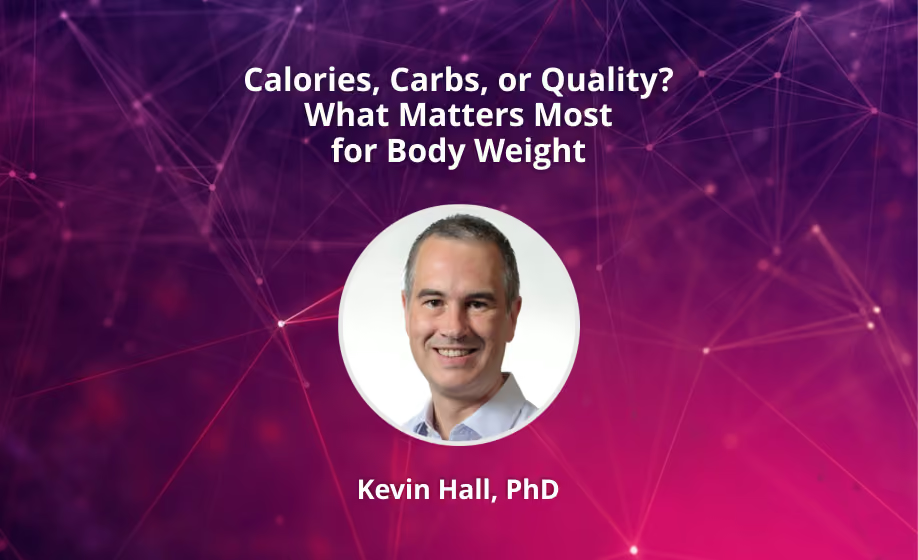
Kevin Hall, PhD discusses the physiology of body weight regulation and how dietary factors like amount of carbs, fat and "ultra-processed" foods affect human body weight.
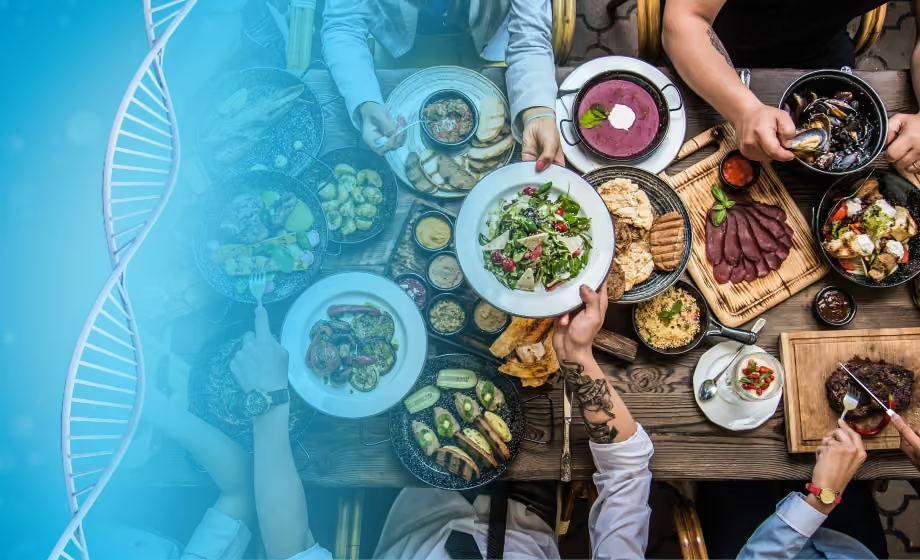
Eating fat makes you fat. No, eating carbs makes you fat. Actually, it's a simple equation relating calories in and calories out. Such endless debates about putative dietary culprits or cures for obesity have led to widespread public confusion and mistrust in nutrition science. But what is the truth?
During this webinar, Dr. Kevin Hall will discuss the physiology of body weight regulation and how we adapt to various changes in diet, including the amount of calories, carbs versus fat, as well as differences in diet quality varying in the amounts of "ultra-processed" foods. Understanding the dynamics of human body weight change has important consequences for conditions such as obesity, diabetes, cardiovascular disease, starvation, and wasting syndromes such as anorexia nervosa and cancer cachexia.
Featuring Insights from

Kevin D. Hall
PhD
Kevin Hall, PhD is the Integrative Physiology Section Chief at NIDDK-NIH. His laboratory investigates how metabolism and the brain adapt in response to a variety of interventions to diet and physical activity. His team conducts experiments in both humans and rodents to better understand the complex mechanisms regulating macronutrient metabolism, body composition and energy expenditure. Uniquely, his research also involves the development of mathematical models to quantitatively describe, explain, integrate, and predict experimental results. Overall, Dr. Hall’s research aims to improve our understanding of body weight regulation and develop practical tools for research and clinical use.
In Partnership with
American Physiological Society
Founded in 1887, the American Physiological Society is a global leader in expanding knowledge related to biological function. We connect a multidisciplinary community of nearly 10,000 scientists and educators from around the world, driving collaboration and spotlighting scientific discoveries in physiology and related disciplines. Our members are advancing treatments and cures for everything from cancer and heart disease, to obesity and addiction. They are also deepening our insight into living organisms generally, helping us to better understand how things like climate change are affecting the world around us.