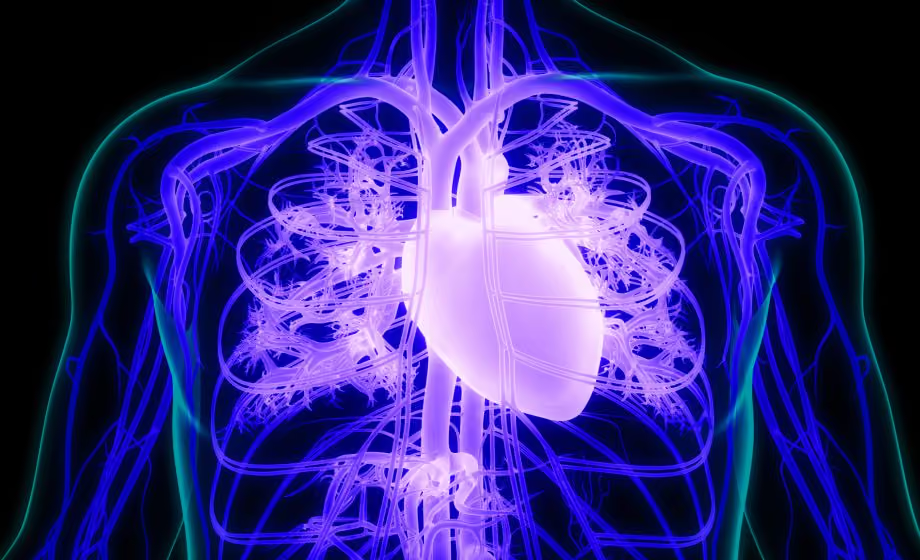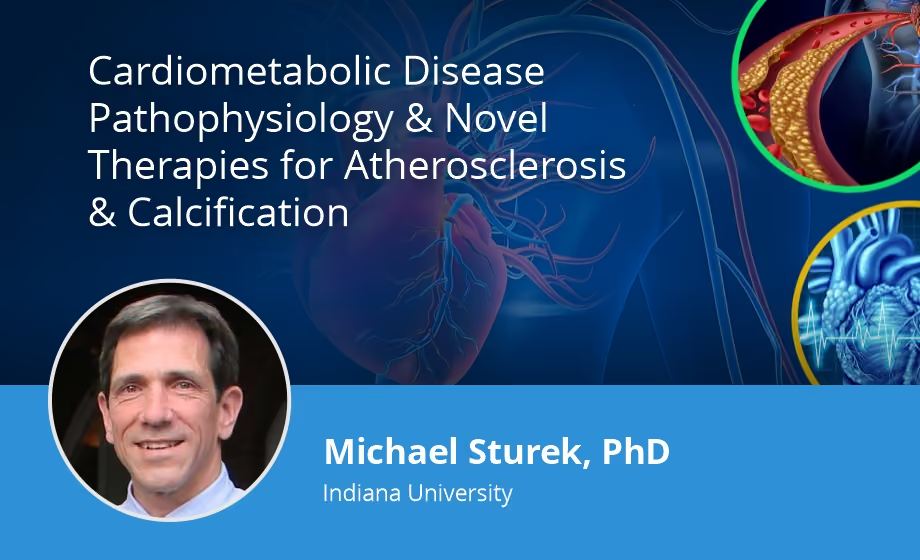
In this webinar, Dr. Michael Sturek reviews features of macrovascular atherosclerosis and microvascular dysfunction that underlie ischemic events and the need for appropriate animal models for optimal translation.
The unabated increase in cardiometabolic disease is a main reason why coronary heart disease remains the leading cause of death worldwide. Despite the effectiveness of lipid lowering therapy in treatment of coronary atherosclerosis, calcification remains a challenging clinical problem.
Lipid lowering therapy is highly effective in treating atherosclerosis, but statins and exercise have been shown to increase coronary artery calcification. Dr. Sturek will review data showing a predominance of intracellular calcium (Ca2+) release in coronary smooth muscle cells that decreases remarkably in cells from metabolic syndrome swine and humans. The early event in coronary artery calcification, i.e. the extracellular deposit of Ca2+ crystals as hydroxyapatite, may be triggered by impaired lysosomal Ca2+ signaling. Selective, novel modulation of lysosomal Ca2+ stores may alter autophagy and matrix vesicle release to treat coronary atherosclerosis and calcification.
Featuring Insights from

Michael Sturek
MS, PhD
Michael Sturek, M.S., Ph.D. has 35 years of experience in academia, teaching and conducting research on cardiometabolic disease. He also was department Chair for 15 years. The general aim of his research program is to understand cellular and molecular Ca2+ signaling mechanisms for in vivo comorbidities in cardiometabolic disease. His research encompasses experimental approaches at all levels – from human tissue to whole animal, organ, tissue, cell, and molecular.
In Partnership with
American Physiological Society
Founded in 1887, the American Physiological Society is a global leader in expanding knowledge related to biological function. We connect a multidisciplinary community of nearly 10,000 scientists and educators from around the world, driving collaboration and spotlighting scientific discoveries in physiology and related disciplines. Our members are advancing treatments and cures for everything from cancer and heart disease, to obesity and addiction. They are also deepening our insight into living organisms generally, helping us to better understand how things like climate change are affecting the world around us.
European Council for Cardiovascular Research
The history of the European Council for Cardiovascular Research (ECCR) goes back more than 30 years when the ‘European Blood Pressure Group’ held its first meeting in March 1979 in Cambridge, UK. To date more than 30 international meetings have been held in various European locations. For more information about ECCR history click here.
The mission of ECCR is to promote prevention, diagnosis and treatment of disease and the preservation and protection of good health through experimental and clinical research in hypertension, cardiovascular and metabolic disease.
ECCR holds an Annual Meeting in October. The purpose of these scientific meetings is to provide a forum for active clinical and non-clinical researchers to discuss important aspects of their work, to advance and strengthen European research in the field of cardiovascular disease, high blood pressure and cardiometabolic disease. The meetings bring together both senior and junior scientists from the leading European groups in the field of cardiovascular research.
ECCR is a member of the Council for Basic Cardiovascular Science (CBCS) of the European Society of Cardiology (ESC), whose aims are to enhance the importance of basic science to clinical cardiology and act as a Europe wide forum for cardiovascular research societies, and a conduit for positive collaboration.