Webinar Summary
- To review the cardiovascular risk factors associated with hyperandrogenemia in PCOS women
- To identify critical mechanisms underlying the cardiovascular risk factors in PCOS women
- To describe the current therapeutic agents available in the clinic to treat cardiovascular risk factors in PCOS women
- Discuss novel therapeutic agents that could treat cardiovascular disease in women with PCOS
- Identify gaps in knowledge in women's health research
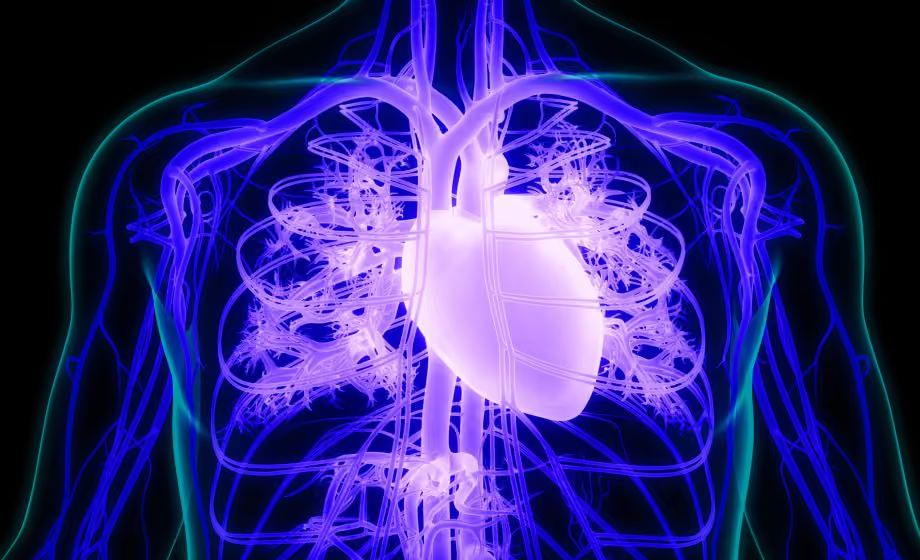
Cardiovascular disease (CVD) is the leading cause of death in women and can affect any age group. In 2021, CVD was responsible for the deaths of 310,661 women - or about 1 in every five female deaths (National Center for Health Statistics of the Centers for Disease Control and Prevention, 2023).
Women with Polycystic Ovary Syndrome (PCOS) have a higher prevalence of cardiovascular risk factors (CRFs), such as obesity, insulin resistance, and elevated blood pressure (BP). Increases in plasma androgens or hyperandrogenemia are found in about 80% of PCOS women. Compared to non-androgenic PCOS women, hyper-androgenic PCOS women have worse cardio-metabolic complications. Despite the strong evidence of increased incidence of CRFs in women with PCOS, whether this will translate into an increased rate of cardiovascular events and mortality has been difficult to demonstrate due to conflicting data.
Recent data from a large retrospective analysis of electronic health records showed that the risk of cardiovascular events in women with PCOS was significantly increased compared with BMI and age-matched control women. In addition, in this cohort, the average age of women with PCOS was only 26 years; thereby, this is a young group of women who are already experiencing cardiovascular disease. More research with long-term follow-up and a more significant number of participants is needed to elucidate the full impact of PCOS diagnosis on cardiovascular health in women. Until then, aggressive management of cardiovascular risk factors must be sought in those affected. Therapeutic agents and options to treat cardiometabolic complications in women with PCOS are limited.
This webinar will discuss interventions to effectively and safely alleviate CRFs in women with PCOS.
Featuring Insights from

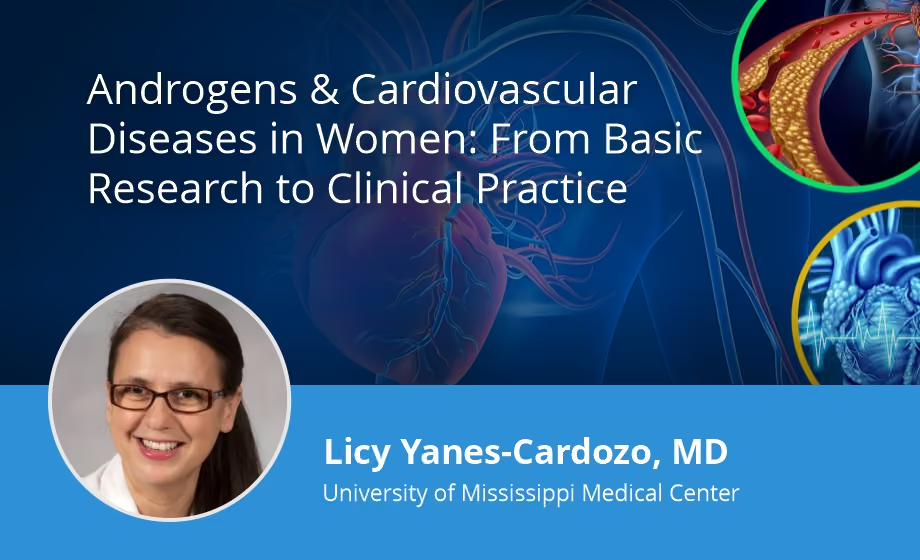
Licy Yanes Cardozo
MD
Licy L. Yanes Cardozo, MD, is a Professor in the Departments of Pharmacology and Medicine/Endocrinology at the University of Mississippi Medical Center (UMMC). She is a physician-scientist engaged in basic research and clinical research. Her research focuses on the role and mechanisms by which androgen excess mediates Cardiovascular Disease in women.
In Partnership with
American Physiological Society
Founded in 1887, the American Physiological Society is a global leader in expanding knowledge related to biological function. We connect a multidisciplinary community of nearly 10,000 scientists and educators from around the world, driving collaboration and spotlighting scientific discoveries in physiology and related disciplines. Our members are advancing treatments and cures for everything from cancer and heart disease, to obesity and addiction. They are also deepening our insight into living organisms generally, helping us to better understand how things like climate change are affecting the world around us.
Society for Women’s Health Research
As a national thought leader dedicated to advancing women’s health and promoting research on sex differences to optimize women’s health, the Society for Women’s Health Research (SWHR) plays a critical role in identifying clinical and research gaps; raising awareness of diseases, conditions, and life stages that differently, disproportionately, or exclusively affect women; and promoting policies that could positively shape health outcomes for women. Over its more than 30-year history, SWHR has been advancing women’s health through its core functions of science, policy, and education.