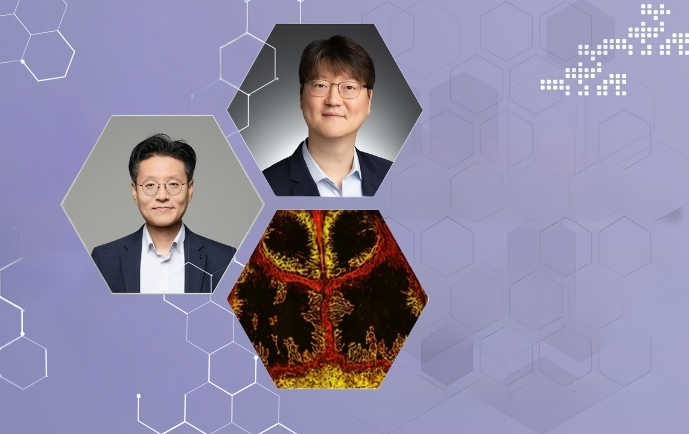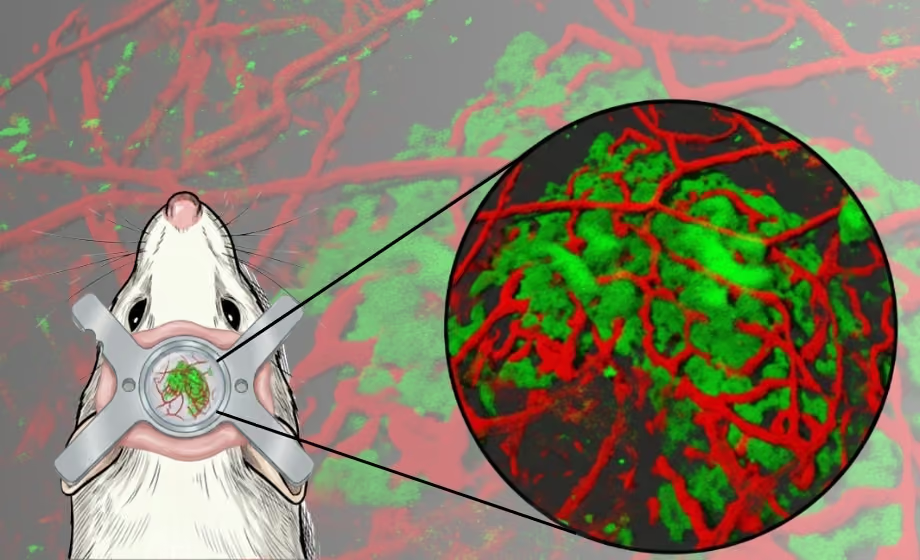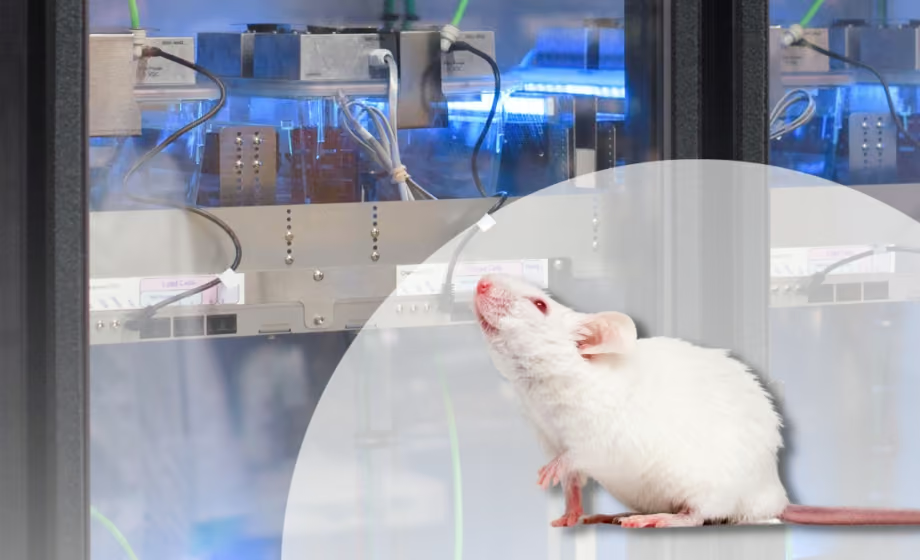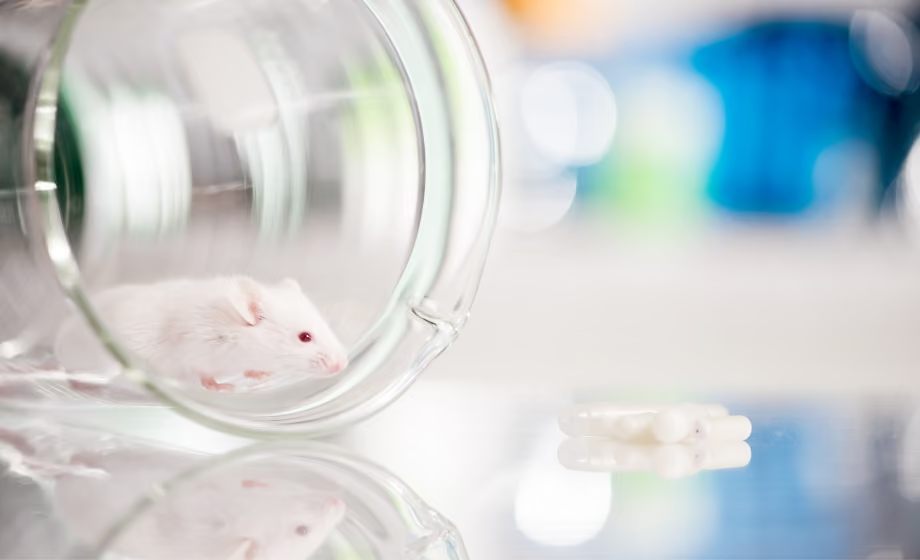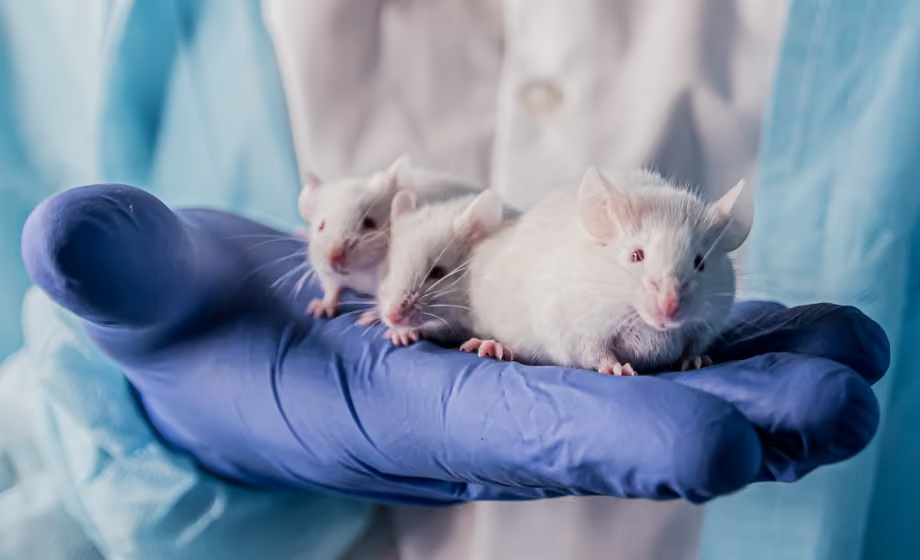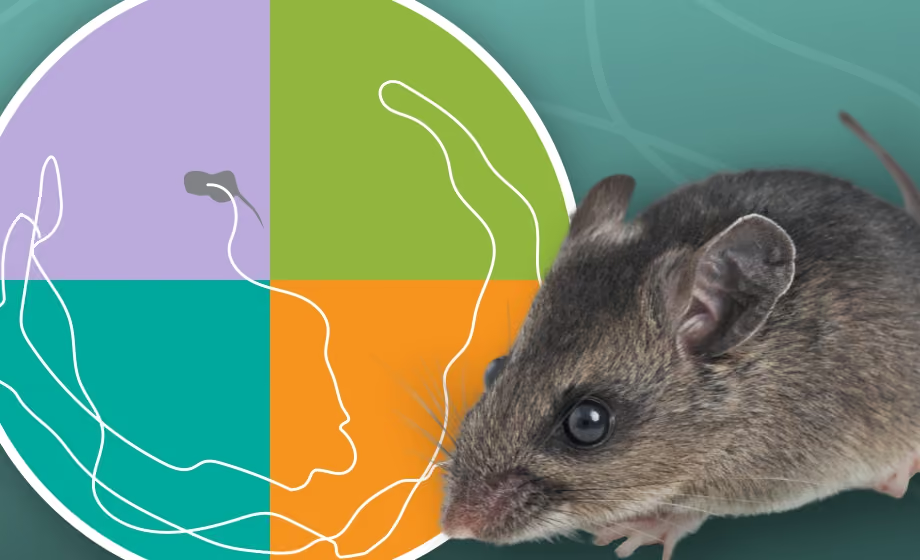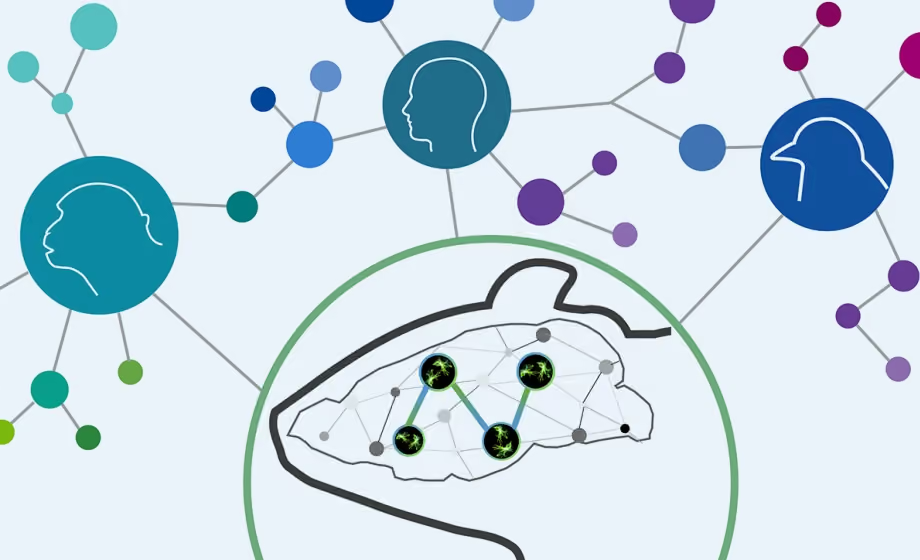
In this webinar, Dr. Ileana Hanganu-Opatz, Dr. Jastyn A. Pöpplau, and Marilena Hnida discuss their research on prefrontal networks in developing head-fixed mice, and the role of these networks in cognition and models of neurodevelopmental diseases.
Dr. Ileana Hanganu-Opatz begins with a brief introduction to the Institute for Developmental Neurophysiology and its main focus: the investigation of the origin and significance of oscillatory brain activity during postnatal development in mice. The following presentations by two Institute members focus on the work of her research team "Juvenile development"; specifically electrophysiological recordings in developing head-fixed mice.
Dr. Jastyn A. Pöpplau dissects the mechanisms of functional prefrontal development during sensitive periods. Beginning with very early postnatal stages in mice, she describes the developmental emergence of fast prefrontal oscillations, as well as how these dynamics are disturbed by altered functionality of distinct neuronal subpopulations. Next, recent experimental results uncovering reorganization of prefrontal circuits during adolescence are highlighted, before resolving the necessity of the identified processes for adult cognitive abilities.
Building on this work, Marilena Hnida presents developmental dynamics within the prefrontal-hippocampal network, focusing on patterns of activity during late development covering the adolescent period. Comparing the dynamics of hippocampal-prefrontal communication in healthy development to animal models of neurodevelopmental diseases, her presentation uncovers age-specific disturbances in the prefrontal-hippocampal networks of affected mice, likely contributing to the progression of disease symptoms.
Featuring Insights from

Ileana L. Hanganu-Opatz
PhD
Ileana Hanganu-Opatz was trained as biochemist and biologist at the University of Bucharest, Romania and graduated in 1998 with a EU-funded diploma thesis achieved at University Medical Center Hamburg-Eppendorf (UKE). She started the investigation of developing neuronal networks during a PhD at the University of Düsseldorf and a postdoctoral stage at INSERM / INMED Marseille, France. Since 2009, Ileana Hanganu-Opatz established her own research group at the ZMNH, UKE to study the development of neuronal networks of cognitive processing, being supported by the Emmy Noether Program of the German Research Foundation, an ERC Consolidator Grant and BMBF. Since 2017 she leads the Institute for Developmental Neurophysiology at UKE and since 2022 she has been appointed as Director of the Hamburg Center of Excellence. Ileana Hanganu-Opatz coordinates several national consortia, such as the Priority Program 1665 and the Research Unit 5159. As member of the Committee for Higher Education and Training (CHET) of FENS, she contributed to establishment of large-scale training programs that optimally fit the needs of next-generation neuroscientists. As founding member of the FENS Kavli Network of Excellence, Ileana initiated a series of educational events at European level to coach the future principal investigators.

Jastyn A. Pöpplau
PhD
Jastyn A. Pöpplau studied Molecular Life Sciences at the University of Hamburg and graduated in 2017. From 2018-2021 she worked as a PhD student in the Institute for Developmental Neurophysiology at the University Medical Center Hamburg-Eppendorf. In 2021 she obtained her doctoral degree and since then leads the team “Juvenile development” in the Institute for Developmental Neurophysiology. Her research focuses on the developmental mechanisms of prefrontal circuits in relationship to adult cognitive abilities.

Marilena Hnida
MSc
Marilena Hnida received her master degree in Neuroscience in 2018 at the University of Bremen. Since then she is a PhD student in the Institute for Developmental Neurophysiology. Her research focuses on the juvenile development of the prefrontal-hippocampal network with a focus on alterations in animal models of neurodevelopmental disorders.
Sponsored by