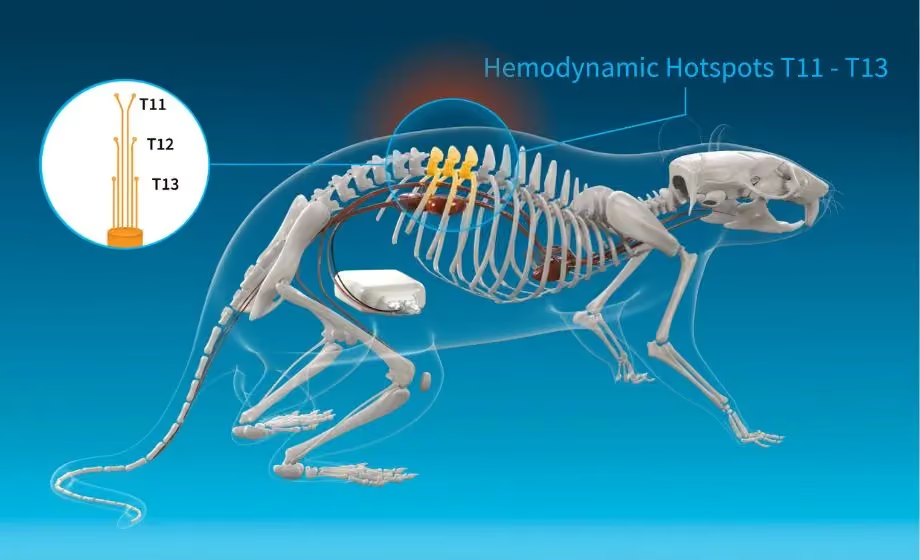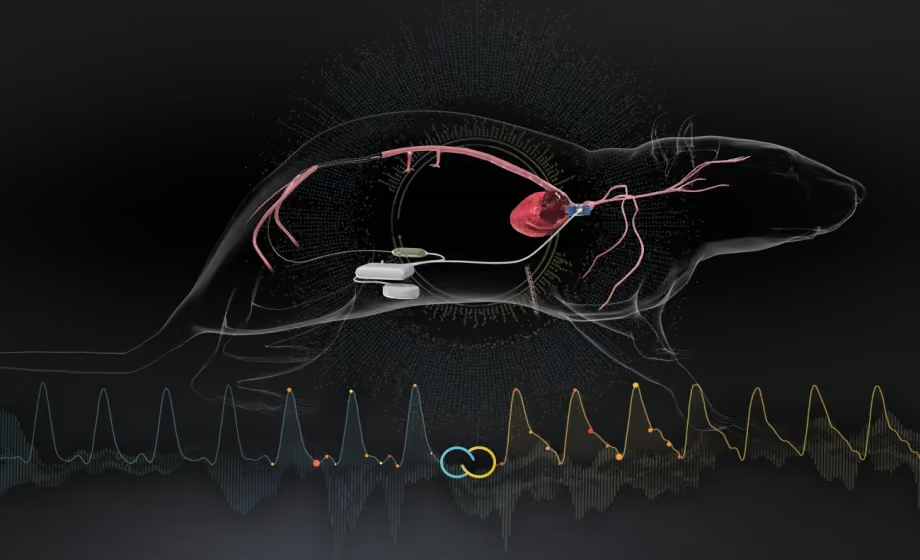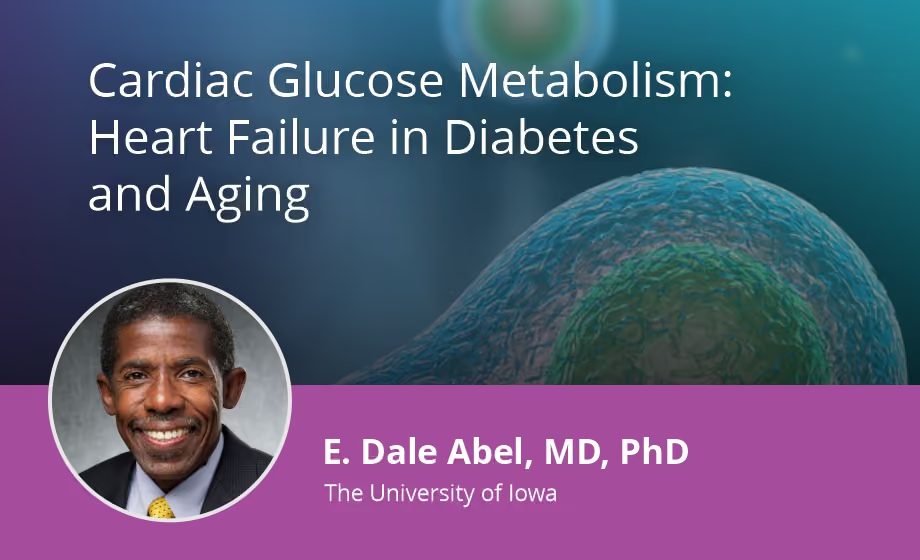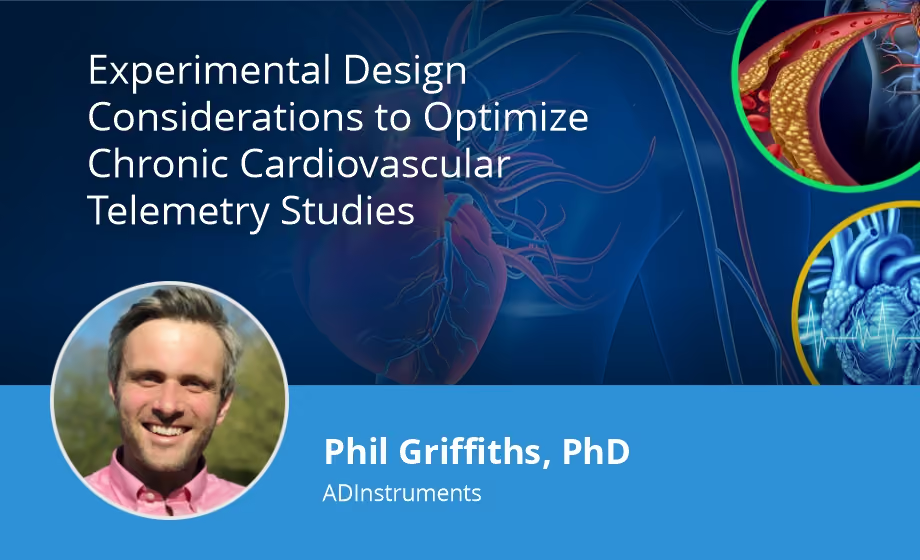
Phil Griffiths, PhD, presents a summary of chronic cardiovascular telemetry studies and considerations for experimental design.
Ensuring you collect the best and most physiologically accurate data from your chronic telemetry experiments requires careful planning and experimental design. This webinar gives an insight into the practical aspects of designing chronic animal experiments to set you on the best path for success. The benefits of chronic studies, how to select the most appropriate sample size for your study, some basic tips and tricks for data acquisition and handling, and how to ensure high animal welfare are discussed.
Featuring Insights from

Phil Griffiths
PhD
Phil Griffiths has a PhD in neuroscience and postdoctoral experience from the University of Bristol, UK where he gained expertise in <em>in vivo</em> blood pressure recording using telemetry. He joined Kaha Sciences in 2019 and then made the move to ADInstruments in February 2021, now as a Research Sales Manager for Europe.
Sponsored by

ADInstruments
In Partnership with

American Physiological Society
Founded in 1887, the American Physiological Society is a global leader in expanding knowledge related to biological function. We connect a multidisciplinary community of nearly 10,000 scientists and educators from around the world, driving collaboration and spotlighting scientific discoveries in physiology and related disciplines. Our members are advancing treatments and cures for everything from cancer and heart disease, to obesity and addiction. They are also deepening our insight into living organisms generally, helping us to better understand how things like climate change are affecting the world around us.
European Council for Cardiovascular Research
The history of the European Council for Cardiovascular Research (ECCR) goes back more than 30 years when the ‘European Blood Pressure Group’ held its first meeting in March 1979 in Cambridge, UK. To date more than 30 international meetings have been held in various European locations. For more information about ECCR history click here.
The mission of ECCR is to promote prevention, diagnosis and treatment of disease and the preservation and protection of good health through experimental and clinical research in hypertension, cardiovascular and metabolic disease.
ECCR holds an Annual Meeting in October. The purpose of these scientific meetings is to provide a forum for active clinical and non-clinical researchers to discuss important aspects of their work, to advance and strengthen European research in the field of cardiovascular disease, high blood pressure and cardiometabolic disease. The meetings bring together both senior and junior scientists from the leading European groups in the field of cardiovascular research.
ECCR is a member of the Council for Basic Cardiovascular Science (CBCS) of the European Society of Cardiology (ESC), whose aims are to enhance the importance of basic science to clinical cardiology and act as a Europe wide forum for cardiovascular research societies, and a conduit for positive collaboration.