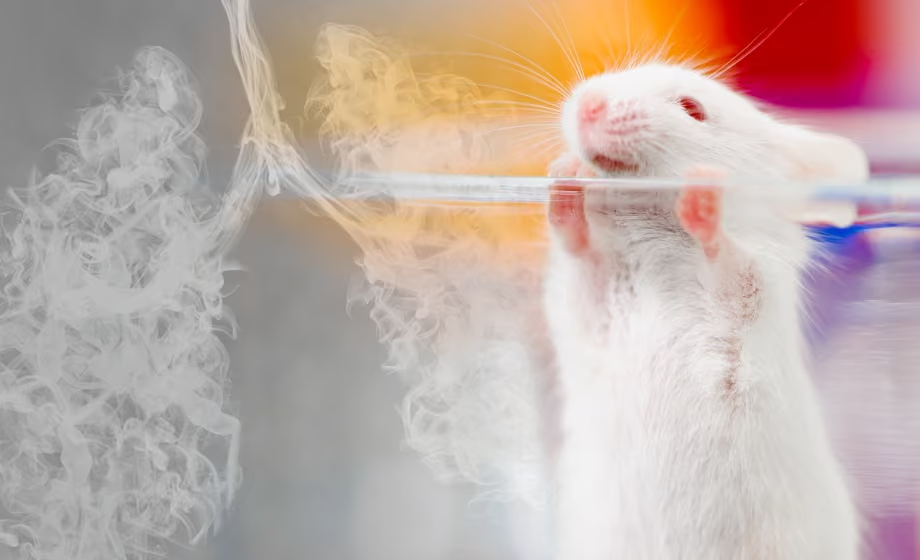
A webinar for scientists interested in methodology, best-practices and techniques for identifying early and subtle quantitative physiological markers of strength, balance and coordination in animal models of pain, CNS, neuromuscular and neurodegenerative disorders.
A webinar for scientists interested in methodology, best-practices and techniques for identifying early and subtle quantitative physiological markers of strength, balance and coordination in animal models of pain, CNS, neuromuscular and neurodegenerative disorders.
In this exclusive webinar sponsored by, Mouse Specifics, Inc. Dr. Thomas Hampton provides an overview of essential parameters for studying gait in laboratory rodents. Topics include key aspects of coordinated movement [walking] such as stride, swing, stance and ataxia. He discusses how animals execute "stepping" via the convergence of motor and sensory inputs and will present a myriad of conditions that can affect walking along with how these conditions can be quantified for use as physiological markers of movement disorders.
Dr. Charles Meshul, Research Biologist and Professor at Veterans Hospital, Portland and Oregon Health & Sciences University, presents gait data obtained from his lab using a progressive animal model of Parkinson's disease. His group has shown that weekly treatment with the neurotoxin, MPTP, for up to 4 weeks, results in a gradual loss of dopamine within the nigrostriatal pathway. He discusses how this unique model may or may not correlate to the extent of motor function tests available and will discuss the sensitivity of gait analysis in describing mice with Parkinson's disease.
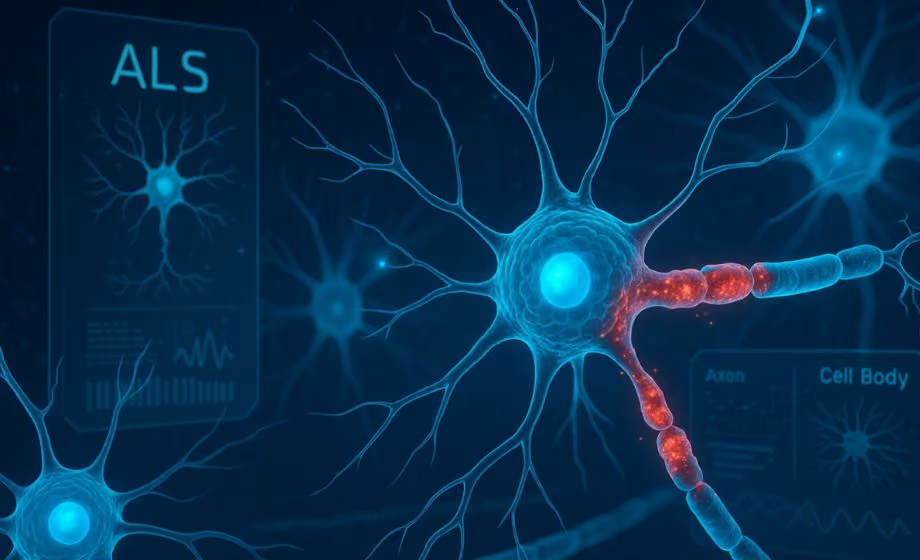
Dr. Carol Milligan, Professor of Neurobiology & Anatomy at Wake Forest School of Medicine, presents behavioral deficits that correlate with early pathology in the SOD1 mouse model of amyotrophic lateral sclerosis (ALS). As Dr. Milligan describes, one potential explanation for why preclinical studies in animal models have not translated positively to clinical trials may be insufficient understanding of when and where pathogenesis begins. Characterization of these early events and correlation to human disease is essential, however, for insight into disease onset, discovery of presymptomatic diagnostic disease markers, and identification of novel therapeutic targets. Dr. Milligan highlights early pathological changes identified in her lab and, importantly, analysis of mouse movement that has revealed deficits corresponding to early pathology.
Featuring Insights from

Charles K. Meshul
PhD
My laboratory is mainly involved in investigating electron microscopic/immunocytochemical changes in synapses within the brain following various drug treatment procedures or lesions of the nigrostriatal pathway, as a model for Parkinson’s disease (PD), and correlating these findings with functional/protein changes using in vivo microdialysis/westerns and motor behaviors in mice. Using a new progressive mouse model of PD developed in my lab, by administering increased doses of the toxin, MPTP, we have found that exposure of mice to a socially enriched environment can, after the initiation of the loss of dopamine, slow down or block the neurochemical and motor behavioral deficits due to continued treatment with MPTP. Research Interests: Parkinson's disease, drugs of abuse, electron/light microscopy, immunocytochemistry, in vivo microdialysis, synaptic plasticity, neuroleptic drugs, treadmill exercise, neuroanatomy, cellular

Carolanne E. Milligan
PhD

Tom Hampton
PhD
Sponsored by