Webinar Summary
- What is a home cage monitoring (HCM) system
- Two main categories of HCM systems
- Benefits of using HCM for behavioral research
- Examples of data that can be acquired using HCM
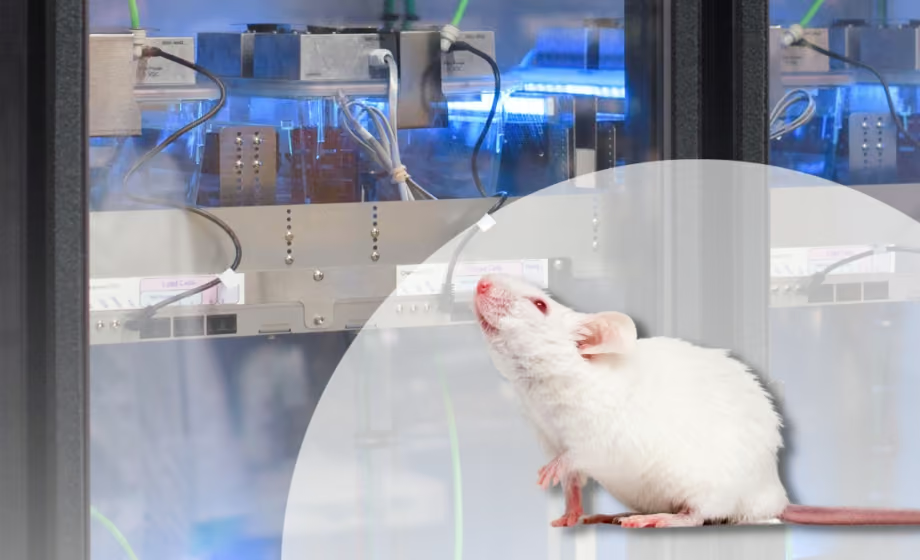
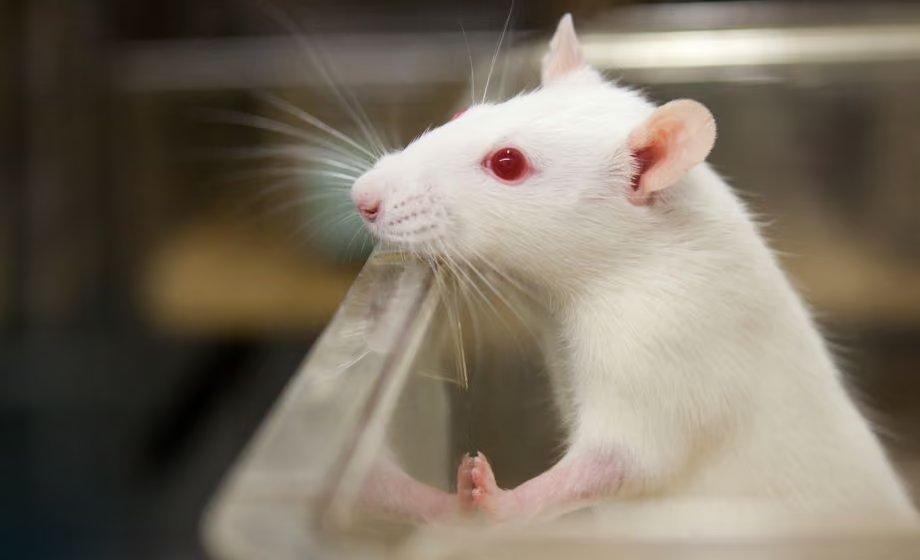
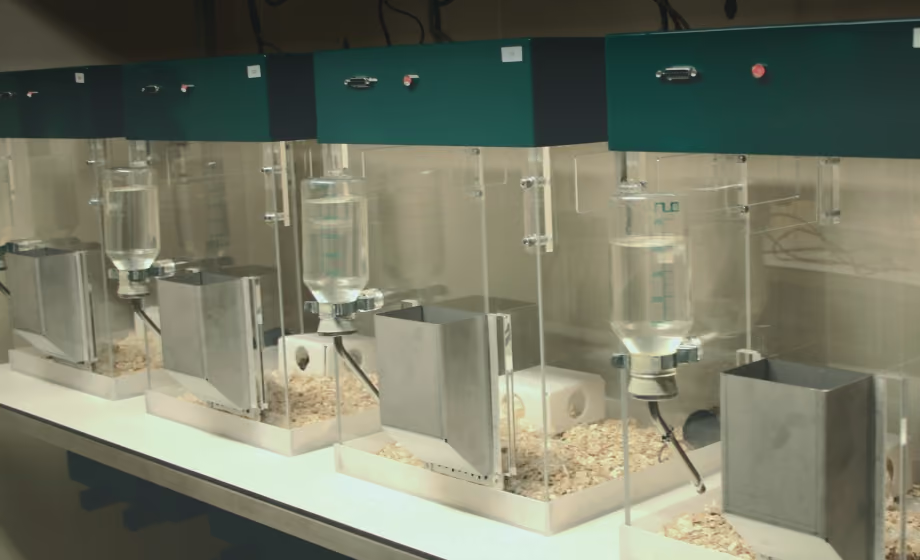
Multiple home cage monitoring systems have been developed during the last two decades with the aim of increasing the reproducibility of test results and improving behavioral assessment in pre-clinical research. In this webinar, Lior Bikovski and Shivang Parikh will address specific advantages and limitations of today's home cage monitoring (HCM) technology used in behavioral research.
Specifically, they discuss the use of HCM systems and compare them with other standard tools in the field of behavioral research. They explain why it can be difficult to see differences between study groups using point sampling methods and why longitudinal tools can be helpful in characterizing behaviors. They also review the calibration of a new system, preliminary results, and the benefits of using the home cage as the test chamber, rather than moving animals to a separate test chamber for observation experiments. Finally, Shivang shares his current work involving HCM and the effects of ultraviolet light with a focus on behavioral assessments and cancer.
Featuring Insights from

Lior Bikovski
PhD
Lior is an expert in neuro-behavioral studies. He provides consultation on experimental design and data analysis, as well as technical training for new users and assistance with scheduling experiments.

Shivang Sunil Parikh
Shivang is currently a PhD student, in Dr. Carmit Levy's lab, where his research focuses on the effects of UV light and cancer. He won an award at the 2nd Zvi and Ester Weinstat Student Award Symposium for outstanding research achievement in the field of cancer research.
Sponsored by