Scientists share case studies and experimental data from various applications using a newly developed automated system to measure vision based on the optomotor reflex.
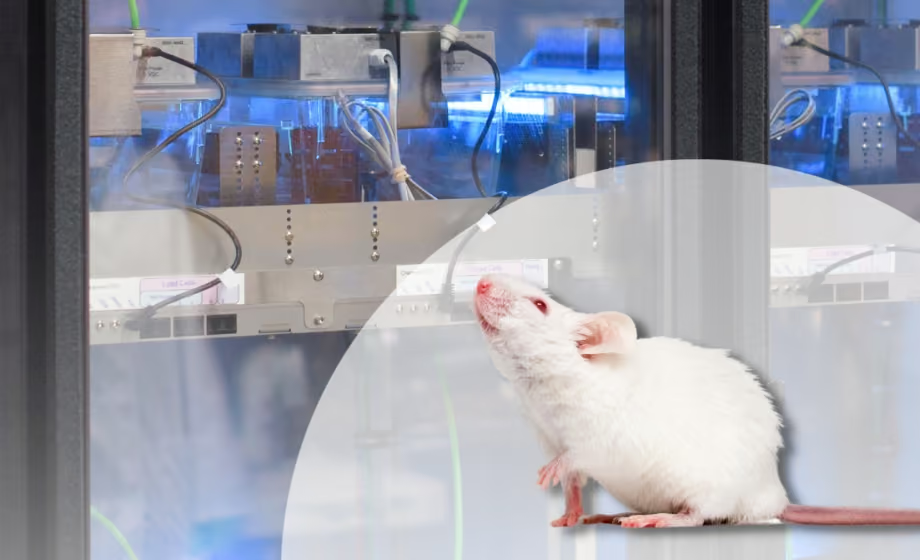
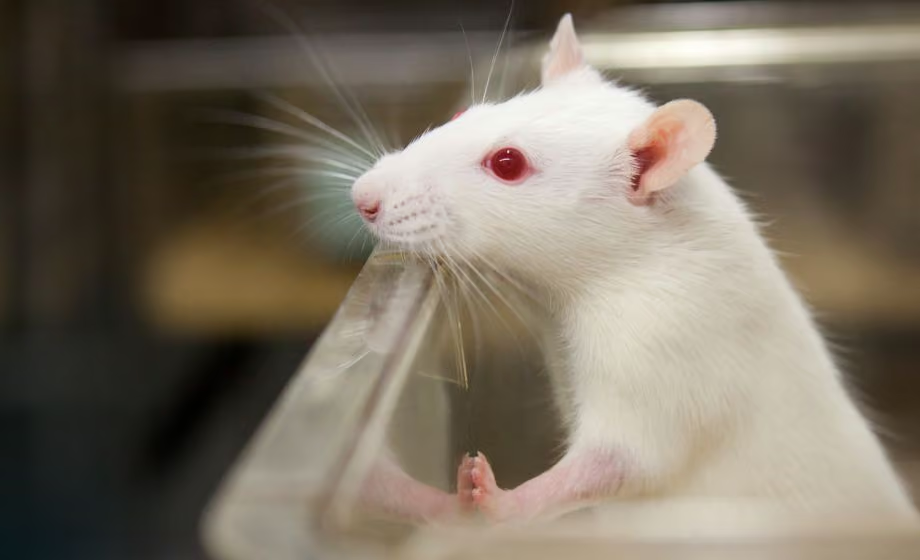
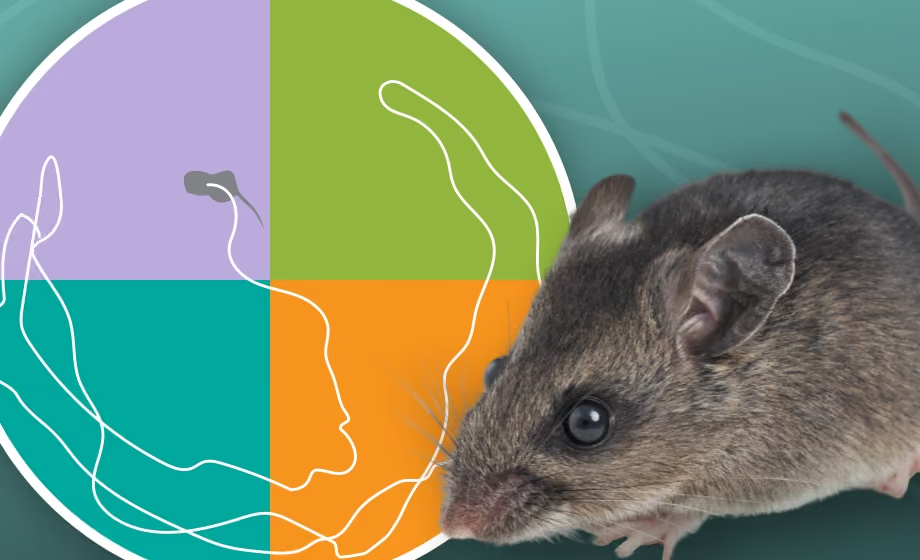
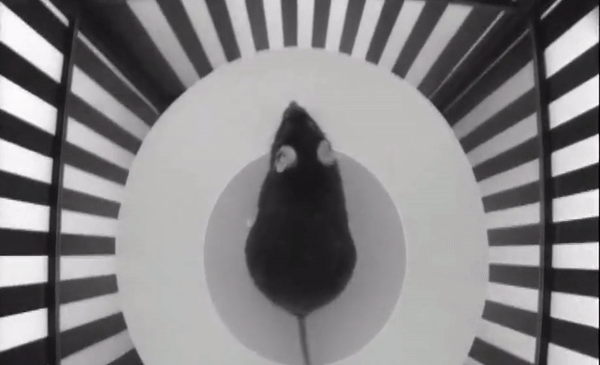
There is a growing need for behavioral readouts to monitor disease progression and to assess the success of a potential therapy. In vision research, observing the optomotor reflex (OMR) is an important and widely established method for assessing visual acuity and contrast sensitivity in rodents.  These tests can be performed with freely moving animals without any need for anaesthesia or restraints.  In addition, since OMR is a reflex-based behavior, observing it does not require any training of the animal.
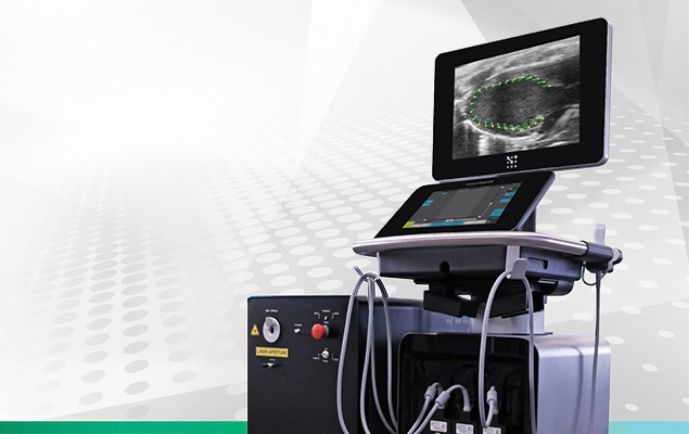
In this webinar, sponsored by Striatech and supported in part by Stoelting, researchers will present objective and bias-free results obtained using a newly developed automated optomotor system. Professor Volker Enzmann from the University Hospital Bern will discuss the pros and cons of using OMR measurements as a readout tool for visual performance in mouse models of retinal degeneration. In addition, he will share data from his research on multiple sclerosis, laser treatment and treatment with sodium iodate.
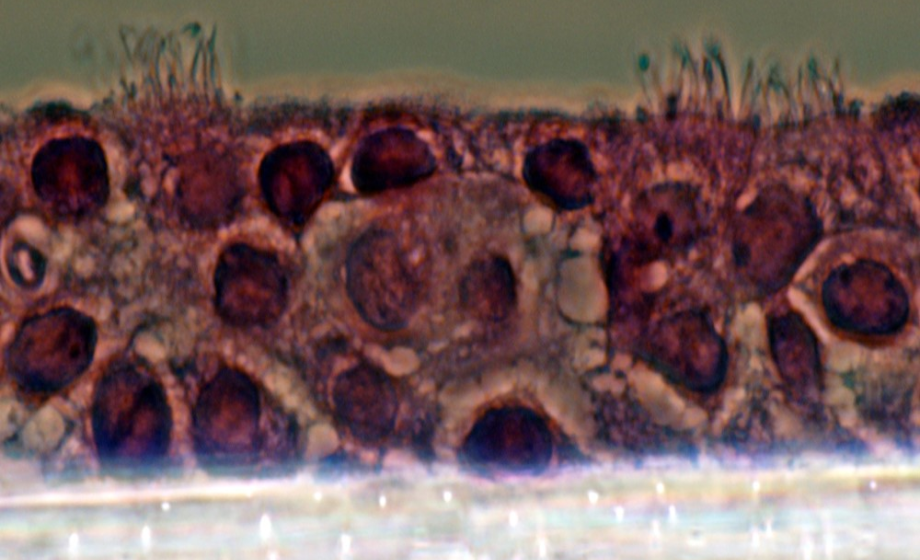
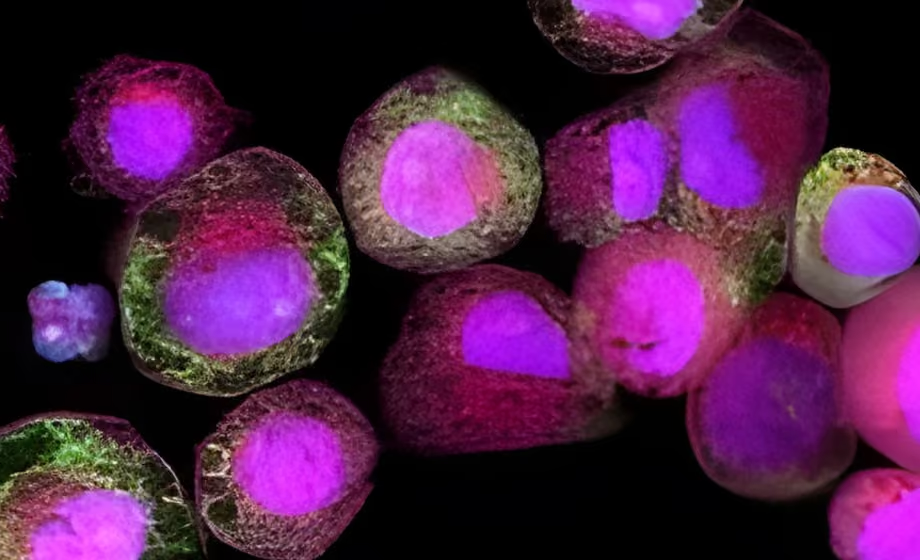
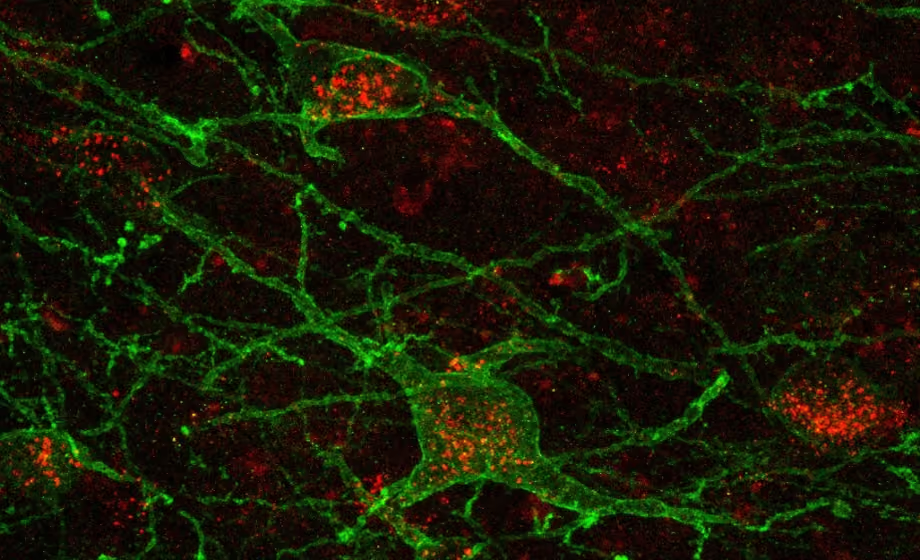
Dr. Kaushikaram Subramanian from the Max Planck Institute of Molecular Cell Biology & Genetics in Dresden will explain how chromatin architecture affects light scattering by photoreceptor nuclei. Following, he will show how the chromatin architecture found in night-active animals provides a visual advantage under scotopic conditions.
Featuring Insights from

Kaushikaram Subramanian
Dr. Kaushikaram Subramanian’s research addresses the optical properties the vertebrate retina, an incredibly cell-dense tissue with the photoreceptors located on its back. Rod photoreceptor nuclei, that account for near 80% of all nuclei in the mouse retina, are known to be inverted in all nocturnal mammal. His investigations elucidate how this nuclear architecture conveys improved image transmission in the mouse retina, ultimately providing enhanced visual perception under low light conditions.

Volker Enzmann
PhD

Thomas Münch
PhD
Thomas Münch is Research Group Leader at the University of Tübingen at the Institute for Ophthalmic Research, and the Centre for Integrative Neuroscience. Thomas studied Biology and Mathematics in Karlsruhe. After obtaining his PhD in Neuroscience at the University of California at Berkeley with Frank Werblin, he did a PostDoc in the lab of Botond Roska at the Friedrich Miescher Institute in Basel. He is expert on vision research, and initiated and supervised the development of the OptoDrum System, initially targeted for the lab’s own research needs. As respected member of the vision research community, Thomas knows the current and future needs of users in the field.
Sponsored by