Webinar Summary
- Discuss the maternal mortality crisis in the United States
- Describe cardiovascular changes and adaptations that occur during normal pregnancy
- Highlight adverse cardiovascular changes that can occur during pregnancy
- Discuss potential metabolic mechanisms contributing to pregnancy-induced cardiac growth and its reversal
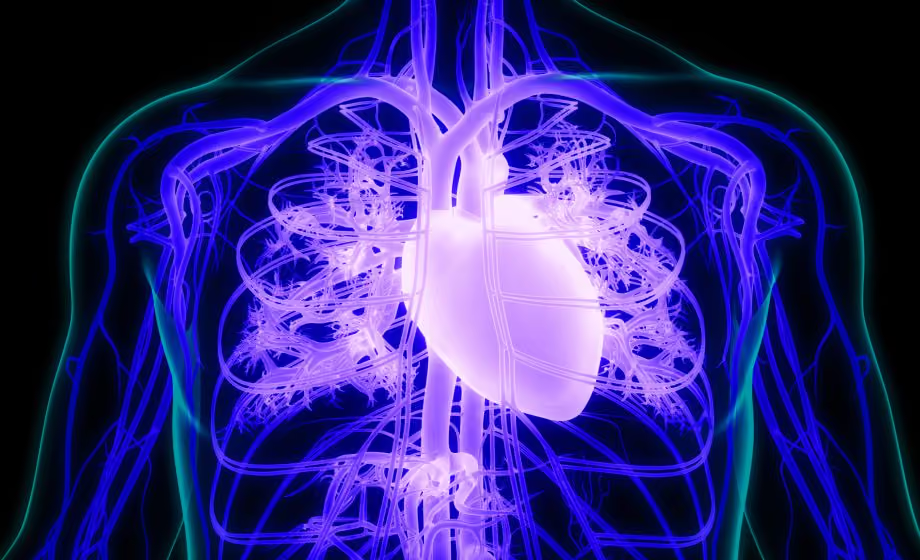
Maternal mortality rates are at an all-time high in the United States and continue to increase, with the leading cause of death being cardiovascular diseases. The development of cardiovascular complications during pregnancy is important because it has been shown to increase both all-cause and cardiovascular mortality in women later in life. Therefore, this highlights the importance of understanding the long-term molecular benefits of a healthy pregnancy.
Dr. Helen E. Collins' laboratory focuses on understanding the mechanisms contributing to female cardiovascular health and resilience in the setting of physiological and pathological stressors, such as during pregnancy and in the setting of myocardial infarction. Currently, NIH-funded studies in the Collins lab focus on understanding the metabolic mechanisms contributing to pregnancy-induced cardiac growth and its reversal.
In this webinar, Dr. Collins describes the current state of knowledge regarding the cardiovascular adaptations during a healthy pregnancy and the potential risk factors for developing pregnancy-associated cardiovascular diseases. She also describes work from her laboratory focused on understanding the underlying metabolic mechanisms contributing to pregnancy-induced cardiac growth, utilizing multi-omics approaches. Specifically, she describes the contributions of the ancillary biosynthetic pathways of glucose metabolism, which provide the building blocks to facilitate cardiac growth, and the contributions of myocardial ketone body metabolism in maintaining mitochondrial energetics in the maternal heart.
Featuring Insights from

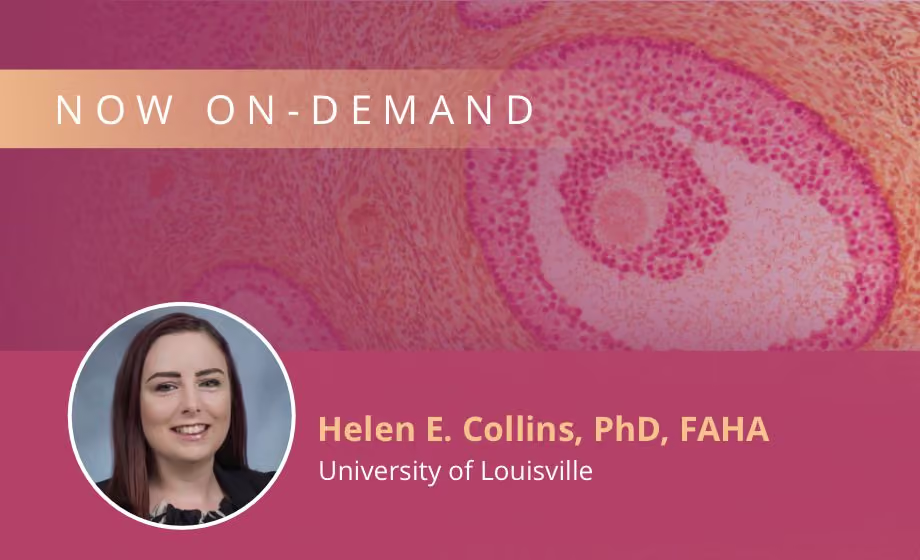
Helen E. Collins
PhD, FAHA
Dr. Helen E. Collins received both her BSc (Hons) degree in Biological Sciences in 2006 and her PhD focused on diurnal variation in cardiac excitation-contraction coupling in 2011 from the University of Leicester in England. In 2012, she joined the laboratory of Dr. John Chatham at the University of Alabama in Birmingham (UAB) as a postdoctoral fellow to elucidate the role of STIM1 in the adult heart. In 2019, Dr. Collins joined the University of Louisville as an Assistant Professor in the Division of Environmental Medicine in the Center for Cardiometabolic Science. Dr. Collins' laboratory focuses on understanding the mechanisms contributing to female cardiovascular health and resilience in the setting of physiological and pathological stressors, such as during pregnancy, exercise, and in the setting of myocardial infarction.
In Partnership with
American Physiological Society
Founded in 1887, the American Physiological Society is a global leader in expanding knowledge related to biological function. We connect a multidisciplinary community of nearly 10,000 scientists and educators from around the world, driving collaboration and spotlighting scientific discoveries in physiology and related disciplines. Our members are advancing treatments and cures for everything from cancer and heart disease, to obesity and addiction. They are also deepening our insight into living organisms generally, helping us to better understand how things like climate change are affecting the world around us.
Society for Women’s Health Research
As a national thought leader dedicated to advancing women’s health and promoting research on sex differences to optimize women’s health, the Society for Women’s Health Research (SWHR) plays a critical role in identifying clinical and research gaps; raising awareness of diseases, conditions, and life stages that differently, disproportionately, or exclusively affect women; and promoting policies that could positively shape health outcomes for women. Over its more than 30-year history, SWHR has been advancing women’s health through its core functions of science, policy, and education.