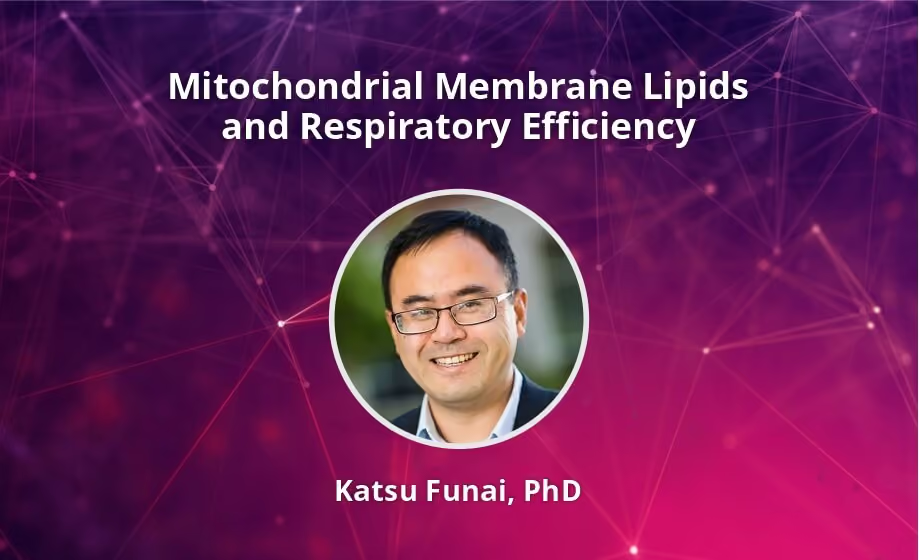
Join Katsu Funai to learn how mitochondrial membrane lipids can affect metabolic efficiency and propensity for obesity-related diseases.
The mitochondrial electron transport system (ETS) consists of a sequence of reactions with known nodes of inefficient energy transfer. Obesity and inactivity, major drivers of metabolic diseases, are both known to increase electron leakage and induce oxidative stress. In contrast, exercise, cold exposure and calorie restriction improve mitochondrial efficiency to maximize energy output. Notably, human mutations that promote loss of IMM lipids are known to cause oxidative stress and are detrimental to health.
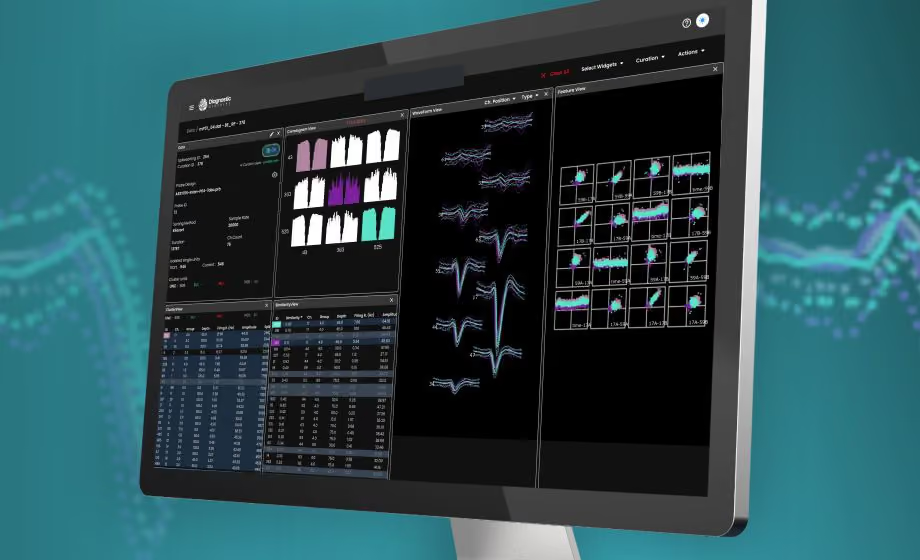
During this exclusive live webinar, Katsu Funai will discuss how lipid composition of the inner mitochondrial membrane (IMM) modulates ETS efficiency to alter propensities for metabolic diseases. Specifically, he will share how his team is utilizing a sophisticated mitochondrial diagnostics platform to systematically examine the role of IMM lipids on the efficiency of each of the energy transfer processes of mitochondrial oxidative phosphorylation. In addition, he will review methodology and share findings of tissue-specific gain- or loss-of-function studies and discuss the role of these experiments in assessing metabolic health.
Featuring Insights from

Katsu Funai
PhD
Dr. Funai’s research involves studying the molecular mechanisms that regulate skeletal muscle metabolism. He uses cell culture, mouse models, and clinical studies to understand how lipid molecules mediate the effect that obesity has on cellular homeostasis. His laboratory is located at the Diabetes & Metabolism Research Center at the University of Utah.
Sponsored by
Aurora Scientific, Inc.
In Partnership with
American Physiological Society
Founded in 1887, the American Physiological Society is a global leader in expanding knowledge related to biological function. We connect a multidisciplinary community of nearly 10,000 scientists and educators from around the world, driving collaboration and spotlighting scientific discoveries in physiology and related disciplines. Our members are advancing treatments and cures for everything from cancer and heart disease, to obesity and addiction. They are also deepening our insight into living organisms generally, helping us to better understand how things like climate change are affecting the world around us.