In this webinar, Bo Kyoung Kim, PhD discusses RIP1 kinase's role in glaucoma and its potential as a therapeutic target to preserve vision.
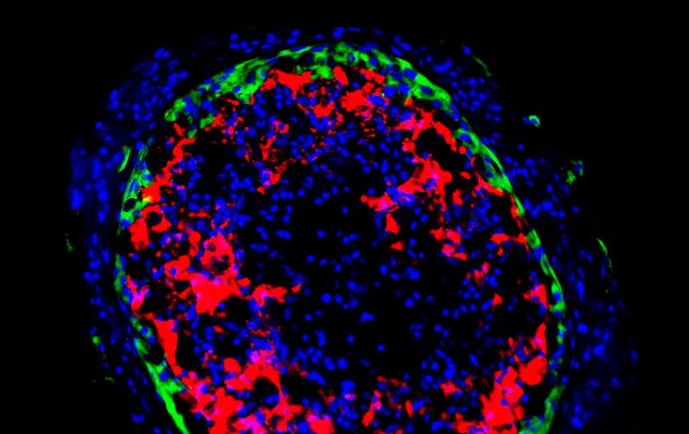
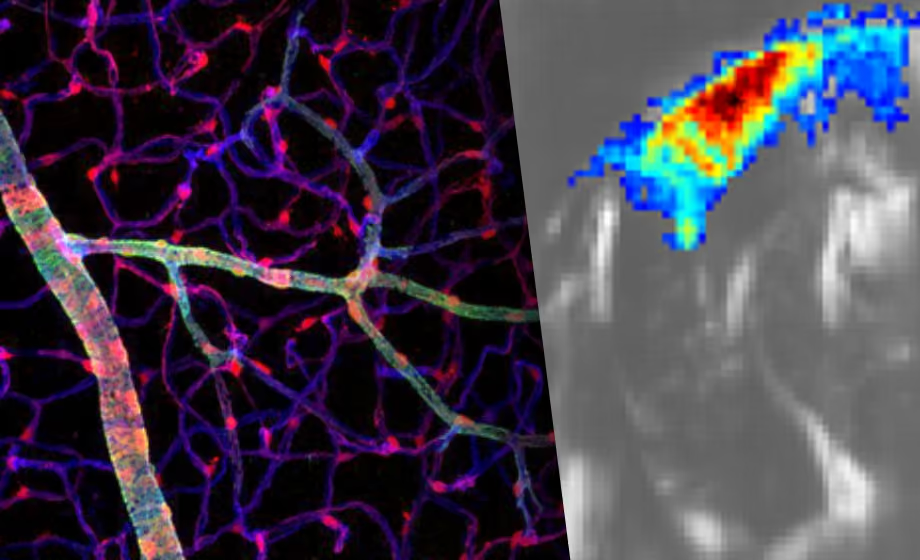
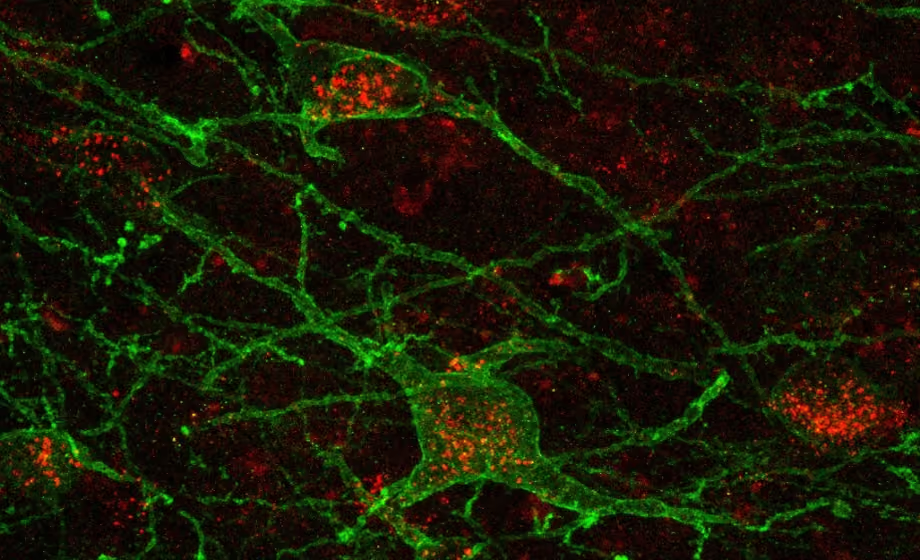
Glaucoma is a leading cause of irreversible vision loss, yet the mechanisms driving retinal ganglion cell (RGC) degeneration are not fully understood. In this study, Kim et al. investigate how RIP1 kinase-mediated inflammatory cell death and microglial infiltration contribute to RGC loss. RIP1 is a critical mediator of multiple signaling pathways that promote inflammatory responses and cell death. They utilized two distinct preclinical glaucoma models and transgenic mice deficient in key necroptosis regulators. By targeting components of the necroptosis pathway with these transgenic mice, they demonstrated that RIP1 inhibition can prevent both RGC degeneration and functional decline following glaucomatous injuries. Notably, Kim et al. found that monogenic glaucoma mutation sensitizes cells to necroptotic death, directly linking genetic risk to inflammatory degeneration. Through integrated use of genetic models, functional assessments including pattern electroretinogram and optomotor reflex, and disease phenotype validation via immunohistochemistry and optical coherence tomography, their findings demonstrate RIP1 as a therapeutic target for developing neuroprotective and anti-inflammatory strategies to preserve vision in glaucoma.
Featuring Insights from

Bo Kyoung Kim
PhD
Dr. Bo Kyoung Kim received her PhD from École polytechnique fédérale de Lausanne (EPFL) under the Roche Doctoral Fellowship program, conducting her research at F. Hoffmann-La Roche, Basel, Switzerland and at Genentech in San Francisco, USA. Her work focused on investigating how different cell death pathways interplay to drive retinal ganglion cell degeneration across diverse preclinical ocular models. Her research explores how cell death and inflammation contribute to neurodegeneration, with the aim of developing therapeutic strategies for ocular diseases.
Sponsored by