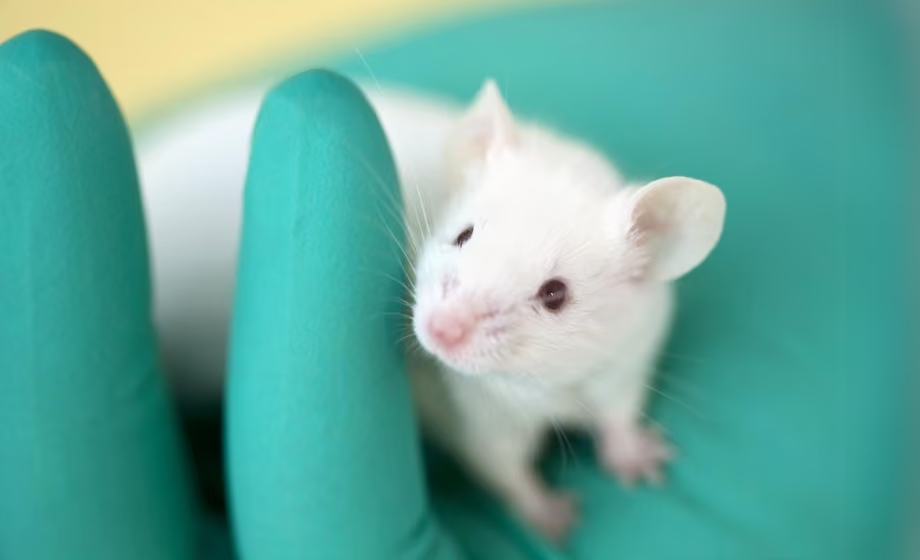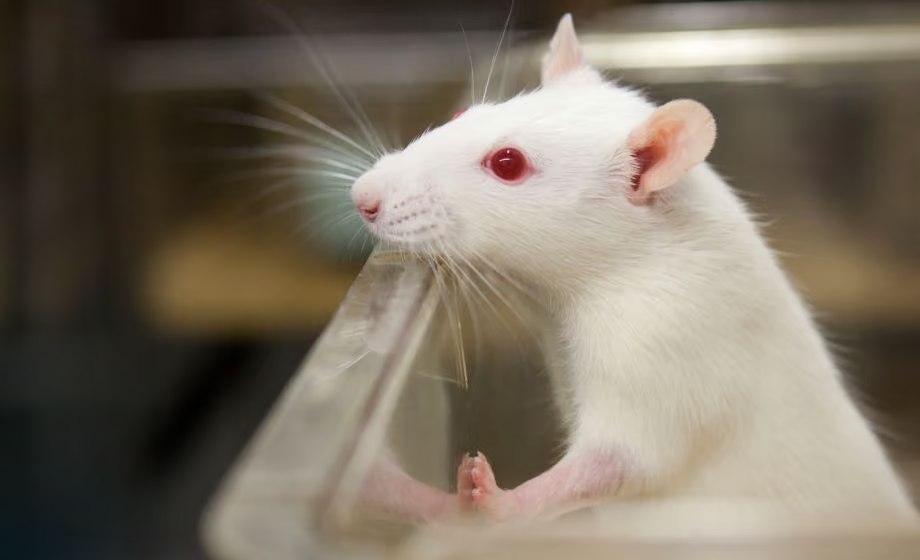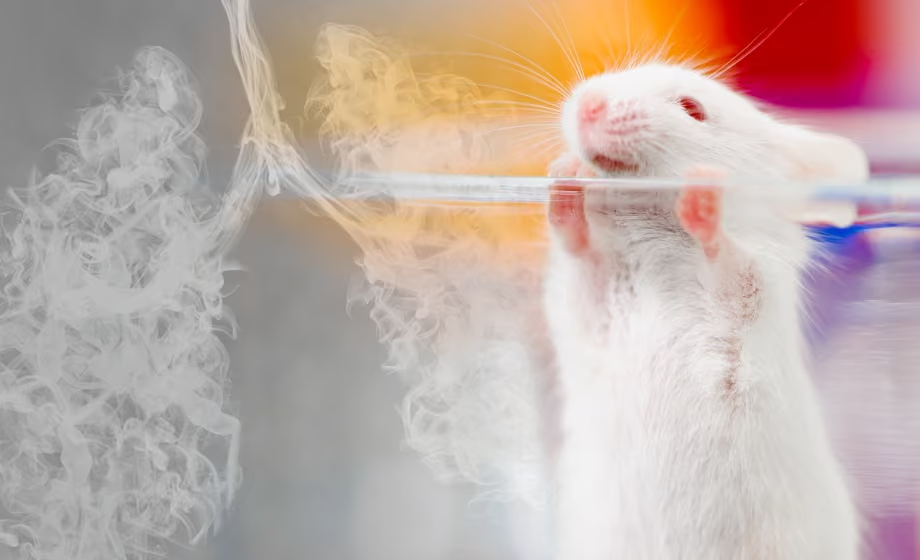
Join Dana McTigue, PhD for a deep dive into her work studying spinal cord injury in rodents and its resulting pathological features in lower organs.
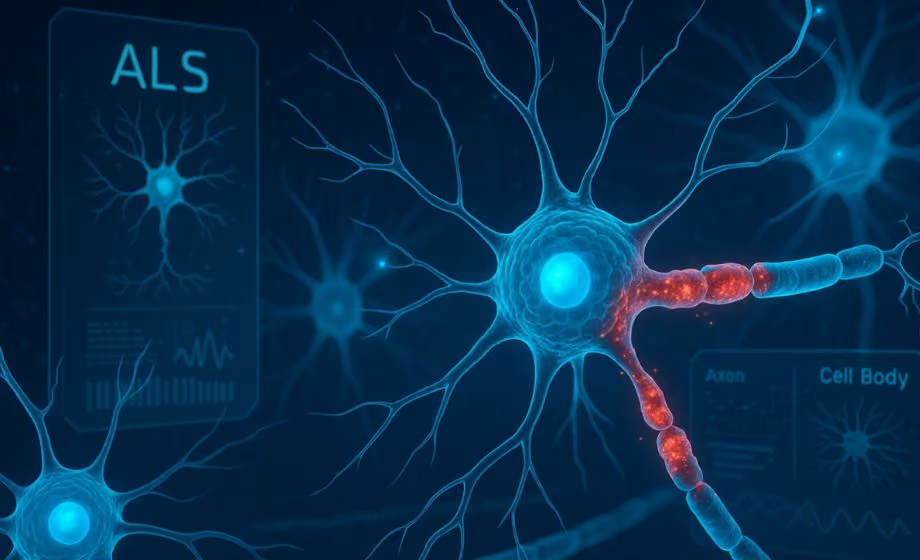
The spinal cord innervates the entire body at and below the neck. Thus, spinal cord injury (SCI) negatively impacts the spinal cord and all organs below the level of the injury. For more than 20 years, Dr. McTigue's work has focused on glial repair after SCI, including oligodendrocyte progenitor cells (OPCs), which is shown to robustly divide and differentiate into oligodendrocytes that generate new myelin after SCI. Dr. McTigue and her lab's recent work shows this surprisingly continues in mice for at least 6 months post-injury. Thus, the adult spinal cord remains highly dynamic for months after injury.
Prior mechanistic studies on regulators of OPC responses after SCI focused on iron, as it is essential for myelination. In studying iron chelation on OPC responses, they noted that the liver - the main iron regulatory organ in the body - was pathological after SCI. Following up this observation led the lab to discover that SCI causes rapid non-alcoholic steatohepatitis, an advanced form of fatty liver disease, as well as insulin resistance and hyperlipidemia, all of which are typically associated with metabolic syndrome and obesity. Current work is evaluating mechanisms to relieve metabolic pathology after SCI, as this is a prominent feature of clinical SCI in humans.
Featuring Insights from
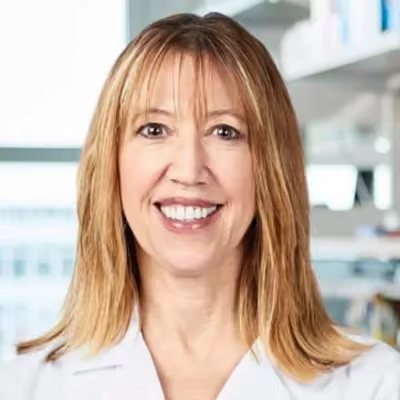
Dana McTigue
PhD
The McTigue lab uses preclinical models to study cellular repair after spinal cord injury (SCI), including oligodendrocyte generation and myelination. More recent studies also study systemic metabolic pathology, including fatty liver disease, insulin resistance and dyslipidemia. The goal of all work is to improve the lives of those living with SCI.
Sponsored by
ALZET
In Partnership with
American Physiological Society
Founded in 1887, the American Physiological Society is a global leader in expanding knowledge related to biological function. We connect a multidisciplinary community of nearly 10,000 scientists and educators from around the world, driving collaboration and spotlighting scientific discoveries in physiology and related disciplines. Our members are advancing treatments and cures for everything from cancer and heart disease, to obesity and addiction. They are also deepening our insight into living organisms generally, helping us to better understand how things like climate change are affecting the world around us.
Society for Neuroscience
- Advance scientific exchange;
- Support the neuroscience community;
- Educate and engage the public; and
- Advocate for the field.
Federation of European Neuroscience Societies
Federation of European Neuroscience Societies (FENS) is the voice of European neuroscience.
Founded in 1998 at the first Forum of European Neuroscience, the FENS is the main organization for neuroscience in Europe. FENS currently represents 44 national and single-discipline neuroscience societies across 33 European countries and more than 22,000 member scientists.
FENS promotes neuroscience research to policy-makers, funding bodies and the general public, both regionally and internationally. FENS promotes excellence in neuroscience research and facilitates exchanges and networking between neuroscientists within the European Research Area and beyond. FENS was created to bring together the scientific community and advance research and education in neuroscience in Europe and beyond.
FENS believes in inclusive, responsible science. FENS takes great pride in its position as the voice of European neuroscience and strives to structure its activities around the following principles.
American Autonomic Society
The American Autonomic Society (AAS) has been established to bring together individuals from diverse disciplines who share an interest in the structure and function of the autonomic nervous system and in the pathology, treatment, and prevention of its disorders. The Society sponsors annual meetings and provides a point of contact among the many interested clinical and basic scientists who wish to communicate across disciplinary lines.
The AAS began informally in 1990 at Vanderbilt University in Nashville, Tennessee. Important motivating force for the initial meeting were Dr. David Robertson and Ms. Dorothy Trainor-Kingsbury (Shy-Drager Support Group). The Society was formally established in 1992, and Dr. Robertson became its first president. The broad aim of the AAS is to provide a vehicle for investigators and clinicians interested in the autonomic nervous system to interact. It aims to promote research, education, and the academic practice in the autonomic disorders. The Society has escalated in its membership, successfully obtained tax-exempt status, adopted a formal charter, and has its own journal (Clinical Autonomic Research).
The Society has an American infrastructure but a strongly international character. Its membership is open to persons of all countries who share the same interests. During the past quarter century, the AAS has expanded from less than 50 members in 1992 to over 150 members today, focusing on both clinical and basic science, and has taken on a new role in the education of physicians in autonomic disorders. The collegial atmosphere and ongoing collaborative efforts has sparked several important discoveries that directly impact the lives of people with autonomic disorders. Partnerships with support groups have expanded the reach of the AAS into the public eye, while partnerships with industry have culminated in approval of new therapies for people with autonomic disorders.
Scientist.com
Scientist.com is the world’s largest and first platform built for the intricacies of scientific outsourcing.
We help pharmaceutical and biotechnology organizations discover, engage, manage, and scale relationships with the providers that support every stage of the pipeline—from discovery and preclinical research to clinical development, manufacturing, medical affairs, and commercialization. Through a centralized platform, organizations can access a global network of 6,000+ providers, streamline sourcing and procurement workflows, maintain compliance, manage supplier relationships, and leverage data-driven insights to make faster, more informed decisions.
Today, Scientist.com supports more than 130 life science organizations, including 24 of the world's top 30 pharmaceutical companies, helping teams reduce operational complexity, accelerate timelines, and bring innovations to patients faster. Our mission is to make it possible to cure all human disease by 2050.