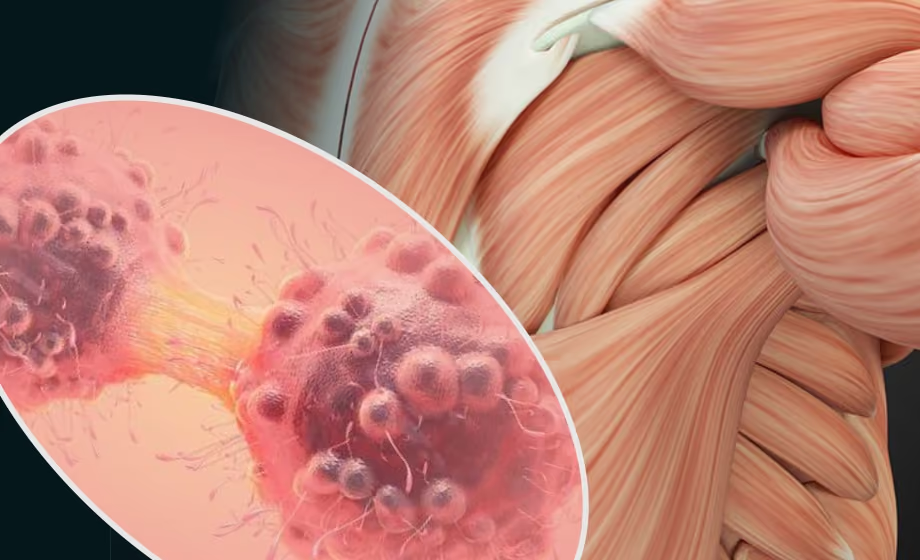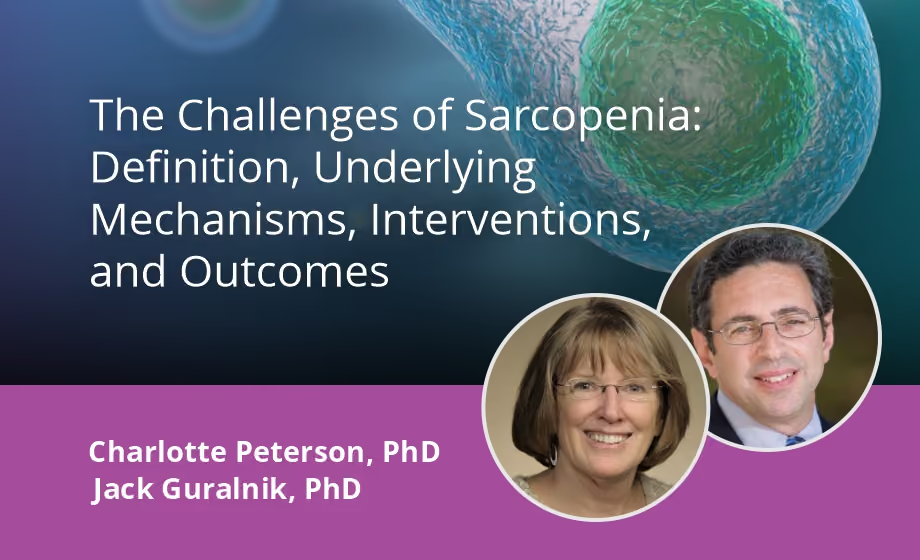
During this webinar, Drs. Peterson and Guralnik will discuss sarcopenia, the physiological mechanisms underlying the disease, and the current avenues of treatment and assessment that are being researched and developed for patients.
Sarcopenia is the age-related loss of muscle that causes decreased strength and functional limitations. Muscle loss occurs universally in people as we age, but some people lose muscle at an accelerated rate compared to others. While chronic disease can cause sarcopenia, it can also result from a sedentary lifestyle, hospitalizations and extended bed rest due to other conditions.A gradual decline in muscle mass and strength begins around 30 years of age with this condition, and annual losses get larger throughout life. The self-reporting of functional difficulties to health care providers may give an indication that sarcopenia is present, but a more precise definition is needed for research and clinical use.
Efforts made in Europe and the US have used grip strength, gait speed and lean mass to define sarcopenia, but these definitions lead to large differences in prevalence rate and discordance in who is labelled as "sarcopenic". To assess this condition, lean mass as measured by dual x-ray absorptiometry (DXA) may not accurately reflect actual muscle mass, but a new technique using dilution of deuterium-labelled creatine may prove to be superior in clinically diagnosing sarcopenia. Currently, a consensus has not been reached on the clinical outcome assessments that can be used by regulatory agencies to judge the effectiveness of drugs for sarcopenia.
A number of potential interventions are being explored to treat sarcopenia in older people, but no drugs are currently approved for this condition. The antidiabetic drug metformin shows promise in preventing many age-associated conditions, but appears to blunt the benefits of exercise on muscle. Senolytic drugs, which clear senescent cells, may improve muscle repair following injury preferentially in older individuals.
Featuring Insights from

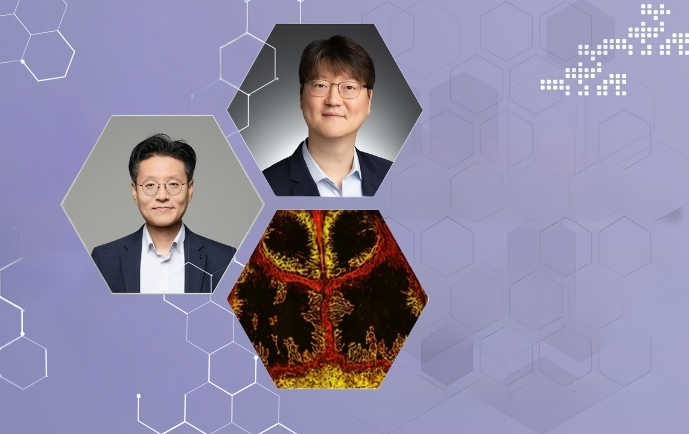
Jack Guralnik
MD, PhD, MPH
Dr. Jack Guralnik is currently Professor of Epidemiology and Public Health at the University of Maryland School of Medicine. He spent 25 years doing research at the National Institute on Aging and was Chief of the intramural Laboratory of Epidemiology, Demography and Biometry.

Charlotte A. Peterson
PhD
Dr. Peterson’s research focuses on elucidation of cellular and molecular mechanisms controlling skeletal muscle structure and function. She is currently funded by the NIH and by the Department of Defense to study the role of adult stem cells in muscle maintenance and adaptation; the influence of obesity and inflammation on muscle function; muscle changes in response to blast injuries resulting in retained metal in muscle; interventions to maintain muscle health in the face of chronic disease and during aging; and strategies to improve exercise outcomes in the elderly. Her long term goal is to develop new strategies to prevent frailty and loss of functional independence.
In Partnership with
American Physiological Society
Founded in 1887, the American Physiological Society is a global leader in expanding knowledge related to biological function. We connect a multidisciplinary community of nearly 10,000 scientists and educators from around the world, driving collaboration and spotlighting scientific discoveries in physiology and related disciplines. Our members are advancing treatments and cures for everything from cancer and heart disease, to obesity and addiction. They are also deepening our insight into living organisms generally, helping us to better understand how things like climate change are affecting the world around us.