Webinar Summary
- Nogo-A expression is upregulated in human ocular pathologies
- Effects of Nogo-A on neuroinflammation
- Different concentrations of NMDA induce different types of injury and visual deficits.
- Systemic as well as acute and localised neutralisation of Nogo-A improves visual functions after retinal injury.
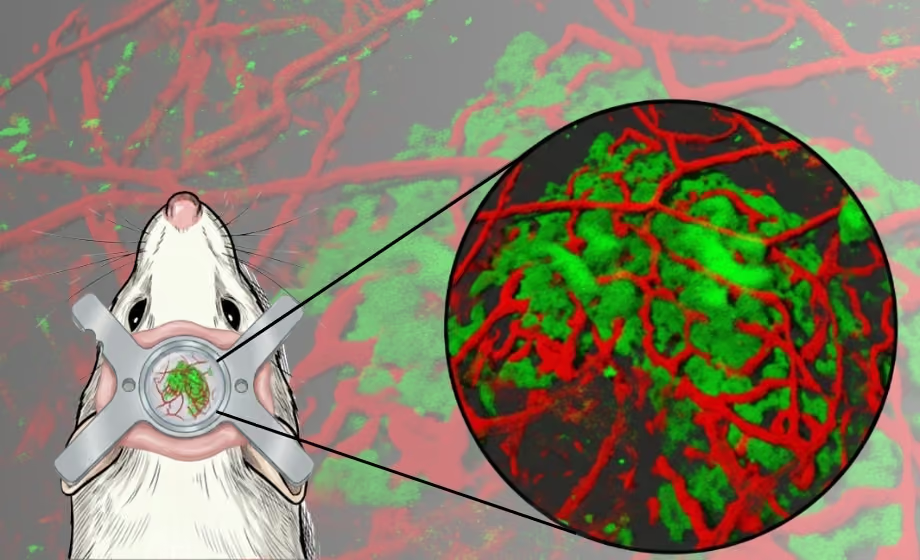
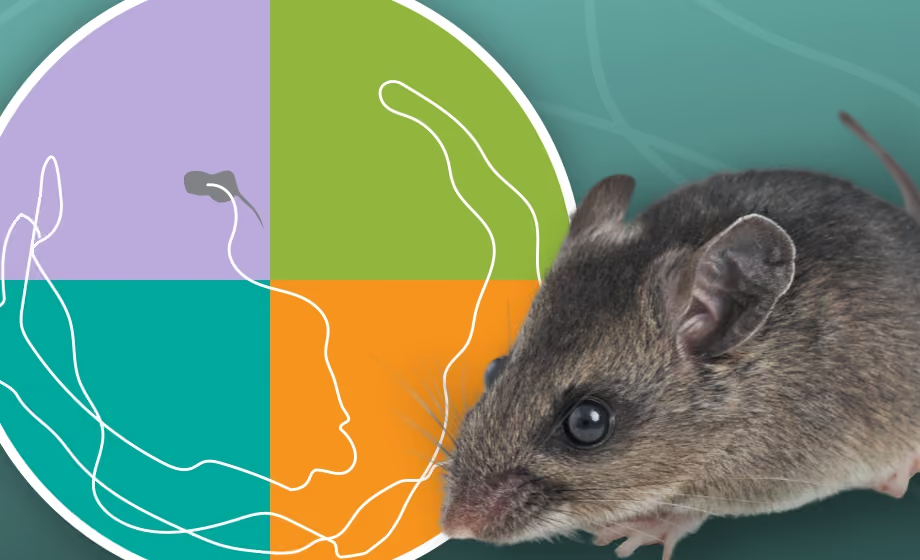
The membrane protein Nogo-A is a potent inhibitor of neuronal growth. After injury, blockade of Nogo-A can support regeneration and functional recovery. For example, in the visual system, the deleterious effects of retinal ischemia on the neuronal survival and function of juvenile mice can be reduced by blocking Nogo-A. In the current study, the aim was to investigate the role of Nogo-A in visual impairments induced by NMDA excitotoxicity in the adult mouse. N-Methyl-D-Aspartate receptor (NMDAR) over-activation is involved in major diseases such as diabetic retinopathy.
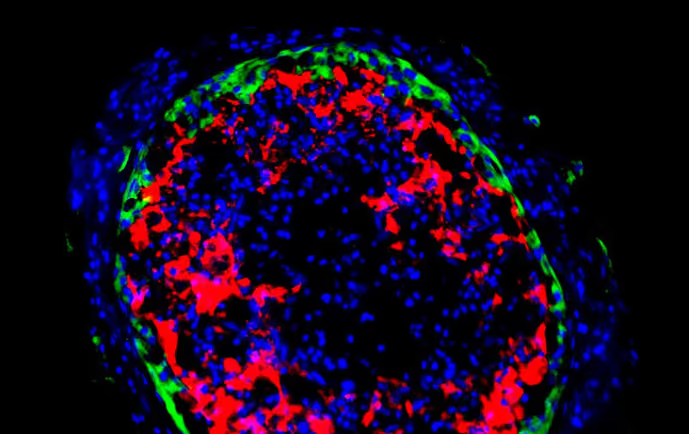
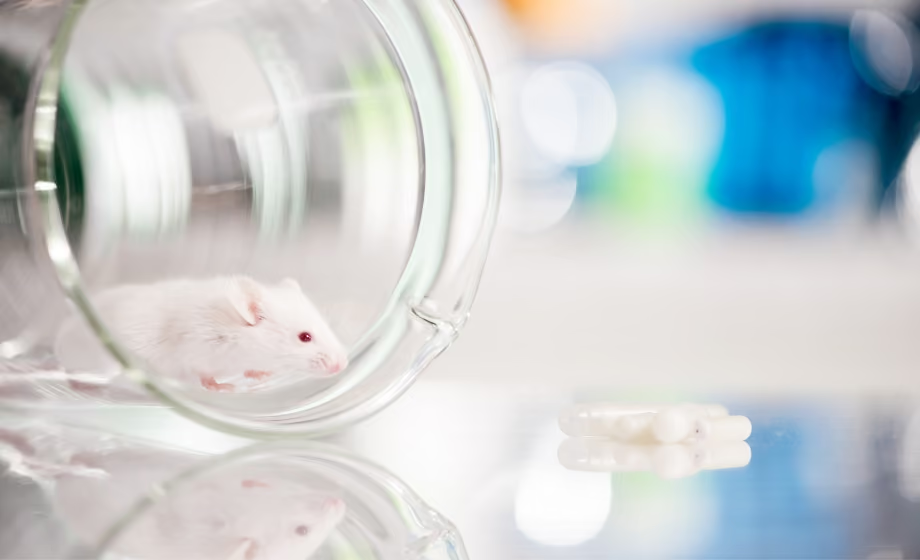
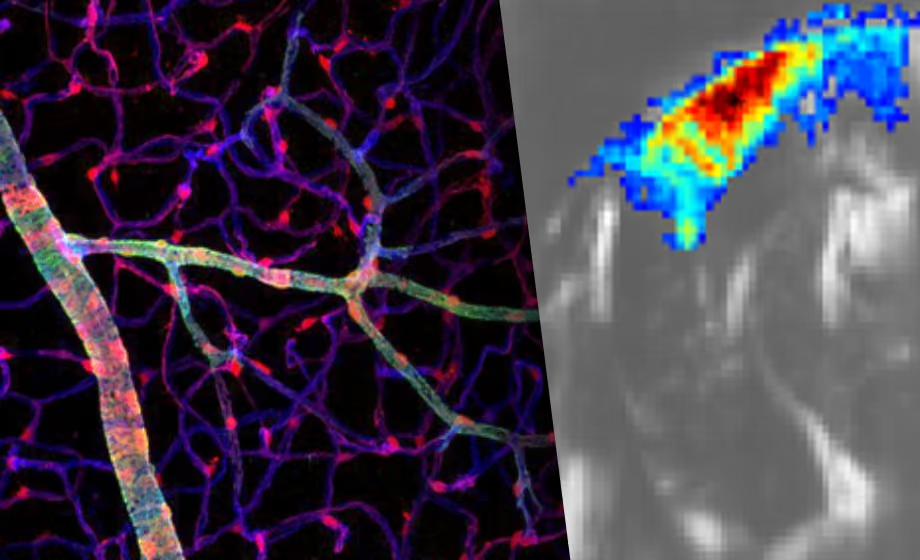
Different levels of retinal injury were induced by intravitreal injection of 0.5 to 40 nmol of NMDA. Nogo-A's function was blocked by using either knock-out (KO) mice or by intraviteally injecting a function-blocking antibody (11C7) two days after NMDA injection. Effects were quantified by following visual function with the optomotor reflex (OMR) and electroretinogram (ERG) recordings, by monitoring visual cortex activity through local field potential (LFP) recording, and by analysing cell survival with immunofluorescence on retinal flat mounts.
Low concentrations of NMDA produced damage limited to the ganglion cell layer (GCL), consisting of a drop of ~20% in visual acuity and a ~30% ganglion cell (GC) loss. Higher concentrations of NMDA resulted in generalized damage to the whole retina: GC loss reached ~80%, visual acuity dropped by ~80% and ERG b-wave amplitudes decreased by half. Nogo-A KO mice, and mice injected with 11C7 intravitreally, showed better functional recovery after NMDA insults. Reduced latency of LFP suggested enhanced visual cortex function after Nogo-A inactivation compared to conrol. However, 11C7 did not significantly influence RGC survival and the ERG response.
Our data suggest that Nogo-A is implicated in the emergence of visual deficits after retinal injury. Antibody-based neutralization of Nogo-A may stimulate visual recovery in retinal diseases involving excitotoxic cell death such as diabetic retinopathy.
Featuring Insights from

Julius Baya Mdzomba
PhD
Julius received his BSc in Cellular Biology in Marsaille, and later specialized in immunological questions of neurodevelopment for his MSc. He has recently received his PhD in Neurobiology from Laval University in Quebec, for his work on the role of Nogo-A in visual deficits, in the lab of Vincent Pernet.
Sponsored by