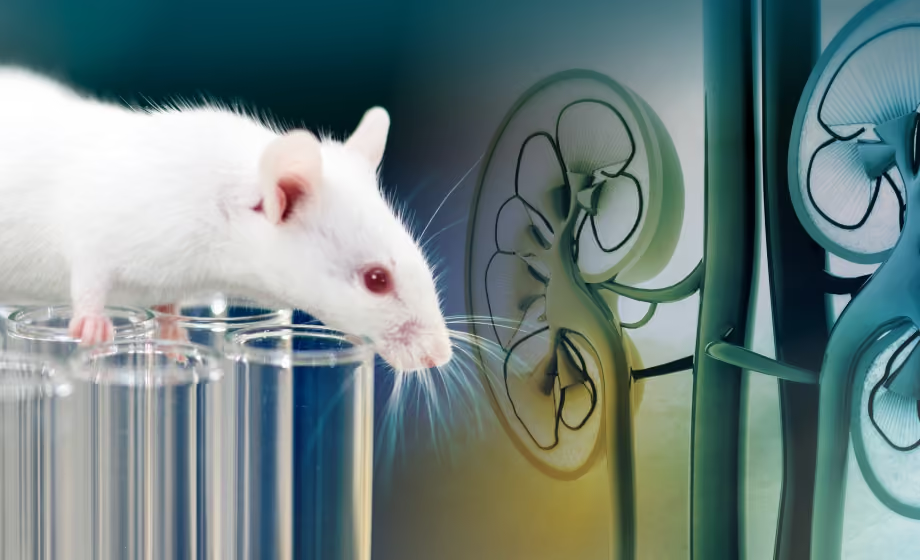
Matthew Sparks, MD, explores the vascular-tubular crosstalk in the renin-angiotensin system that may play a key role in the regulation of pressure natriuresis.
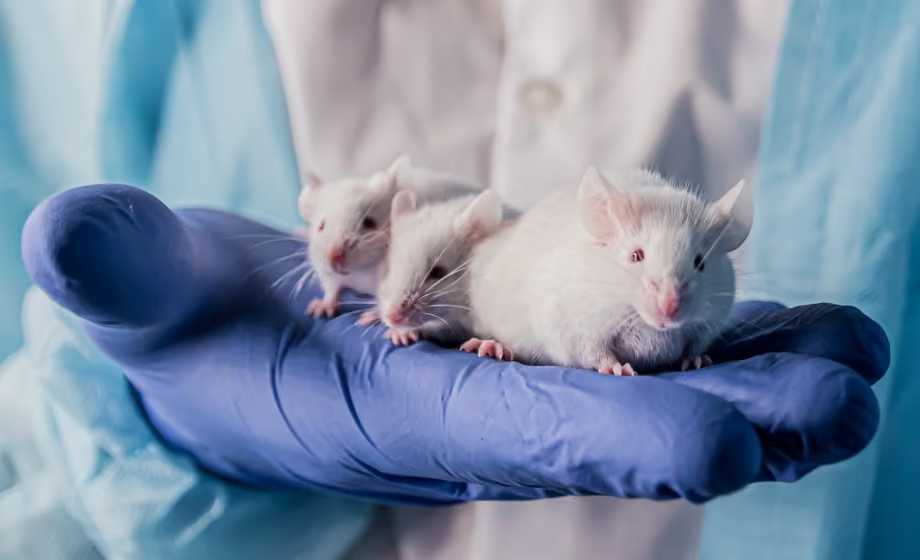
A major pathway in hypertension pathogenesis involves direct activation of ANG II type 1 (AT1) receptors in the kidney, stimulating Na+ reabsorption. AT1 receptors in tubular epithelia control expression and stimulation of Na+ transporters and channels. Recently, Dr. Sparks' team found reduced blood pressure and enhanced natriuresis in mice with cell-specific deletion of AT1 receptors in smooth muscle (SMKO mice). Although impaired vasoconstriction and preserved renal blood flow might contribute to exaggerated urinary Na+ excretion in SMKO mice, they considered whether alterations in Na+ transporter expression might also play a role.
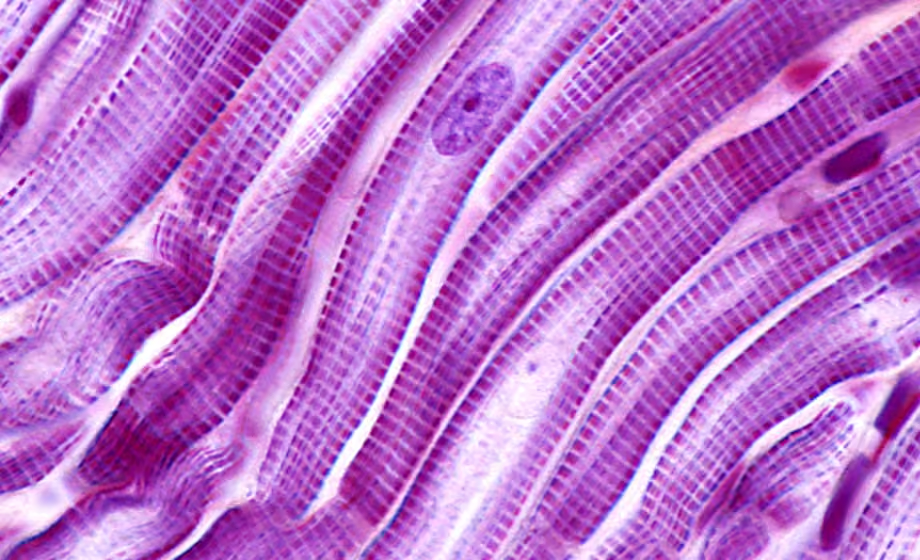
Using proteomic analysis, they found that levels of Na+-K+-2Cl- cotransporter isoform 2 (NKCC2) and Na+/H+ exchanger isoform 3 (NHE3) are reduced at baseline in SMKO mice, accompanied by attenuated natriuretic and diuretic responses to furosemide. During ANG II hypertension, they found widespread remodeling of transporter expression in wild-type mice with significant increases in the levels of total NaCl cotransporter, phosphorylated NaCl cotransporter (Ser71), and phosphorylated NKCC2, along with the cleaved, activated forms of the α- and γ-epithelial Na+ channel. However, the increases in α- and γ-epithelial Na+ channel with ANG II were substantially attenuated in SMKO mice. This was accompanied by a reduced natriuretic response to amiloride. Thus, enhanced urinary Na+ excretion observed after cell-specific deletion of AT1 receptors from smooth muscle cells is associated with altered Na+ transporter abundance across epithelia in multiple nephron segments. These findings suggest a system of vascular-epithelial in the kidney, modulating the expression of Na+ transporters and contributing to the regulation of pressure natriuresis.
Featuring Insights from

Matthew Sparks
MD
Matthew Sparks, MD is an Associate Professor of Medicine at Duke University and serves as the Program Director for the Nephrology Fellowship. He is the founding Director of the Duke Department of Medicine, Society for Early Education Scholars (SEEDS) educational program for all fellows across the department of medicine.
Sponsored by
ALZET
In Partnership with
American Physiological Society
Founded in 1887, the American Physiological Society is a global leader in expanding knowledge related to biological function. We connect a multidisciplinary community of nearly 10,000 scientists and educators from around the world, driving collaboration and spotlighting scientific discoveries in physiology and related disciplines. Our members are advancing treatments and cures for everything from cancer and heart disease, to obesity and addiction. They are also deepening our insight into living organisms generally, helping us to better understand how things like climate change are affecting the world around us.