Webinar Summary
- Aging and neurodegenerative disease affect photoreceptors differentially
- Rod, cone, and melanopsin-expressing intrinsically photosensitive retinal ganglion cells (ipRGCs) contributions to CSF and PLR
- Behavioral assays may be useful as early biomarkers in neurodegenerative disorders
Webinar Highlights
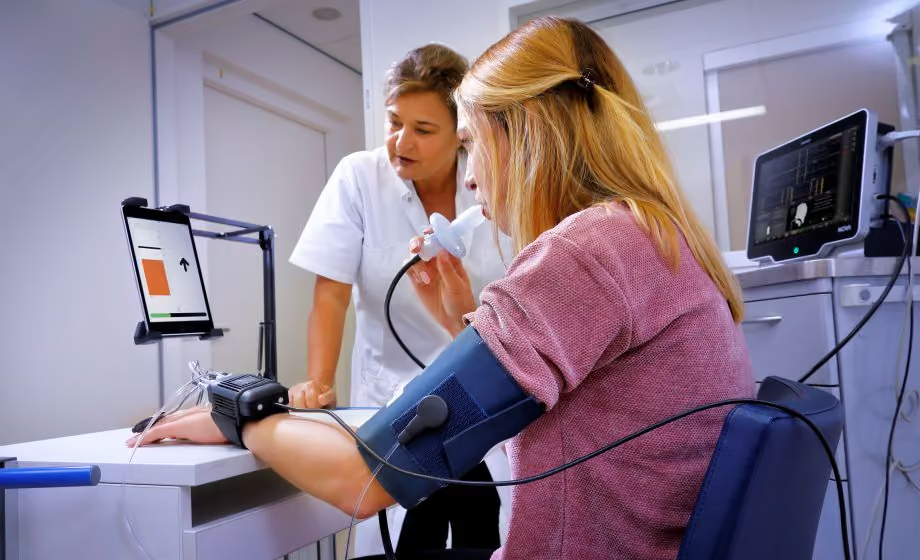
Rod, cone, and melanopsin-expressing intrinsically photosensitive retinal ganglion cells (ipRGCs) are highly conserved from mouse to human. Consequently, many visual functions are highly translatable from bench to clinic, and are thus ideal for evaluating retinal function in aging and neurodegeneration such as Alzheimer's Disease. For example, ipRGCs have been shown to undergo early degeneration in mouse models of Alzheimer's Disease, as well in human post-mortem retinas compared to aged controls. Their contributions to visual acuity, contrast sensitivity, and the pupillary light reflex can be differentiated in people and mice using behavioral assays that are non-invasive, amenable to repeated testing, with no to minimal collateral damage.Learning Objectives:
- Rod, cone and melanopsin-expressing ipRGCs contribute to multiple visual functions, including contrast sensitivity function and the pupillary light reflex
- Specific visual functions can be differentially compromised in specific pathological conditions
- Behavioral measures of visual function can be used to discriminate specific photoreceptor dysfunction
Featuring Insights from

Anna Matynia
PhD
Anna Matynia received her PhD in fission yeast cell cycle at Baylor College of Medicine, and completed her post-doctoral training at UCLA in molecular and behavioral studies of learning and memory in mice with Dr. Alcino Silva. She recently moved to the University of Houston College of Optometry as an Associate Professor where she will continue to investigate the role of retinal and corneal innervation in health and disease.
Sponsored by