Bariatric surgery is one of the most effective treatments of obesity in adults. Unlike many drugs prescribed for the treatment of obesity, bariatric surgery has a broad range of effects, including physiological impact on the gastrointestinal tract and gut microbiota.
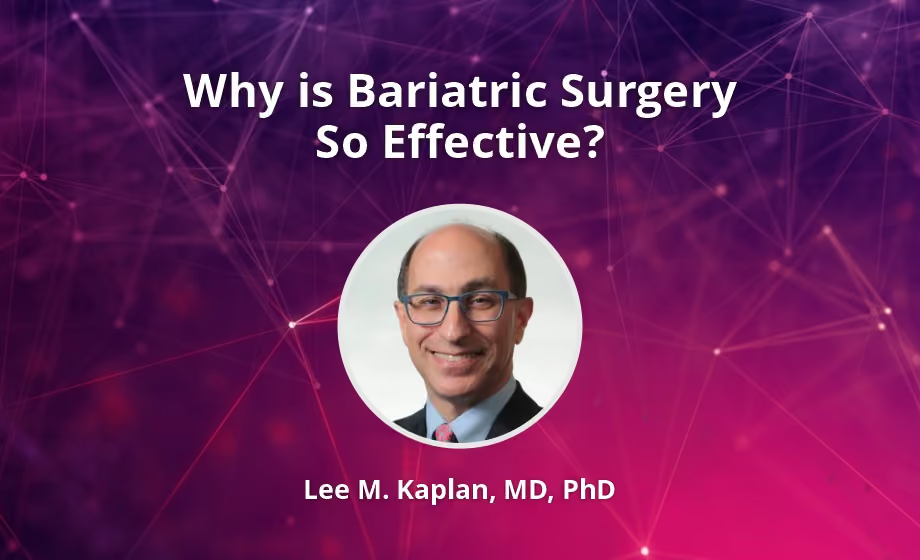
In this final installment of our Obesity 2020 webinar series, Dr. Lee Kaplan discusses late-breaking research and reviews various mechanisms of action of bariatric and metabolic surgery and how they affect the regulation of energy balance and metabolic function.
Featuring Insights from

Lee M. Kaplan
MD, PhD, FTOS
Lee M. Kaplan, MD, PhD, is director of the Obesity, Metabolism, and Nutrition Institute and founding director of the Weight Center at Massachusetts General Hospital (MGH), and associate professor of medicine at Harvard Medical School (HMS). His research focuses on the role of the gastrointestinal tract and gut microbiota in the regulation of energy balance and metabolic function, including the mechanism of action of bariatric and metabolic surgery, as well as the genetic determinants of obesity and its response to therapy.
Dr. Kaplan is director of the subspecialty fellowship program in Obesity Medicine and Nutrition at MGH, director of the Blackburn Course in Obesity Medicine at Harvard Medical School, chair of the U.S. Obesity Medicine Fellowship Council, and associate director of the National Institutes of Health (NIH)-sponsored Nutrition and Obesity Research Center at Harvard. He has served in many professional leadership roles and is a past president of The Obesity Society.
In Partnership with
American Physiological Society
Founded in 1887, the American Physiological Society is a global leader in expanding knowledge related to biological function. We connect a multidisciplinary community of nearly 10,000 scientists and educators from around the world, driving collaboration and spotlighting scientific discoveries in physiology and related disciplines. Our members are advancing treatments and cures for everything from cancer and heart disease, to obesity and addiction. They are also deepening our insight into living organisms generally, helping us to better understand how things like climate change are affecting the world around us.
The Obesity Society
Founded in 1982, The Obesity Society (TOS) is the leading professional society focused on obesity science, treatment and prevention. Our approximately 2,800 members worldwide are people like you, ranging from early career to established members of the field, including basic and clinical researchers, clinicians and care providers, educators, early career investigators and students. Everything the Society does is done by and for people like you. Every action we take supports professionals in the obesity field and people who are impacted by obesity around the globe. Whatever your perspective—scientific, clinical, public health, economic, personal or any other—you are dealing every day with an intractable worldwide epidemic. You know, as we do, that obesity affects individuals, families, friends and neighbors, and countless communities and societies everywhere. Our Society has been charged with advancing the science-based understanding of the causes, consequences, prevention and treatment of obesity. In other words, it’s our mission to help people like you continue your indispensable efforts.