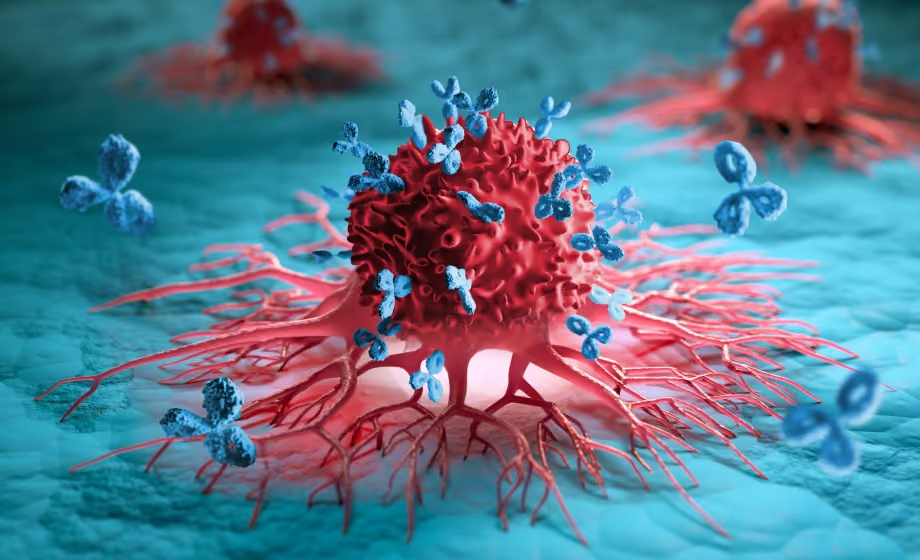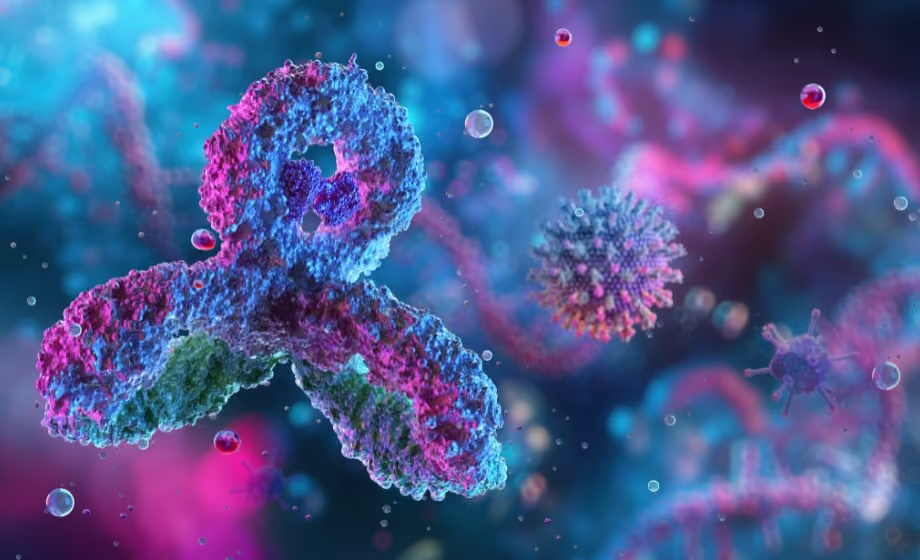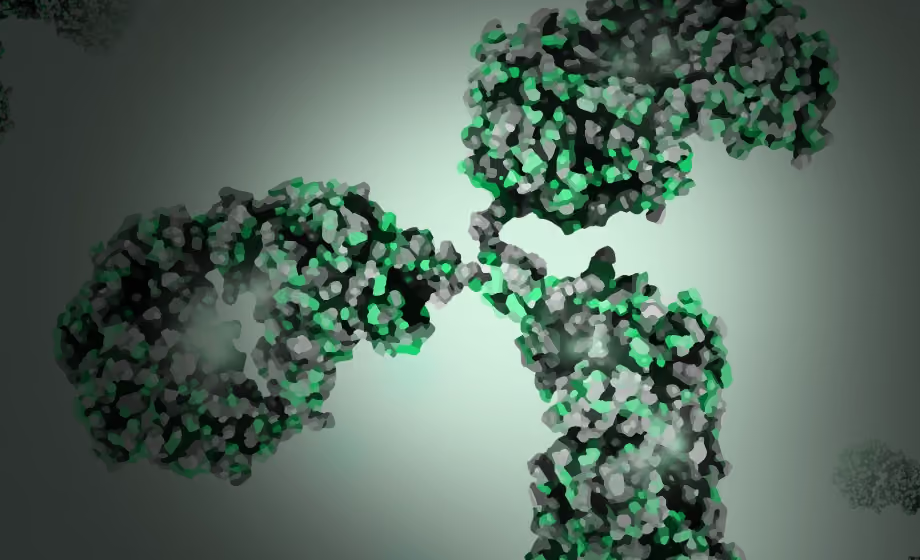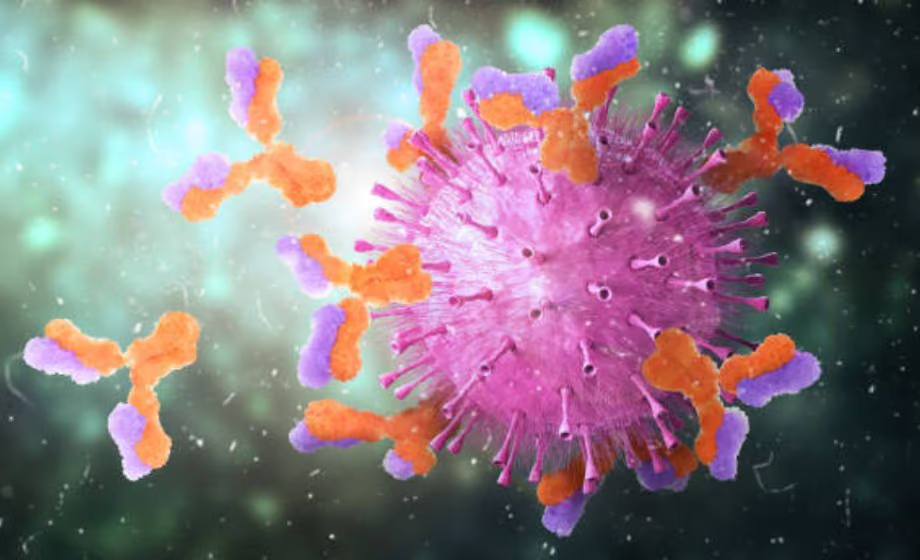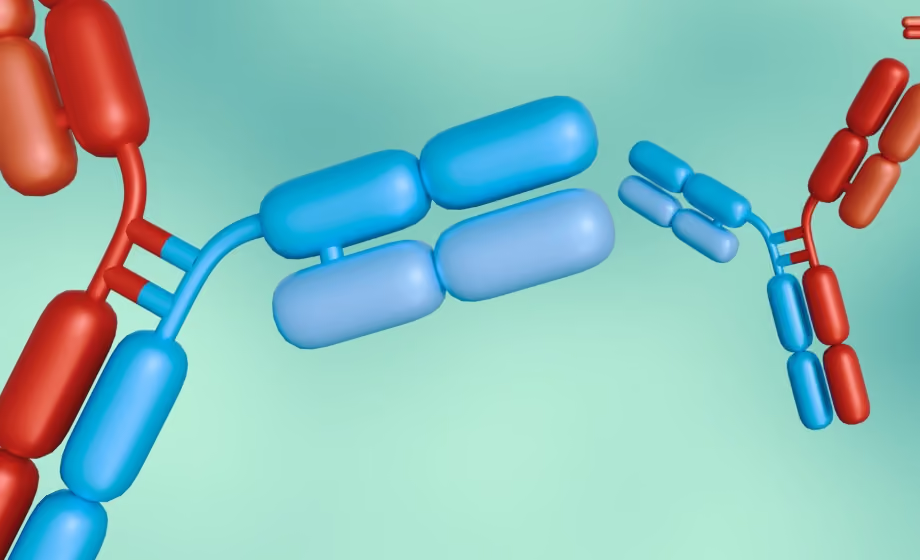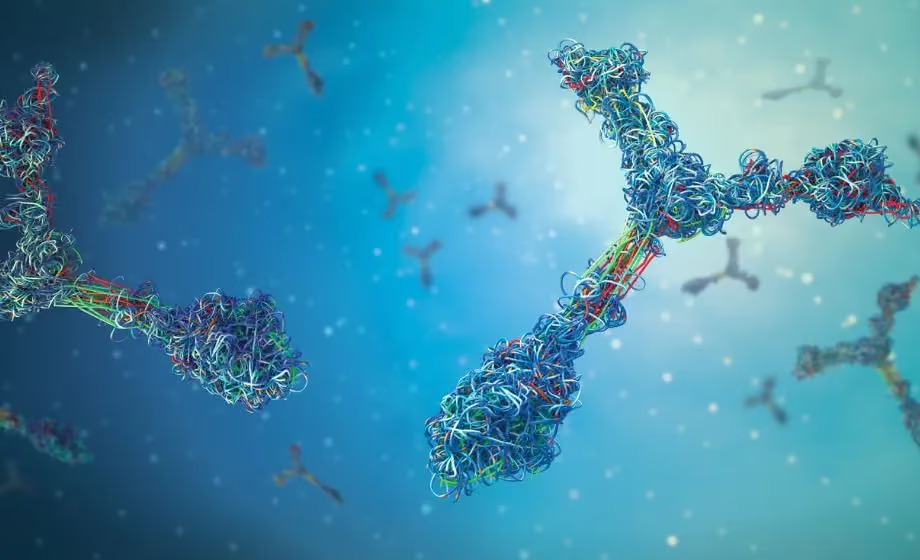
In this webinar, Dr. Jiahui Yang provides an overview of antibody discovery platforms and discusses how single B cell sorting can be used to generate functional monoclonal antibodies for a range of applications including disease diagnosis and therapeutics.
Monoclonal antibodies are monovalent antibodies that bind to the same epitope and are produced from a single B cell clone. Herein, Dr. Yang details the lengthy process of antibody development and the challenges associated with antibody generation. Additionally, Dr. Yang provides an overview of antibody discovery platforms offered by Sino Biological, and discusses how they have developed unique monoclonal antibodies to target and block SARS-CoV-2 spike and nucleocapsid proteins.
"In this year, 2021, 100 antibodies have been approved for therapeutic use, and there are still many more under clinical and preclinical development."
Antibody development is a multi-step process involving immunization, antibody generation, positive antibody screening, expression, purification, and functional analysis. A prerequisite of immunization is the choice of antigen, and this is dependent on the desired final application. For example, recombinant proteins can be used to recognize both linear and conformational epitopes, but challenges of this approach include low antigen expression levels, protein aggregation and degradation, and variation among batches. Vector optimization and longer culture durations can be used to increase protein expression levels, but longer culture durations also increase degradation extent. Degradation can be minimized by using lower temperatures, and aggregation can be decreased with the use of additives. Immunization strategies can further be modified with varying dosages, routes, adjuvants, and timelines.
Sino Biological offers three platforms for monoclonal antibody development, all of which utilize immunized animals (e.g., mice, rabbits) and have their own unique advantages and disadvantages. The hybridoma platform involves immunizing a species against a specific epitope and obtaining B cells from the animal's spleen. Antibody phage display can be used to build a library from which new antibodies can be generated. This process involves isolating B cells from human blood and amplifying certain gene fragments by polymerase chain reaction (PCR). Antibodies can be obtained much more quickly by this process than by traditional hybridoma, and can even be used to generate antibodies to toxic antigens that cannot be used to immunize an animal. Single B cell antibody technology produces antibodies from single human B cells based on the analysis of the immunoglobulin gene repertoire. Like antibody phage display, desired gene fragments are amplified by PCR, and many specific human monoclonal antibodies can be produced in a short period of time.
To conclude this webinar, Dr. Yang discusses case studies for the development of monoclonal antibodies, paying particular attention to antibody development for COVID-19 diagnosis and treatment. Herein, Dr. Yang details the challenges associated with rapid COVID-19 antibody development, including specific antigen generation, the emergence of viral variants, and the need for large-scale antibody production.
"Speed is the most important part to quickly obtain functional . . . and specific antibodies which can be used for COVID-19 research, diagnosis, or even [therapy]."
Since production speed is critical in COVID-19 antibody development, Sino Biological employs their rapid single B cell technology for this application. Despite the fact that SARS-CoV-2 is highly homologous with the original SARS-CoV-1 virus and other coronaviruses, Sino Biological was able to target the SARS-CoV-2 spike and nucleocapsid proteins with high specificity. Variants are of particular concern for antibody development since mutations often affect biological functions and could evade detection by currently available antibody technology. Sino Biological has therefore produced a large collection of antigens to support new antibody discovery, and has used multiple platforms to generate potential antibody clones that can recognize diverse epitopes.
Webinar Highlights
- Applications of monoclonal antibodies, including disease diagnosis and therapy
- Steps in antibody development, including immunization, purification, and functional analysis
- Common challenges in antibody generation and how to avoid or mitigate them
- How to optimize immunization by modifying vectors, culture durations, and temperatures
- Types and characteristics of antibody discovery platforms including hybridoma, antibody phage display, and single B cell antibody technology
- Case studies of antibody development against severe acute respiratory syndrome coronavirus 2 (SARS-CoV-2) proteins and their mutations
Featuring Insights from

Jiahui Yang
PhD
Dr. Jiahui Yang obtained her Ph.D. from Tufts University and joined Sino Biological Inc. after her graduation. She has 10 years of experience in developing optimizing recombinant protein expression and antibody generation. She has led her team to successfully produce >3000 recombinant proteins and >5000 antibodies.
In Partnership with
Scientist.com
Scientist.com is the world’s largest and first platform built for the intricacies of scientific outsourcing.
We help pharmaceutical and biotechnology organizations discover, engage, manage, and scale relationships with the providers that support every stage of the pipeline—from discovery and preclinical research to clinical development, manufacturing, medical affairs, and commercialization. Through a centralized platform, organizations can access a global network of 6,000+ providers, streamline sourcing and procurement workflows, maintain compliance, manage supplier relationships, and leverage data-driven insights to make faster, more informed decisions.
Today, Scientist.com supports more than 130 life science organizations, including 24 of the world's top 30 pharmaceutical companies, helping teams reduce operational complexity, accelerate timelines, and bring innovations to patients faster. Our mission is to make it possible to cure all human disease by 2050.

.avif)
.avif)