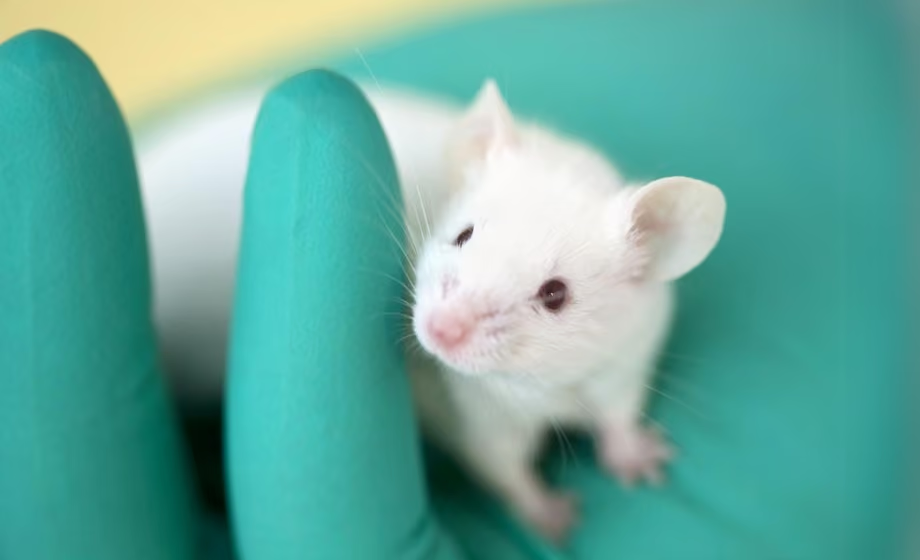
Experts provide insight into high-throughput cognition testing of individual rodents within their social environment, discussing how this supports increased animal welfare and decreased data variability and workload for the researcher.
During this exclusive webinar sponsored by, TSE Systems, Drs. Ewelina Knapska, David Wolfer, and Holger Russig review automated home-cage behavioral phenotyping using the IntelliCage system and discuss several research applications including the study of hippocampus-dependent spatial learning tasks, measuring motor impulsivity, studying the role of MMP-9 in the central amygdala in learning of appetitively and aversively motivated behaviors, and assessing cognitive rigidity in a mouse models of autism.
After establishing basic concepts, presenters demonstrate how freely programmable behavioral tasks can be controlled and how to link them to established paradigms performed in biomedical and basic behavioral, neurobiological, psychiatric, pharmacological and genetic research. The implications for understanding therapeutic strategies is also discussed.
Featuring Insights from

David P. Wolfer
MD

Ewelina Knapska
PhD

Holger Russig
PhD
Sponsored by

































.avif)