In this webinar, as the tenth part of the Science of Aging Webinar Series, Dr. Dale Abel discusses mechanisms underlying heart failure in aging and diabetes.
Dr. Abel begins this webinar with an overview of complications resulting from diabetes and the comorbidities associated with this disease.
"For many years, the focus has been on the microvascular complications such as retinopathy, nephropathy, and neuropathy, but more importantly it is the macrovascular complications that drive most of the suffering and increase the risk of heart attack and stroke."
He proceeds to present epidemiological evidence that shows trends in vascular complications from the early 2000s. One study revealed that nearly half of patients hospitalized with heart failure also present with diabetes, which led to Dr. Abel's investigation of whether whole-body glucose metabolic dysfunction leads to cardiomyopathy and resulting heart failure. The first section of this webinar discusses the intrinsic defects in cardiac muscle that increase the likelihood that cardiac dysfunction will develop in the presence of added stressors such as ischemia or cardiac hypertrophy. He then presents data showing that changes in Troponin T, an integral component of the troponin complex in cardiac and skeletal muscle, are predictive of heart failure and mortality in diabetic patients.
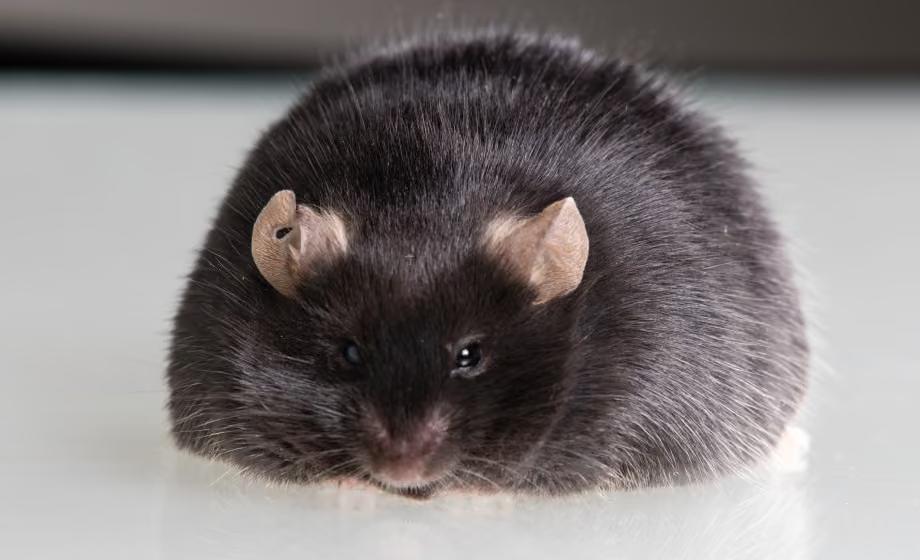
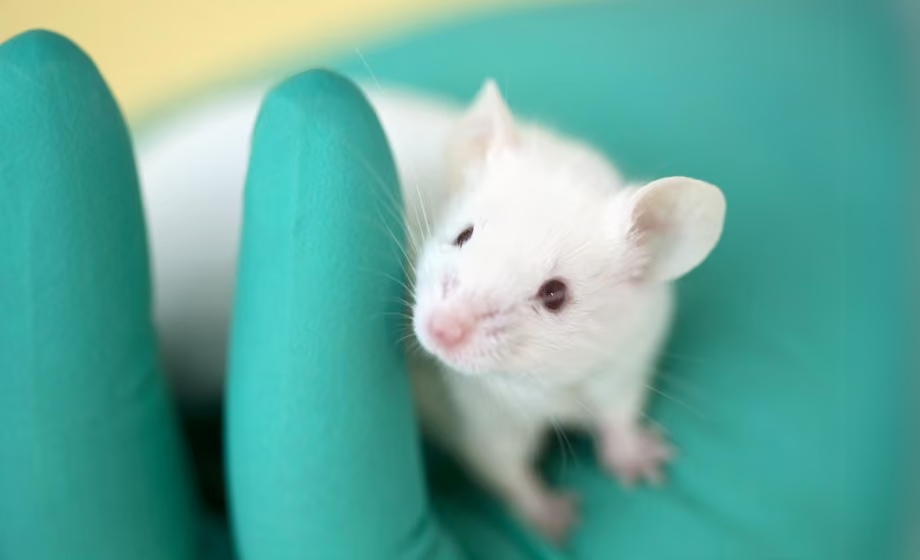
The next part of the webinar focuses on glucose metabolism and specifically outlines "glucotoxicity" and the effect it has on mitochondria. Dr. Abel introduces his group's work on the effects of dysfunctional glucose metabolism on mitochondrial function. They developed a mouse model in which GLUT4, a glucose transporter in cardiac muscle, is overexpressed. This mutation was sufficient to increase glucose uptake in cardiac muscles and resulted in mitochondrial dysfunction in these mice, including glucose-dependent protein modifications on mitochondrial electron transport chain complexes in cardiac mitochondria. These modifications also change the way that fatty acids are metabolized by cardiomyocytes which leads to further metabolic dysfunction and resulting heart failure.
"Hyperglycemia primes the heart to be susceptible to the consequences of lipotoxicity . . ."
Dr. Abel continues with an overview of the "lessons learned" from metabolomic profiling of patients with heart failure and diabetes to elucidate the mechanisms that can be exploited for treatment and cardioprotection. He highlights work that investigated the mismatch between the rate of glucose oxidation and the rate of metabolite flux through the TCA cycle in patients with left ventricular assistive device (LVAD) implants. They discovered that an increased mismatch between these rates was directly correlated to poorer outcomes in patients with LVAD implantations.
Another study that investigated LVAD implantation outcomes showed that patients with positive outcomes also showed greater glucose metabolic pathway remodelling, which promoted cardioprotection and the resulting recovery from LVAD implantation.
"Heart failure and cancer share a common metabolic soil in the sense that in heart failure, these glycolytic intermediates are really driving the process of ventricular remodelling, while in cancer, these pathways are driving cellular proliferation."
Finally, Dr. Abel finishes the webinar by presenting studies that outline dysfunction in pyruvate and glucose metabolism and its prevalence in both cancer and heart failure.
Webinar Highlights
- An overview of complications associated with diabetes and aging that contribute to heart failure
- A risk assessment of developing cardiomyopathies associated with aging, obesity, and diabetes
- Dysfunctional glucose metabolism mechanisms and heart failure
- Metabolic profiling to determine cardioprotective treatments for heart failure in patients with diabetes
- Review of how cancer metabolism and cardiomyopathies have parallel dysfunctions
Featuring Insights from
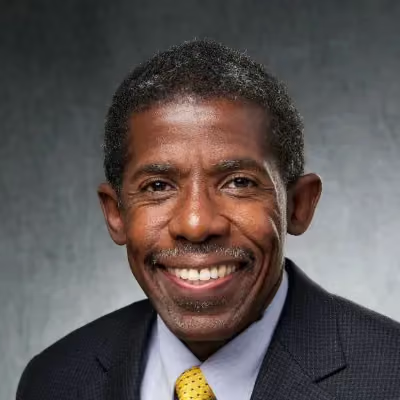
E. Dale Abel
MD, PhD
E. Dale Abel, MD, PhD is the Chair and Department Executive Officer of the Department of Internal Medicine and Director of the Fraternal Order of Eagles Diabetes Research Center (FOEDRC) at the University of Iowa. He is a Professor of Medicine, of Biochemistry, and of Biomedical Engineering.
In Partnership with
American Physiological Society
Founded in 1887, the American Physiological Society is a global leader in expanding knowledge related to biological function. We connect a multidisciplinary community of nearly 10,000 scientists and educators from around the world, driving collaboration and spotlighting scientific discoveries in physiology and related disciplines. Our members are advancing treatments and cures for everything from cancer and heart disease, to obesity and addiction. They are also deepening our insight into living organisms generally, helping us to better understand how things like climate change are affecting the world around us.