Webinar Summary
- To learn how metabolic cage systems function and their value in studying health and disease
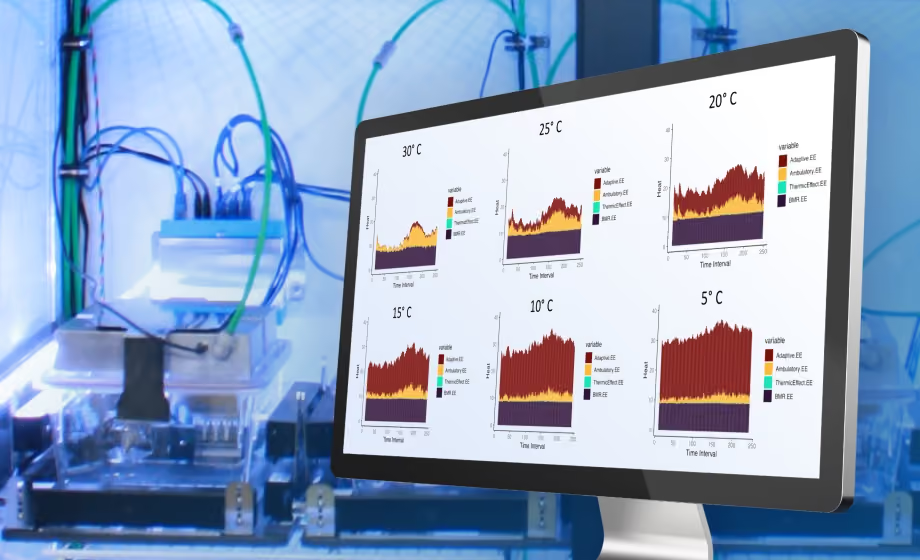
- To identify the 4 major parameters that make up total energy expenditure
- To understand the basis of Clambake and the ability of this method to estimate the 4 major energy expenditure parameters using metabolic cage data
In this webinar, Dr. Jonathan Brestoff discusses his research on metabolism and a new method to quantify metabolic data known as Clambake.
Changes in energy expenditure are observed in a wide variety of disease and physiologic states. The most frequently used method to estimate energy expenditure in small animal models is indirect calorimetry, which is utilized in metabolic cage systems. However, total energy expenditure is a composite of four major parameters: basal metabolic rate, activity-induced energy expenditure, the thermic effect of food, and adaptive thermogenesis. This presentation describes a new bioinformatic approach called Clambake that estimates these four parameters using metabolic cage data. Clambake is sufficiently robust to analyze data from new experimental conditions and can reveal hidden phenotypes that might otherwise be overlooked. Therefore, Clambake provides an unprecedented level of detail in metabolic cage data and has the potential to enable novel insights about energy homeostasis in mouse models of physiology or disease.
Featuring Insights from

Jonathan Brestoff
MD, PhD, MPH
Dr. Brestoff is an Assistant Professor of Pathology and Immunology at Washington University School of Medicine in St. Louis and leads a research program focused on cell-to-cell transfer of mitochondria and how the immune system regulates white, beige, and brown fat function.
Sponsored by