Webinar Summary
- MyBP-C is a family of regulatory proteins encoded by 3 separate genes that are expressed in striated muscles and that are critical for normal muscle function.
- Mutations in genes encoding MyBP-C lead to debilitating skeletal muscle and cardiac diseases.
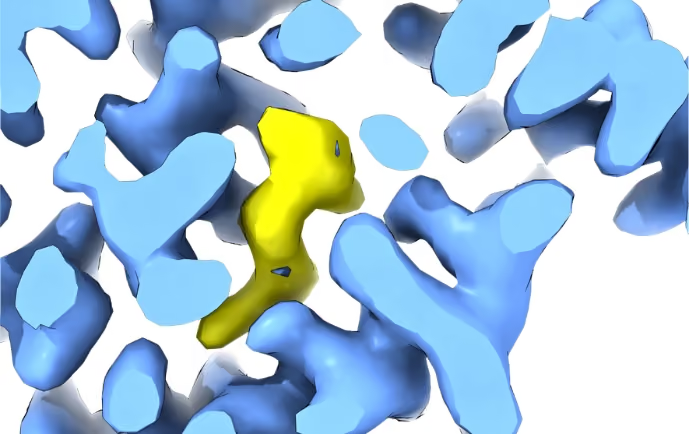
- MyBP-C performs both regulatory and structural functions in each muscle type, likely by interacting directly with actin and myosin.
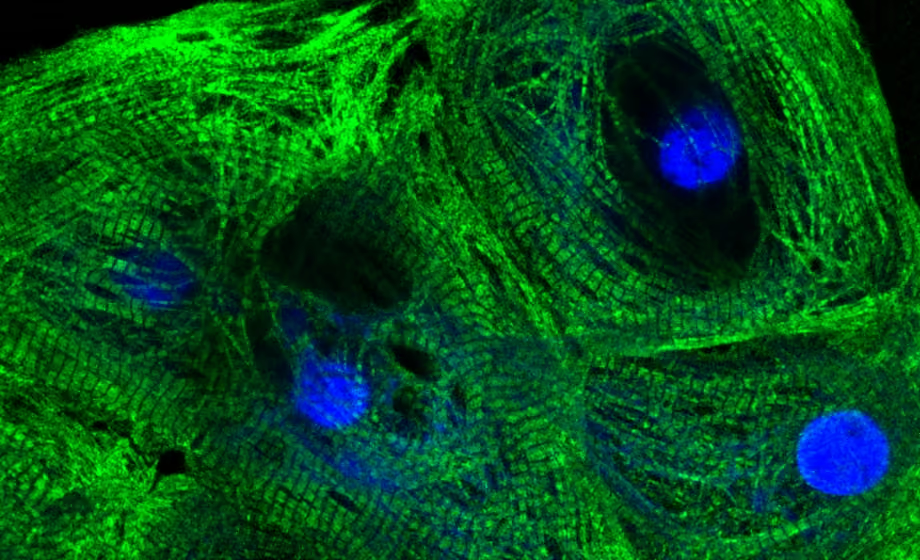
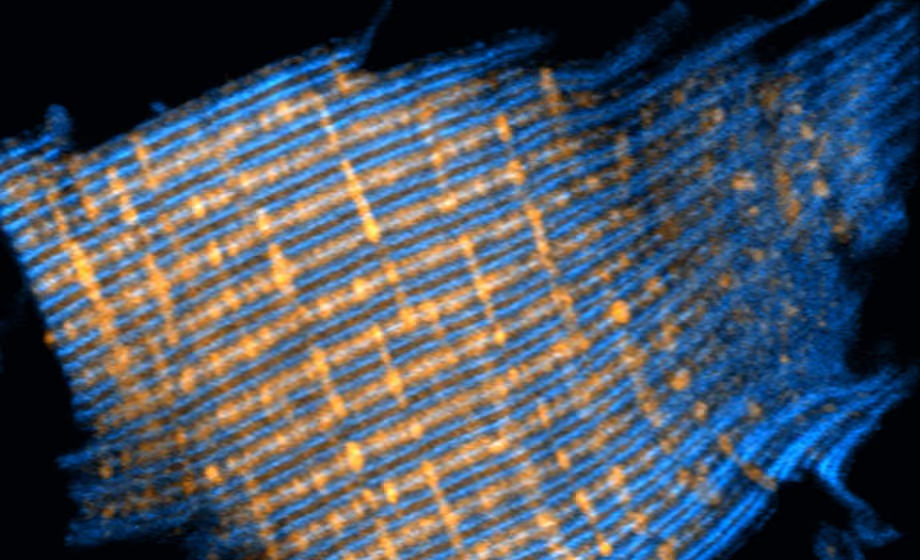
The family of proteins known as myosin binding protein-C (MyBP-C) are regulatory proteins localized to muscle sarcomeres that are encoded by 3 separate genes (MYBPC1, MYBPC2, and MYBPC3). The 3 genes encode distinct MyBP-C protein paralogs expressed in fast skeletal, slow skeletal, and cardiac muscles, respectively. The importance of the different paralogs is highlighted by the fact that mutations in all 3 genes can lead to debilitating skeletal and cardiac muscle diseases. However, it has been challenging to determine distinct functional roles for each protein, especially in skeletal muscles where a mixture of fast and slow MyBP-C (and their related multiple splice variants) are typically expressed in muscles that express a mixture of fast and slow twitch fibers.
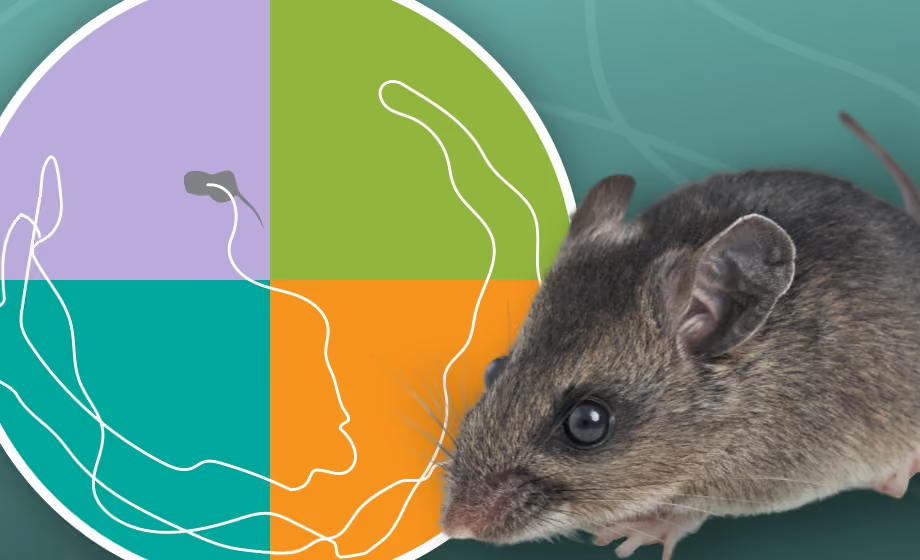
In this webinar we discuss how the Harris lab has overcome this challenge by engineering three new mouse models that selectively target MYBPC1, MYBPC2, and MYBPC3 to permit removal and replacement (cut and paste) of each protein paralog in permeabilized muscle fibers in situ. We also discuss how the 3 mouse models facilitate discovery of MyBP-C structure and function in different muscle types and how the different mouse models can be used to test how mutations in each paralog causes disease in skeletal and cardiac muscles.
Featuring Insights from

Samantha Harris
PhD
Dr. Samantha Harris is a muscle physiologist who studies molecular mechanisms of cardiac contraction and relaxation, especially how the myofilament regulatory protein, myosin binding protein-C (MyBP-C), influences actin and myosin interactions. Her lab recently pioneered the novel "cut and paste" approach to selectively replace MyBP-C in sarcomeres in situ.

Matthew Borkowski
Matthew Borkowski is a biomedical engineer and a graduate of the University of Toronto. He has been involved in product design and customer support at Aurora Scientific for over 15 years. Today, he spends much of his time in the lab consulting with scientists, assisting with novel application of Aurora Scientific instruments in various disciplines, including muscle, tendon, and connective tissue research.
Sponsored by
Aurora Scientific, Inc.
In Partnership with

American Physiological Society
Founded in 1887, the American Physiological Society is a global leader in expanding knowledge related to biological function. We connect a multidisciplinary community of nearly 10,000 scientists and educators from around the world, driving collaboration and spotlighting scientific discoveries in physiology and related disciplines. Our members are advancing treatments and cures for everything from cancer and heart disease, to obesity and addiction. They are also deepening our insight into living organisms generally, helping us to better understand how things like climate change are affecting the world around us.