A unique webinar where experts answer specific questions about best practices and how to apply noninvasive blood flow velocity measurements to your research
Prior to this event, InsideScientific hosted two webinars focused on noninvasive Doppler blood flow velocity measurement as a means to study cardiac and vascular function in rodents. During these sessions, presenters discussed how Doppler flow velocity can be used to reliably assess systolic and diastolic cardiac function, myocardial perfusion and coronary reserve, pressure overload, aortic stiffness and peripheral perfusion without the need for complex surgery or imaging. Data was also presented highlighting how this measurement can be used to quantify cardiac contractility as a surrogate to +dP/dtmax.
Featuring Insights from

Tonya Coulthard
MSc
Tonya has a background in Biochemistry (BSc.) and Experimental Medicine (MSc.) and has worked with researchers around the world in a wide variety of disease areas, including cardiovascular disease, for over 10 years. Tonya works with customers at Indus Instruments to understand their specific research applications and to better align product capabilities to their needs ensuring users have success generating data and performing research with their systems.
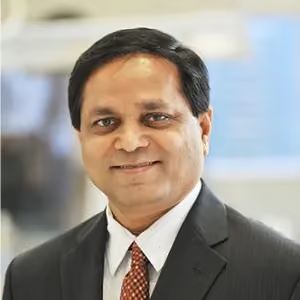
Anilkumar K. Reddy
PhD
Dr. Reddy’s research interests include evaluation of cardiac and vascular mechanics in senescent, disease, transgenic, and surgical models of mice. Some of the rodent models he studies include atherosclerosis, dwarf, myocardial infarction/remodeling, pressure overload, hypertension, absent vascular tone, and absent steroid receptor coactivator-1, with the main goal being to translate what is learned in mice to humans for early detection and screening.
Sponsored by
















.avif)