- Clinical researchers: Biologists, biochemists, and analytical scientists investigating or interested in expanding research into acute and chronic inflammation linked to the onset of cardiovascular disorders, metabolic syndrome, and related fields.
- Scientists working in human metabolomics research seeking to expand their expertise into standardized NMR-based Metabolomics.
- Graduate students and postdoctoral fellows: Those seeking advanced knowledge and practical skills in applying NMR in human health and inflammation disease.
- Industry professionals: Scientists and R&D personnel in pharmaceutical, biotechnology, and nutritional companies doing research and developing therapeutic and diagnostic solutions related to inflammation
Webinar Summary
- Innovative NMR Techniques: Learn about Bruker's diffusion and relaxation-edited NMR experiments, which led to a model-free inflammatory panel featuring SPC1, SPC2, SPC3, GlycA, and GlycB peaks.
- Comprehensive Data Analysis: Discover how these five parameters enable the construction of a molecular multivariate map of acute and chronic inflammatory phenotypes across multiple disease and population cohorts (N = 5000).
- Translational Technology: Understand the potential of benchtop NMR spectrometers for predicting lipoprotein parameters and fractions.
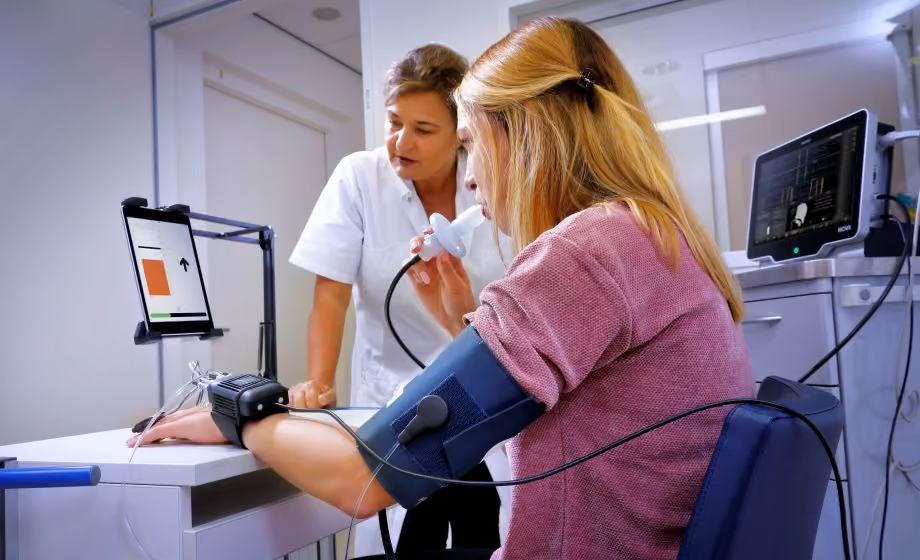
- Clinical Research Applications: Learn how self-administered capillary blood samples can eliminate the need for venipuncture, opening new avenues for sampling in remote areas or for high-frequency longitudinal studies.
Webinar Topics
Bruker Corporation
Featuring Insights from

Julien Wist
PhD
Murdoch University (Centre for Computational and Systems Medicine, Health Futures Institute)
Professor & Deputy Director
Prof. Julien Wist is currently the Deputy Director of the Centre for Computational and Systems Medicine at Murdoch University and head of operations and lead of the bio-/ chem-informatics team at the Australian National Phenome Centre consisting of software engineers, biostatisticians, chemometricians, and data processing experts to develop analytical pipelines for metabolic phenotyping.