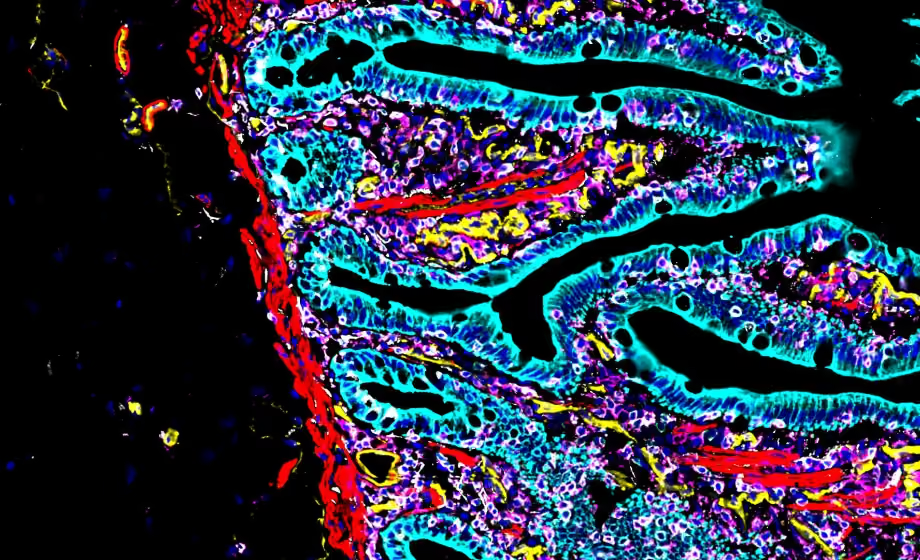
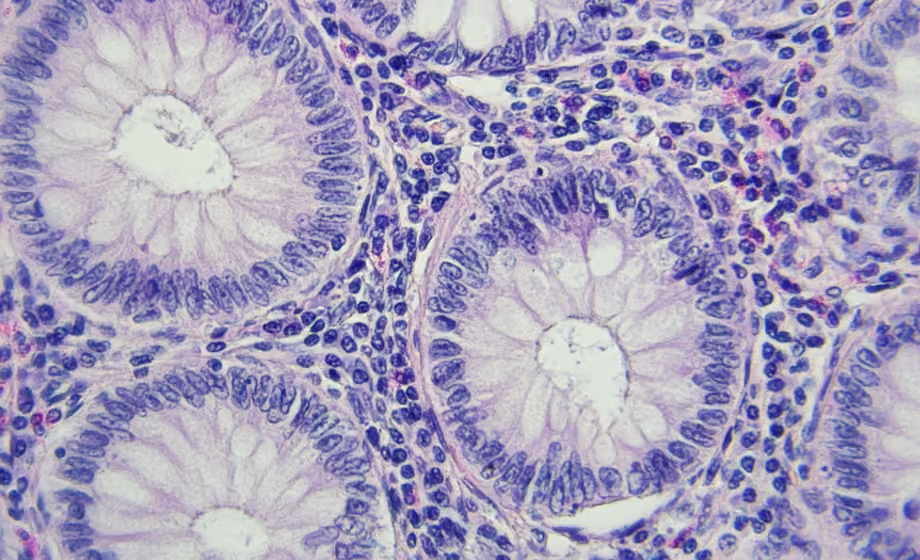
Dr. Gwendalyn Randolph discusses strategies that the intestine uses to limit the dissemination of inflammatory signals in the venous and lymphatic vasculature.
Dr. Randolph begins this webinar with an introduction to the lymphatic vasculature, including initial lymphatics, collecting lymphatics, and lymph nodes. The intestine is home to large numbers of microorganisms, and the role of the lymphatic system is to host immune responses, but also filter and regulate access of these foreign pathogens (and other inflammatory mediators) to limit their dissemination in the vasculature. This can prevent septic shock and disseminated intravascular coagulation, and in some cases, may result in restriction of tumor metastases to lymph tissues.
"One of the anatomical features that is really critical for how our anatomy is arranged is that the venous vasculature coming from the intestine is filtered by the largest organ in the body, and that is the liver."
The concept of the enterohepatic dilemma is introduced; this refers to the opposing requirements of the intestine to absorb nutrients but also protect against dissemination of microbes and proinflammatory signals. One of the ways in which this is achieved is by the close arrangement of lymphatic and blood vessels within the intestinal lumen wall, with differing relative absorption of carbohydrates, proteins, and lipids. Lipids are transported in lipoproteins known as chylomicrons, produced by the intestine, and also via low-density lipoprotein (LDL) and high-density lipoprotein (HDL). HDL was long thought to be synthesized by the liver, but it is now recognized that the intestine also produces HDL, although the purpose of this production and its role in control of dissemination of inflammatory signals remains unclear.
A common inflammatory mediator is LPS, abundant in gram-negative bacteria. LPS-binding proteins (LBP) bind to the fatty acid chains of LPS, allowing transfer of LPS to CD14 proteins before binding to toll-like receptor 4 (TLR4)-MD2 complexes. This ultimately leads to activation of NF-kappaB and the initiation of proinflammatory signaling cascades. Due to the presence of fatty acid chains, LPS can also bind to lipoproteins; as a result, HDL can bind and neutralize LPS, reducing the inflammatory response.
". . . since the mid-90s or so, we've known that LBP, in fact, can not only deliver LPS to CD14 but also to lipoproteins like reconstituted HDL . . ."
The traditional view of the HDL cycle is presented, beginning with HDL synthesis in the liver, transendothelial transport from blood to interstitial fluid (where HDL is remodeled), and movement out of tissues via the lymphatic system before returning to the bloodstream. Although exactly how intestine-derived HDL fits into this model is unclear, Dr. Randolph proposes that HDL is like a backpack, in that it accepts and releases cargo while regularly undergoing remodeling.
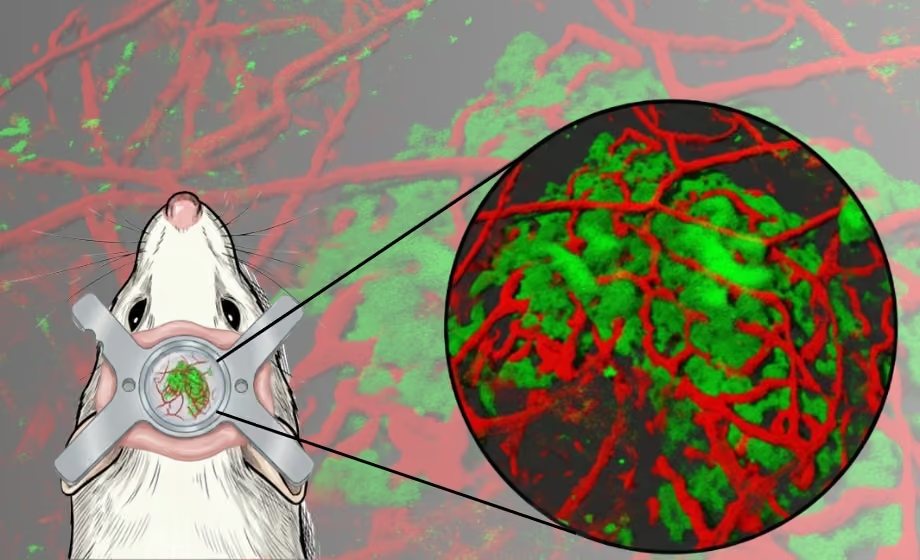
Dr. Randolph's group has recently developed a mouse model in which photo-activated HDL is expressed, allowing for study of HDL dissemination throughout the body and lymphatic system. Data obtained with this model revealed that gut-derived HDL is produced at the ileal segment of the small intestine and accounts for the vast majority of HDL-cholesterol in hepatic portal blood. Clinical studies of systemic and hepatic portal blood demonstrated that gut-derived HDL is primarily of the HDL3 subtype, is associated with LBP, and neutralizes LPS-mediated inflammatory responses in Kupffer cells by restricting TLR4 binding. One potential consequence of the involvement of intestinal HDL in limiting inflammation is that resection of the small intestine may result in liver failure and fibrosis due to the loss of protection from LPS-mediated damage.
"But there may be scenarios where that role of the lymph node is not sufficient - and one such scenario could be inflammatory bowel disease or Crohn's disease . . ."
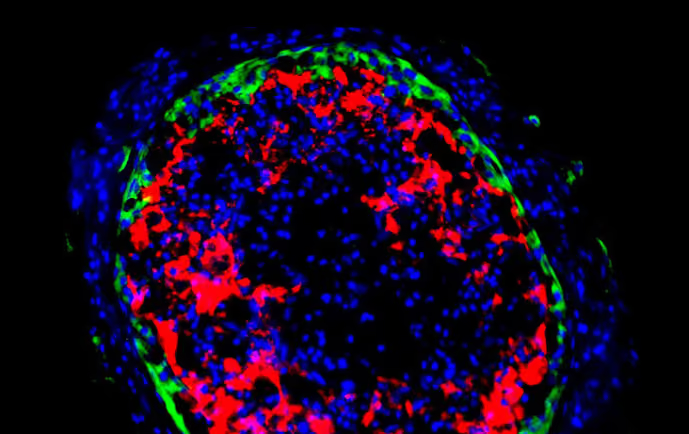
In the final portion of the webinar, Dr. Randolph focuses on the role of the lymphatic system in inflammatory bowel disease. Data collected from a transgenic mouse model of ileitis have revealed that B cell rich lymphoid follicles develop in existing lymphoid tissue, clustered near lymphatic valves. Using in vivo injections of a fluorescent marker, Dr. Randolph's group demonstrated that these structures prevent dissemination of inflammatory cells and factors away from the gut through the draining mesenteric lymph node. In addition, collecting vessel pressures are elevated, effectively resulting in a pressure cuff surrounding lymphatic vessels. In conclusion, this method of restricting inflammation to the gut works in concert with other mechanisms, such as HDL production, to limit dissemination of inflammatory signals throughout the body.
Webinar Highlights
- An introduction to the lymphatic system and its role in the intestine
- Discussion of the enterohepatic dilemma
- A summary of lipopolysaccharide (LPS) and the immune response
- A summary of the high-density lipoprotein (HDL) cycle
- The role of gut-derived HDL
- Lymphatic changes in inflammatory bowel disease
Featuring Insights from

Gwendalyn J Randolph
PhD
Dr. Gwendalyn Randolph's laboratory considers the impact of how transit of cells and molecules out of tissues influences the inflammatory microenvironment. The lymphatic vasculature is the primary regulator of flux out of tissues and thus we focus on the functionality of the lymphatic vasculature as it relates to the transport of cargo, particularly myeloid antigen-presenting cells in immunity and molecular entities like HDL. In this context, they focus on two chronic inflammatory disease settings, experimental atherosclerosis and inflammatory bowel disease.
In Partnership with

American Physiological Society
Founded in 1887, the American Physiological Society is a global leader in expanding knowledge related to biological function. We connect a multidisciplinary community of nearly 10,000 scientists and educators from around the world, driving collaboration and spotlighting scientific discoveries in physiology and related disciplines. Our members are advancing treatments and cures for everything from cancer and heart disease, to obesity and addiction. They are also deepening our insight into living organisms generally, helping us to better understand how things like climate change are affecting the world around us.

Autoimmune Association
How we do it?
The Autoimmune Association office is in Eastpointe, Michigan just outside of Detroit. We are a small, dedicated team and we work hard to achieve our mission. Every patient matters to us. Every donation is treated with the utmost respect, and we greatly appreciate contributions in every size and shape.
Our office space was once a physician’s office. Where patients once were treated, we now work to ensure autoimmune patients have the resources and knowledge for their own treatments as well as advance awareness and research into autoimmune diseases.- We help autoimmune disease patients all over the world by connecting them to resources and information
- We hold awareness walks around the country throughout the year
- Our Facebook page has the latest on research and other autoimmune disease news
Ask anyone with an autoimmune disease, and they will tell you how frustrating it is.
With over a hundred autoimmune diseases, impacting approximately one in five people, you more than likely know several people fighting against one or more autoimmune disease. Right from the beginning when trying to get a diagnosis, patients can often be seen by multiple doctors and specialists over the course of several years before starting treatment and getting relief from their disease. Then comes the battle of fighting a chronic illness, and the costs associated with adequate care. This is unacceptable. The Autoimmune Association’s goal is to increase research by scientists for better advancements in the autoimmunity field, and to increase awareness of autoimmune diseases themselves, so that diagnoses are made quicker. Visit autoimmune.org to learn more and donate to the cause








.avif)