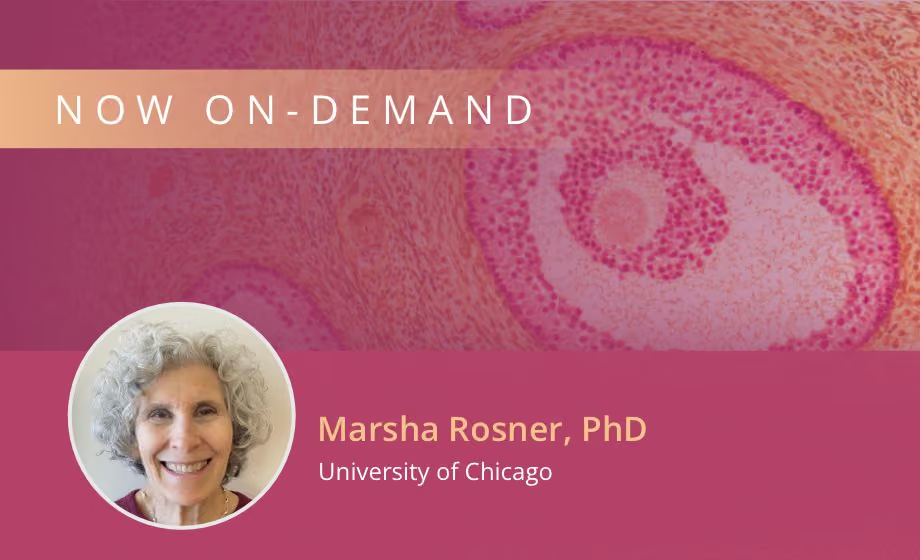
In this exclusive session, Stephanie Piekos, PhD, Senior Scientist at Boehringer Ingelheim, shares insights into the challenges of evaluating AO substrates and how more predictive, human-relevant models are shaping the future of DMPK studies.
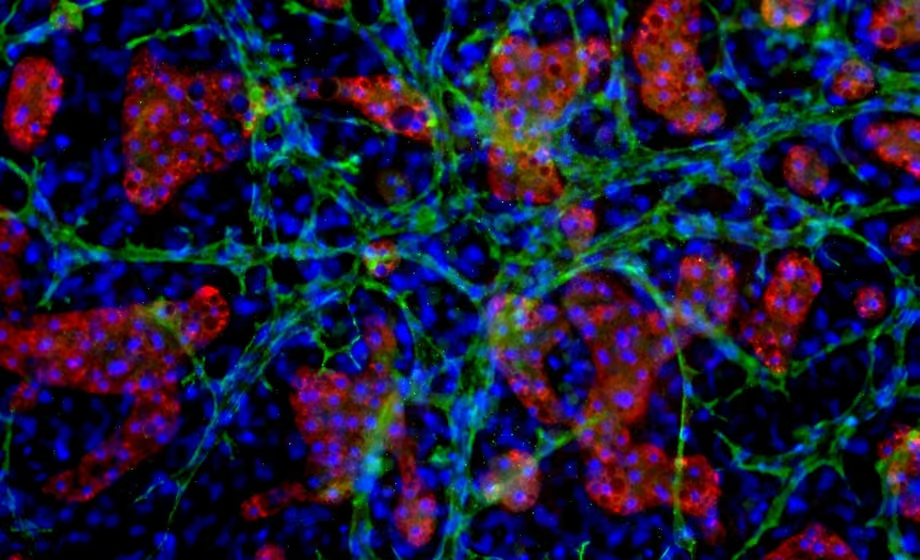
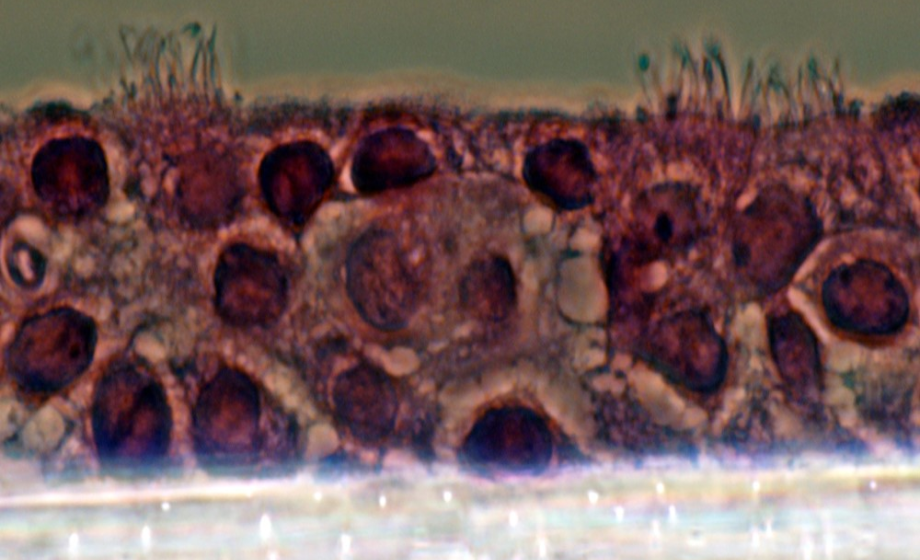
Understanding aldehyde oxidase (AO)-mediated metabolism has become increasingly critical in drug development, as traditional models often fail to capture this non-CYP clearance pathway with sufficient accuracy. Join us to explore how TruVivo—LifeNet Health's all-human 2D+ hepatic system—delivers enhanced AO activity compared to conventional in vitro models. With improved enzyme stability and metabolic function over extended culture periods, TruVivo offers a powerful platform for identifying metabolic liabilities, predicting human clearance, and bridging translational gaps in early development. This session is a must for scientists focused on advancing preclinical models for more accurate and reliable decision-making.
Featuring Insights from
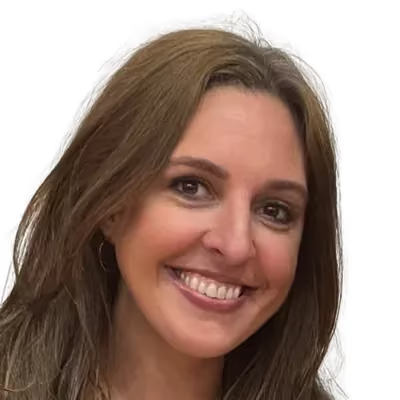
Stephanie Piekos
PhD
Stephanie is currently a Principal Scientist in the Nonclinical Drug Metabolism and Pharmacokinetics group at Boehringer Ingelheim in Ridgefield, Connecticut.
Sponsored by
LifeNet Health LifeSciences
In Partnership with
Scientist.com
Scientist.com is the world’s largest and first platform built for the intricacies of scientific outsourcing.
We help pharmaceutical and biotechnology organizations discover, engage, manage, and scale relationships with the providers that support every stage of the pipeline—from discovery and preclinical research to clinical development, manufacturing, medical affairs, and commercialization. Through a centralized platform, organizations can access a global network of 6,000+ providers, streamline sourcing and procurement workflows, maintain compliance, manage supplier relationships, and leverage data-driven insights to make faster, more informed decisions.
Today, Scientist.com supports more than 130 life science organizations, including 24 of the world's top 30 pharmaceutical companies, helping teams reduce operational complexity, accelerate timelines, and bring innovations to patients faster. Our mission is to make it possible to cure all human disease by 2050.





.avif)