Webinar Summary
- Indications and advantages of portal vascular access
- Surgical approach and technique
- Post operative care and management
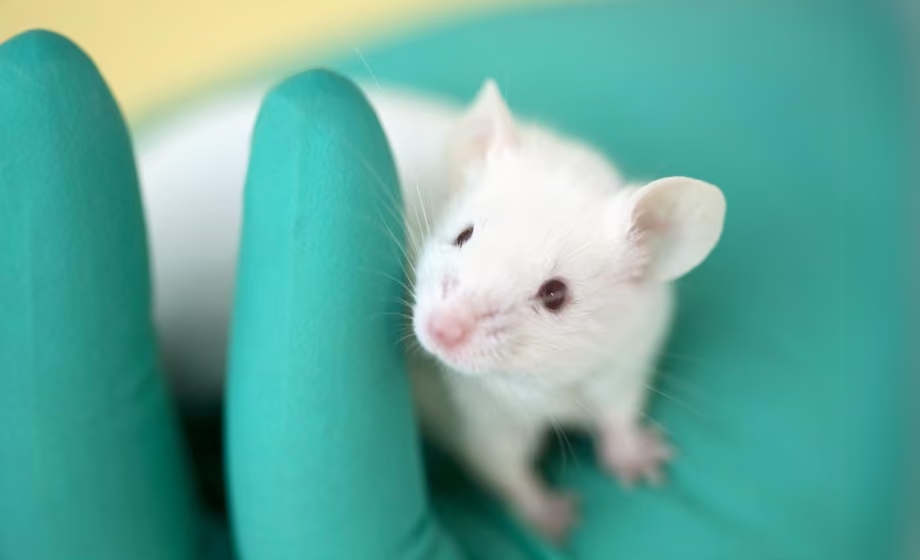
Animals in experimental setting often require repeated and prolonged vascular access for indications including blood sampling or administration of fluids, blood products, medication, or other therapies. A vascular access approach should be tailored to experimental or clinical use, meeting the needs of the individual animal, such that benefits outweigh risks with optimal device and placement technique is based on the specific anatomic sites and planned use.
Totally implanted vascular access ports (VAPs) enable reliable access for frequent sample collection and/or intravenous therapies, minimize discomfort, and minimize physiologic changes which can confound biologic data and drug responses. VAPs facilitate species' typical behavior and social group activities and are compatible with animal enrichment programs that include play and swim since there are no externalized components. VAPs are typically used long-term and demonstrate excellent durability with high patency and low complication rates over time, presenting a safe and dependable vascular access approach.
Featuring Insights from

Melanie Graham
MPH, PhD
Melanie Graham, MPH, PhD is a Professor in the Departments of Surgery in the Medical School at the University of Minnesota. She is the Director of the Preclinical Research Center (PCRC) and performs multi-disciplinary research developing cell-, gene-, and immuno- therapies for metabolic, autoimmune, infectious, and inherited diseases.
In Partnership with

Academy of Surgical Research
- Encourage, foster, promote, and advance professional and academic standards, education, research, and development in the arts and sciences of experimental surgery.
- Promote, initiate, support, and accomplish academic and practical educational programs, cooperative research, and development in experimental surgery in the public interest.
- Promote humane use and treatment of experimental animals and prevent their use when other means can bring about the same scientific results.
- Cooperate with medical organizations, other scientific organizations, government agencies, and other interested parties in establishing, reviewing, and evaluating ethics, theories, practices, and research pertaining to surgical research and promotion of the product of surgical research for clinical application.
- Encourage the advancement of the field of surgery in all aspects, including research, education, and critical promotion of research products for clinical applications.






















.avif)