Dr. David Barefield gives an in-depth discussion on his research investigating the role of the MyBP-HL protein in atrial dysfunction.
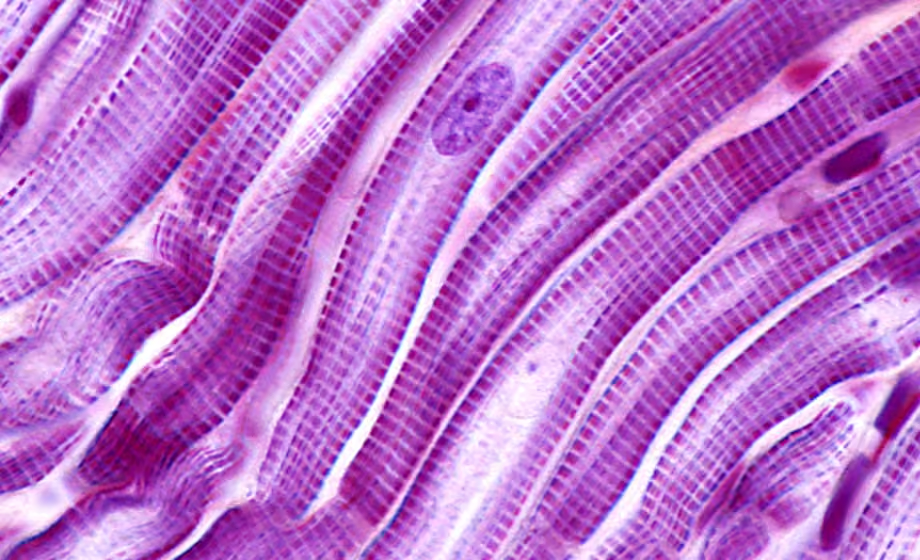
Myosin binding protein H-like (MyBP-HL) is an atrial myofilament protein that establishes a stoichiometry with cardiac myosin binding protein-C (cMyBP-C). Loss of MyBP-HL leads to atrial dilation, arrhythmia, and dilated cardiomyopathy. Several human MYBPHL nonsense variants are reported in the gnomAD database.
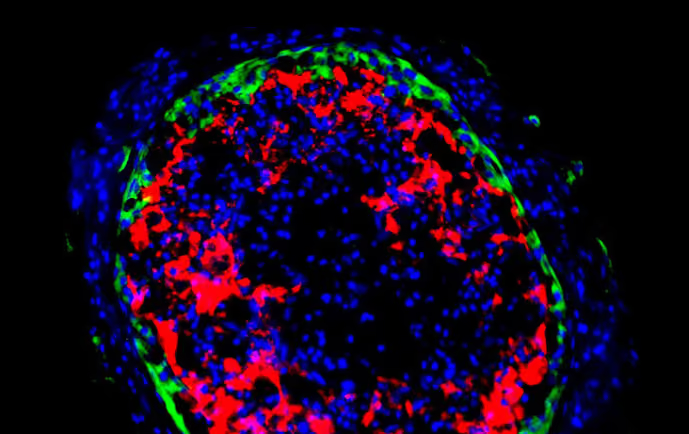
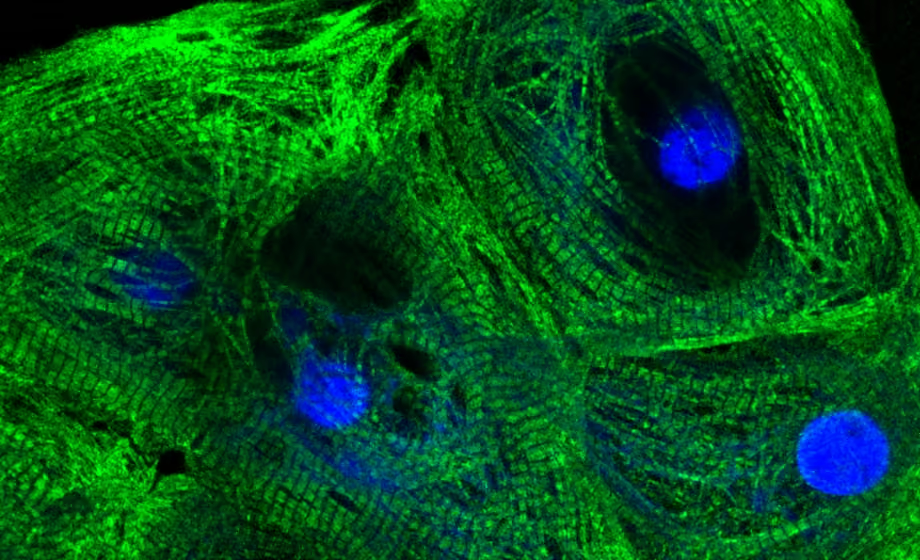
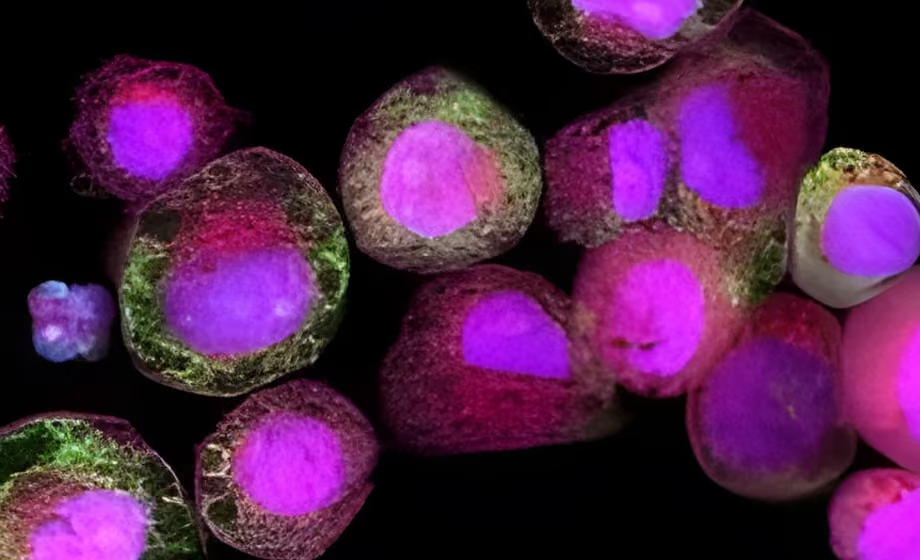
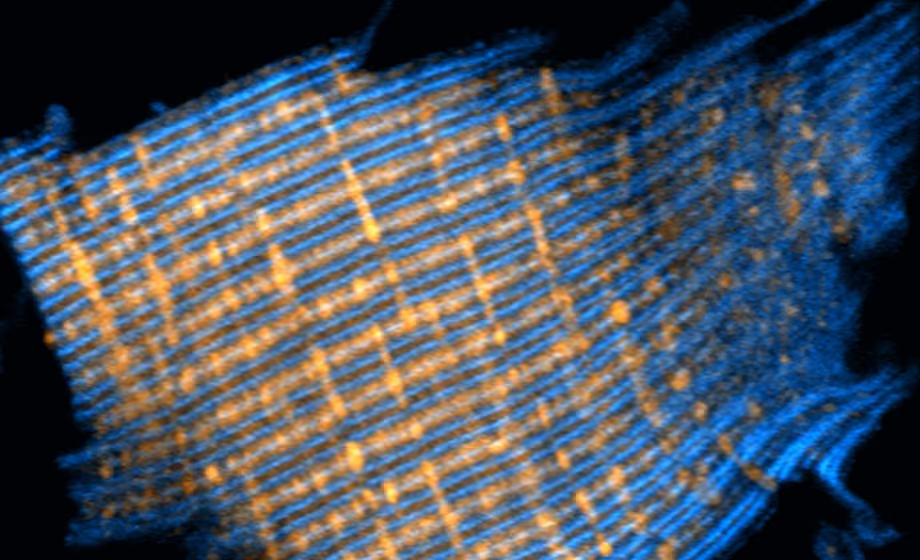
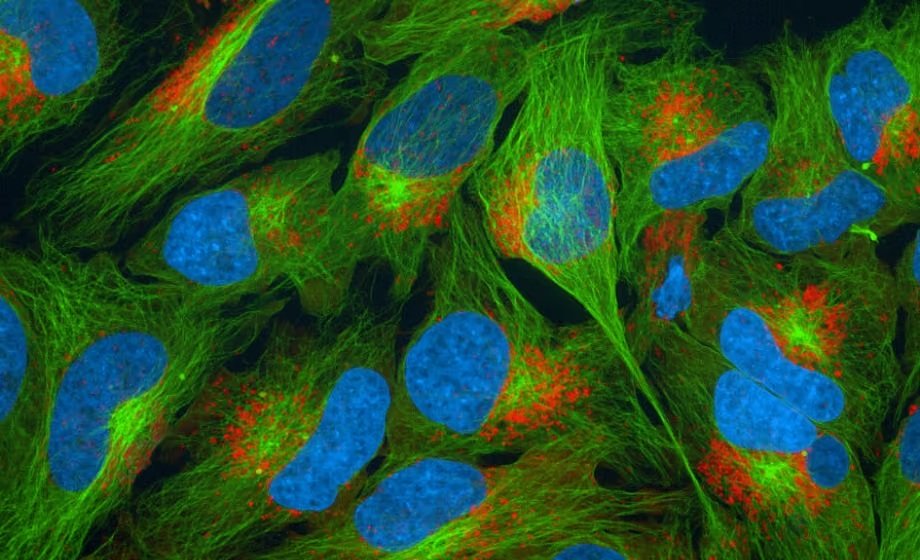
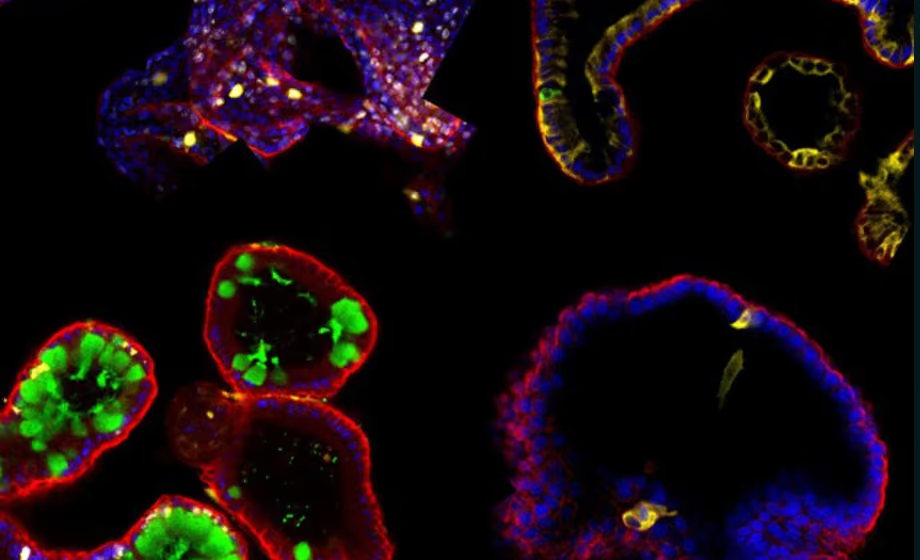
The Barefield Lab asked whether nonsense variants prevent MyBP-HL incorporation into the myofilament, or if truncation variants result in alternative protein localization within the cardiomyocyte. Neonatal rat cardiomyocytes were isolated and transfected with wild-type mouse Mybphl or mouse Mybphl that had human MYBPHL nonsense mutations. Immunofluorescence confocal microscopy showed wild-type mouse MyBP-HL colocalized with cMyBP-C. The W54X, R133X, W158X, W192X, K250X, and R255X variants all failed to co-localize.
As the MYBPHL stop variants prevented myofilament binding, the Barefield Lab performed biophysical experiments on single myofibrils isolated from Mybphl null mice. Mybphl null myofibrils showed significantly faster phase of linear relaxation. These data show that MYBPHL premature stop variants do not encode functional proteins and loss of MyBP-HL causes biophysical defects in atrial myofibrils.
Featuring Insights from

David Barefield
PhD
Dr. David Barefield is an Assistant Professor at Loyola University Chicago. The Barefield Lab opened in May 2020 and focuses on atrial myopathies and the role of atrial dysfunction in common forms of cardiovascular disease.
Sponsored by

Aurora Scientific, Inc.
In Partnership with

American Physiological Society
Founded in 1887, the American Physiological Society is a global leader in expanding knowledge related to biological function. We connect a multidisciplinary community of nearly 10,000 scientists and educators from around the world, driving collaboration and spotlighting scientific discoveries in physiology and related disciplines. Our members are advancing treatments and cures for everything from cancer and heart disease, to obesity and addiction. They are also deepening our insight into living organisms generally, helping us to better understand how things like climate change are affecting the world around us.

European Council for Cardiovascular Research
The history of the European Council for Cardiovascular Research (ECCR) goes back more than 30 years when the ‘European Blood Pressure Group’ held its first meeting in March 1979 in Cambridge, UK. To date more than 30 international meetings have been held in various European locations. For more information about ECCR history click here.
The mission of ECCR is to promote prevention, diagnosis and treatment of disease and the preservation and protection of good health through experimental and clinical research in hypertension, cardiovascular and metabolic disease.
ECCR holds an Annual Meeting in October. The purpose of these scientific meetings is to provide a forum for active clinical and non-clinical researchers to discuss important aspects of their work, to advance and strengthen European research in the field of cardiovascular disease, high blood pressure and cardiometabolic disease. The meetings bring together both senior and junior scientists from the leading European groups in the field of cardiovascular research.
ECCR is a member of the Council for Basic Cardiovascular Science (CBCS) of the European Society of Cardiology (ESC), whose aims are to enhance the importance of basic science to clinical cardiology and act as a Europe wide forum for cardiovascular research societies, and a conduit for positive collaboration.