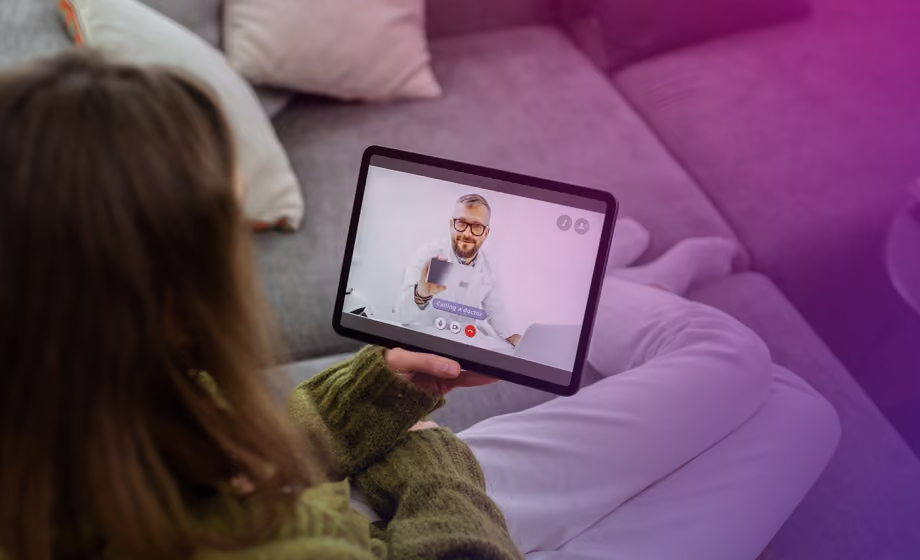
In this webinar, a panel of experts in patient advocacy, health literacy, and health economics and outcomes research (HEOR) discuss the need for improved accessibility in the field.
As patients are becoming more involved in their health care outcomes and data, improved and accessible communications are increasingly needed. OPEN Health's Gavin Jones, the moderator of this panel, highlights the four main domains of HEOR that are important to consider when communicating with patient communities: (1) having an underlying intent to improve patient outcomes, (2) ensuring patient involvement at every step of the process, (3) taking inspiration from what matters most to the patients and their families, and (4) ensuring that stakeholders are informed of the results in a way that is understandable to them. 
"HEOR … are the processes that investigate and communicate unmet patient needs and treatment gaps, together with evaluating and communicating the efficacy and cost effectiveness of treatments in the real world."
As part of OPEN Health's mission to make HEOR more accessible to patients, they have assembled a panel of six experts to answer some questions about this topic. Danielle Drachmann, MA, shares a more personal viewpoint on accessibility within HEOR. As a mother of a child with a rare disease, she has seen firsthand how difficult finding a solution can be when data is inaccessible or nonexistent. Danielle would like to see a framework for patient data that allows researchers to more easily draw connections and analyze data.
"One of the very difficult parts of having a rare disease, or even being undiagnosed, [is that] the hope is simply not there."
Josie Godfrey, MA, is the Strategic Director of Project Hercules, a program that helps patients with Duchenne muscular dystrophy (DMD) access innovative treatments. Josie acts as an intermediary between patients and clinicians, and works between them and pharmaceutical companies to facilitate reimbursements for new DMD treatments. She also advocates for improved communications between patients and clinicians, and disapproves of using a single individual for this process. Patients can lose trust in the system when communicating with someone who is not involved or interested in the research and clinical practices. Furthermore, this person often lacks the perspective of the actual researchers. 
Kristine Sørensen, PhD, is a health literacy expert working to improve data and health literacy across the globe. In this webinar, she provides insights into this emerging field and how it can empower patients to take action and ownership of their health care. During the COVID-19 pandemic, the importance of sharing accurate information was more pressing than ever, and the extent to which things can get misconstrued was far more evident than it had been before. Kristine believes that adding human perspective to scientific papers could help improve stakeholder and patient understanding, and could help communicate accurate data and results with these parties. 
"Health literacy is the capacity of individuals and organizations... to make sure people can find and understand and use information to make … decisions to protect their health." 
The next speaker in the panel is Kelly McCarrier, PhD, an expert in PRO tools (e.g., patient questionnaires) that support clinical trials. Much of his career has been spent working with the FDA to improve these tools, as they cannot comprehensively measure everything a patient or their family is experiencing. Therefore, it is important to isolate what symptoms or factors are most important to those who are experiencing them.
 "If a drug moves a biomarker but really isn't able to demonstrate meaningful improvement in the way a patient feels or functions, it's less likely to receive a favorable review from regulators."
The final panelist is Beth Lesher, PharmD, BCPS, a Senior Director in Strategic Market Access at OPEN Health. Beth notes that a better understanding of stakeholder values is of great importance moving forward, and that improved communications among stakeholders, clinicians, and patients would benefit accessibility in HEOR. For example, sharing easily digestible summaries of journal articles could help patients better understand HEOR and the scientific process as a whole.
Webinar Highlights
- Patient-centered mindset of rare diseases
- Health literacy in HEOR
- Patient-reported outcome (PRO) tools
Featuring Insights from
Danielle Drachmann
MA
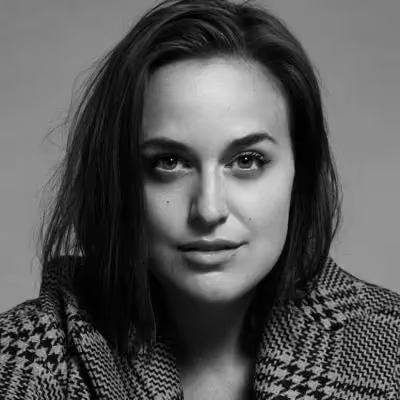
Danielle Drachmann is a Rare Disease Mother which led her to become Executive Director of Ketotic Hypoglycemia International & Patient Representative at the European Medicines Agency.
Josie Godfrey
MA
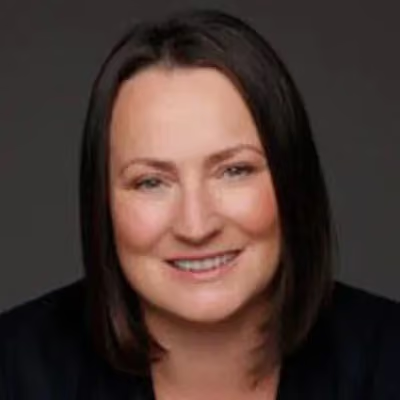
Josie Godfrey improves patient access to services and treatments through market access, policy, and public affairs and stakeholder engagement, with a particular focus on rare diseases and innovative medicines.

Kristine Sørensen
PhD
Kristine Sørensen, the founder of the Global Health Literacy Academy, is a global expert and strategic advisor helping leaders enhancing health literacy for equity and sustainable impact.
Beth Lesher
PharmD, BCPS
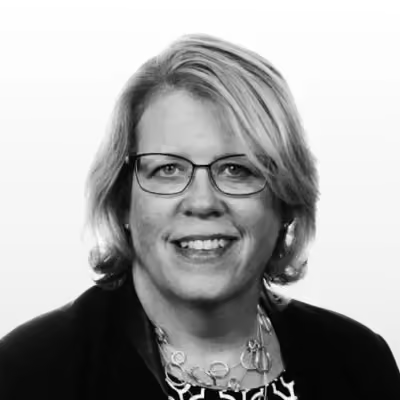
Beth Lesher is a Senior Director in Strategic Market Access, at OPEN Health. She has more than 20 years of medical writing experience, with a focus on value communications. Beth has extensive experience developing global and AMCP dossiers, manuscripts, visual abstracts, literature reviews, monographs, strategy documents, protocols, analysis plans, and slide decks for a variety of therapeutic areas. Beth is a board-certified pharmacotherapy specialist and a member of the Academy of Managed Care Pharmacy (AMCP). She currently is a member of the of the AMCP Format Committee.

Kelly McCarrier
PhD
Kelly McCarrier is Director in Patient-Centered Outcomes, located in OPEN Health’s Bethesda, MD office. Entering the HEOR consulting field in 2006, Kelly has over a decade of experience in qualitative and mixed-methods development and evaluation of COA tools.
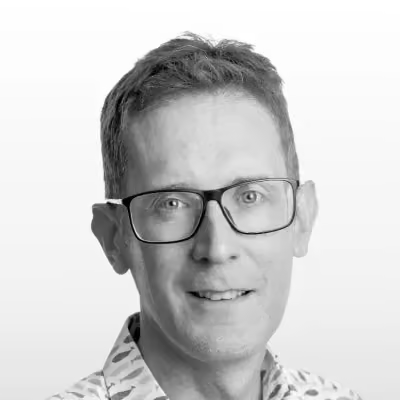
Gavin Jones
BSc
Gavin Jones works with clients and RARE communities to deliver better patient outcomes through bespoke education, support, plus access and evidence generation. Every conversation he's had in RARE takes his understanding that little bit further forward. He brings confidence and humility in helping overcome challenges to collectively make a difference.
Sponsored by
OPEN Health
In Partnership with
HealthEconomics.com
HealthEconomics.com is the world’s largest Connected Community™ for Value, Evidence and Access in the life sciences industry.
HealthEconomics.com provides a single global link to the health economic and outcomes research (HEOR), real-world evidence (RWE), and Market Access (MA) stakeholder communities. Since 1993, we have provided unparalleled access to drive business, improve knowledge, and connect researchers and payer decision-makers world-wide.
Our 27,000 engaged readers rely on HealthEconomics.com as the most reliable, credible and curated digital hub for the latest news, insights, educational opportunities, and industry benchmarks in HEOR, RWE and MA. Our advertisers, numbering more than 500 with a 91% retention rate, depend upon HealthEconomics.com for best-in-class global brand awareness and business development solutions. Our aim is to connect people with expert-driven content and resources — all in one place — with the corporate mission to advance communication about healthcare value.