Webinar Summary
- How mass and size do not always go together
- Which intracellular processes are important in increasing muscle function
- How muscle activity/exercise impinges on some of these processes
- Workflow to identify sites of muscle deficit in dysfunctional muscles
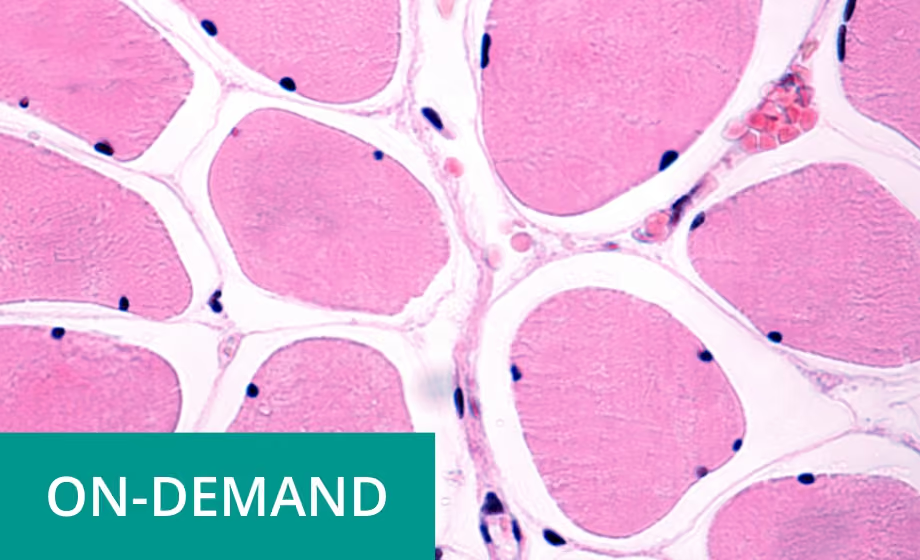
Dr. Blaauw presents a detailed exploration of the regulatory pathways underpinning adult skeletal muscle mass and function, focusing particularly on the Akt-mTORC1 signaling pathway. He clarifies the misconception that muscle mass and size are synonymous, explaining that increased size doesn't always mean enhanced function. The critical intracellular processes bolstered by muscle activity and exercise, which contribute to muscle strength and performance is also presented. Finally, Dr. Blaauw introduces a strategic workflow to identify and address muscle deficits in dysfunctional muscles, a key step for targeted therapeutic interventions.
Featuring Insights from
Bert Blaauw
PhD
Bert Blaauw is an academic researcher from University of Padua. During the first phase of his independent career, he led the work that identified the functional role of mTORC1 in muscle homeostasis and growth. In the lab, they set up various approaches to determine muscle function in whole muscles in vivo, isolated muscles ex-vivo, and isolated muscle fibers in vitro. This in-depth analysis of muscle function has allowed the lab to link changes in muscle signaling or structural proteins to alterations in muscle function, and vice-versa.
Sponsored by
Aurora Scientific, Inc.
In Partnership with
American Physiological Society
Founded in 1887, the American Physiological Society is a global leader in expanding knowledge related to biological function. We connect a multidisciplinary community of nearly 10,000 scientists and educators from around the world, driving collaboration and spotlighting scientific discoveries in physiology and related disciplines. Our members are advancing treatments and cures for everything from cancer and heart disease, to obesity and addiction. They are also deepening our insight into living organisms generally, helping us to better understand how things like climate change are affecting the world around us.

.avif)