Webinar Summary
- Cognitive functioning can be assessed via multiple test modalities in rodents, similar to the clinical setting.
- Multiple domains of complex, higher-order cognitive functioning (sustained attention, behavioral flexibility, goal-directed behavior) are mediated by the frontal lobe in rodents in a similar fashion to the human brain, with long-lasting alterations after brain trauma occurring regardless of sex.
- Differences between multiple classes of pharmacotherapies employed to restore neurobehavioral and cognitive performance after traumatic brain injury, such as antidepressants and cholinergic drugs.
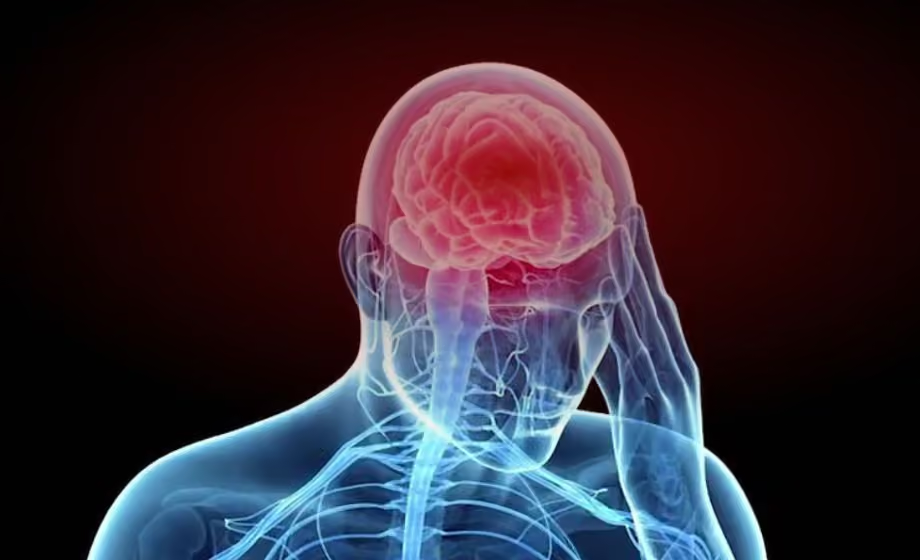
Traumatic brain injuries (TBIs) affect 2.8 million individuals in the United States each year. Moreover, 500,000 yearly emergency room visits are attributed to childhood-acquired brain trauma, while the elderly also constitute another high-risk population segment due to falls, with patients enduring long-lasting cognitive, physical, or behavioral effects. Impaired attention is central to the cognitive deficits associated with long-term sequelae for many TBI survivors. Considering that cognitive deficits are often assessed using multi-domain neuropsychological cognitive battery tests, Dr. Bondi's group employed, for the first time, multimodal approaches to determine higher-order attentional capabilities after experimental TBI in rats. Their studies aimed to investigate complex cognitive deficits in adolescent and adult male and female rats subjected to frontal or parietal lobe injuries.  Higher-order attentional testing will advance the understanding of long-term cognitive impairments in survivors of brain trauma and may provide reliable avenues towards developing more suitable therapeutic approaches.
Featuring Insights from

Corina O. Bondi
PhD
Dr. Corina Bondi is Associate Director of Executive Function and Neuropharmacology at the Safar Center for Resuscitation Research (SCRR) of the University of Pittsburgh. Her laboratory explores therapeutic strategies after experimental traumatic brain injury (TBI), such as pharmacotherapies and environmental enrichment, for complex cognitive processing deficits and distinct neurobehavioral and neurochemical alterations relevant to psychiatric disorders. Her team pursues a variety of behavioral, neurochemical, and molecular-based approaches encompassing the overlap of cognitive neuroscience, stress circuitry, and TBI neuropathology, with complex and sensitive tasks such as attentional set-shifting tests, operant tasks of sustained attention and goal-directed behavior, or assays of affect and anxiety being customarily employed in the laboratory. Underlying pathomechanisms are further characterized using a diverse array of techniques such as tissue processing via microscopy, Western blotting, immunostaining, and proteomics.
Sponsored by






















.avif)