About
In this webinar, experts explore how New Approach Methodologies can replace, reduce, or refine animal testing requirements in drug discovery and development.
Crucial Starting Material Considerations for NAM Success
Courtney Noah, PhD, VP of Scientific Affairs, BioIVT
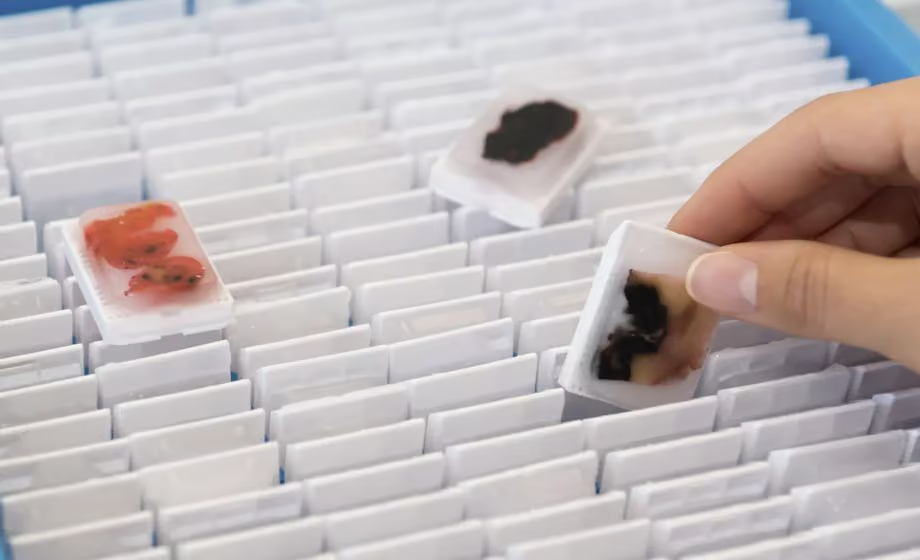
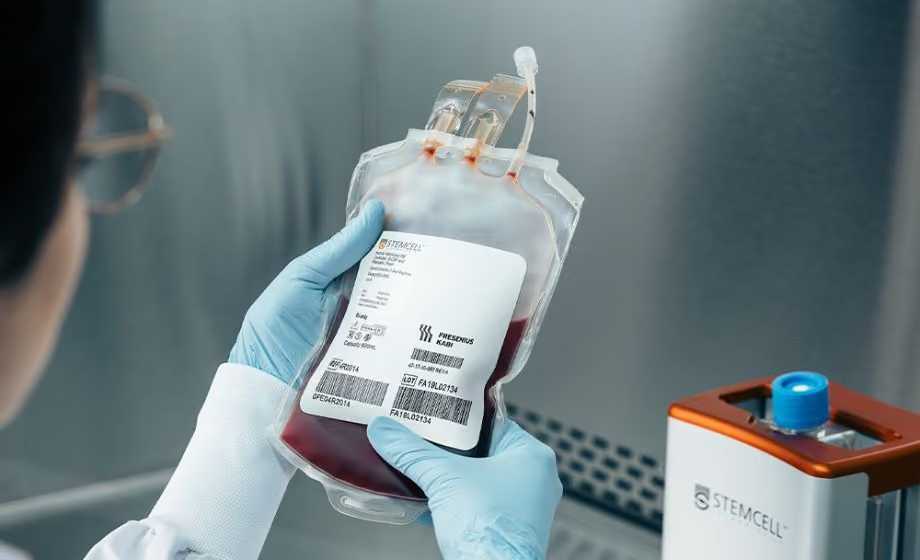
This presentation explores the critical role of human specimen starting materials in the success of New Approach Methodologies (NAMs), and how ethical sourcing, characterization, and quality control can drive confidence, reproducibility, and regulatory acceptance.
Miniaturizing Organoid Screening for Commercial R&D
René Overmeer, PhD, Principal Scientist, HUB Organoids (part of Merck KGaA)
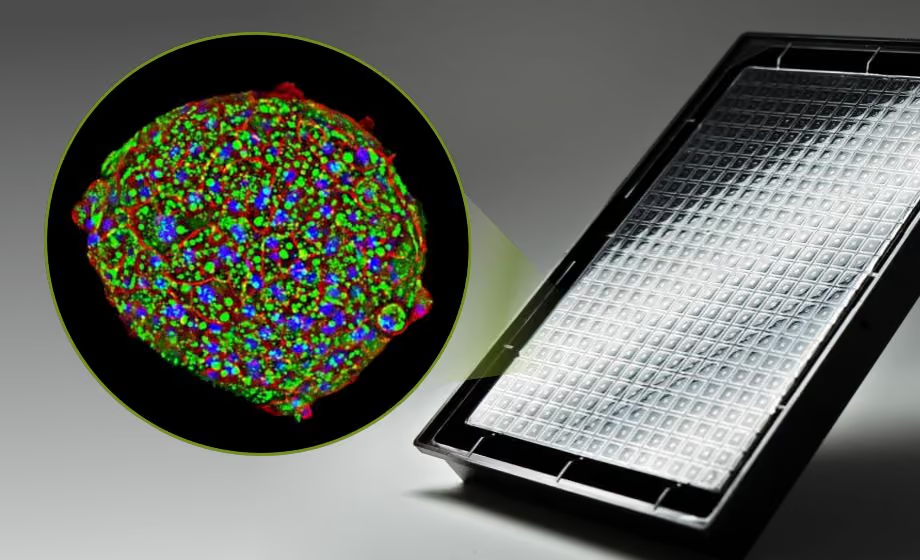
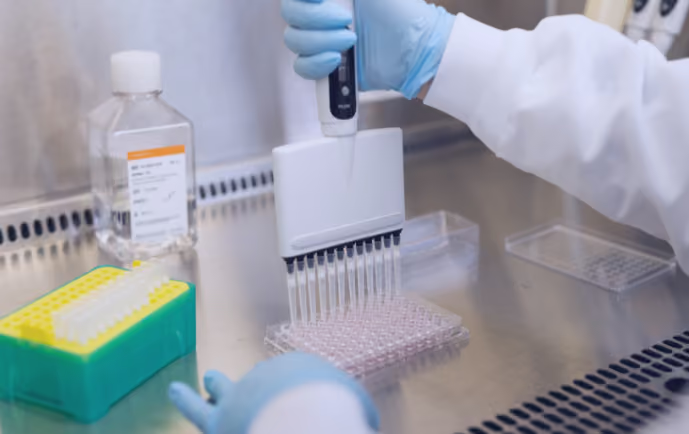
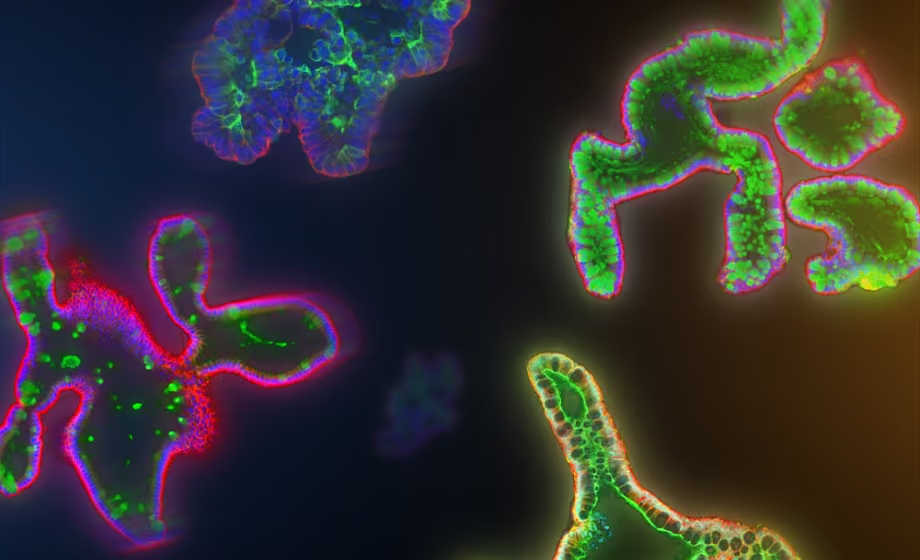
Patient-derived-organoids (PDOs) are valuable tools for predicting individual responses to cancer treatments. However, current screening methods require large numbers of PDOs, resulting in long turnaround times and limiting use. Our miniaturized, automated platform using patient-derived organoids enables high-quality drug screening with substantially fewer cells, accelerating the translation of in vitro results to patient-specific predictions. Integrating mini-organoids workflow reduces the time to actionable readouts to about one week, while maintaining patient-relevance and increasing throughput. This supports HUB Organoids’ goal of rapid prediction to guide selection of successful preclinical candidates.
Predicting Multi Organ Toxicity Early Using AI Enabled Transcriptomic Profiling in Human Models
Paul Walker, PhD, VP, Head of Toxicology and Innovation Efficiency, Cyprotex
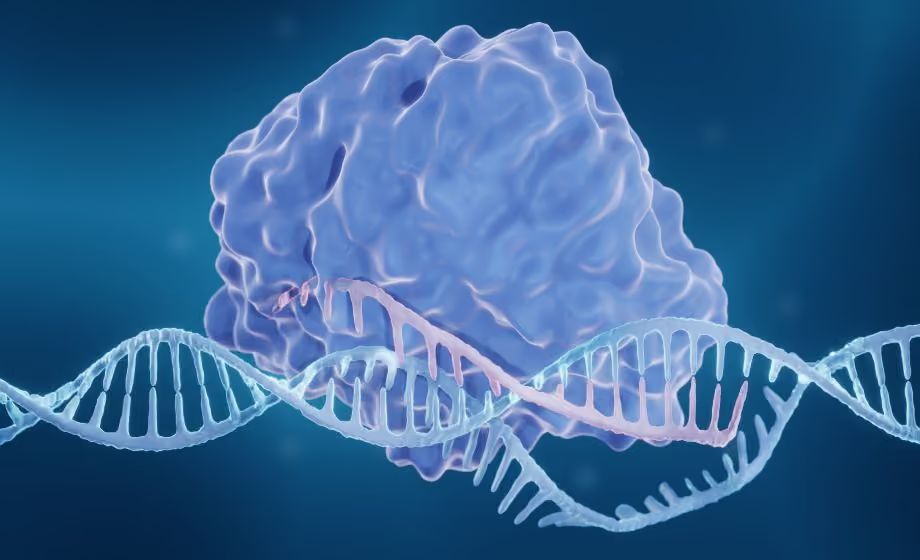
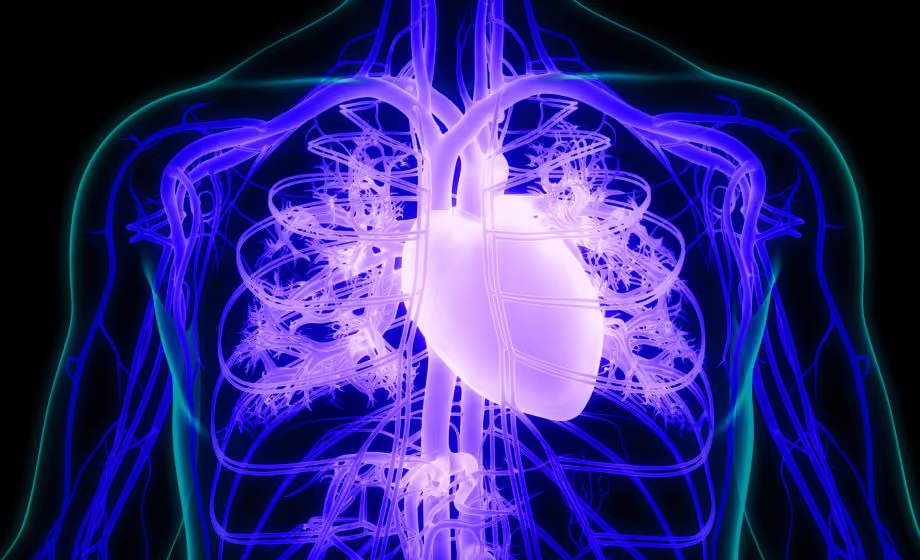
High clinical attrition driven by safety and efficacy failures underscores the need for earlier, more predictive toxicology strategies. Advances in human relevant in vitro systems, new approach methodologies (NAMs), transcriptomics, and AI/ML now enable earlier, mechanistically informed toxicity screening in drug discovery.Here, we profile organ specific clinical reference compounds across liver, cardiac, and kidney human cellular models using high throughput RNA seq. Differential expression, BMD/PoD modelling, pathway analysis, and AI/ML were applied to derive quantitative toxicity metrics. Integrating transcriptomics with NAMs provides a robust framework for early identification of multi organ toxicological liabilities.
Key Topics:
- How to manage donor variability while maintaining human relevance and reproducibility
- The importance of fit for purpose QC, standardization, and documentation
- How BioIVT’s human biospecimen capabilities help de risk NAM development from the start
- Hub Organoids’ miniaturized, automated platform for high-quality drug screening
- Evotec’s high throughput RNA seq applied to organ specific clinical reference compounds across liver, cardiac, and kidney human cellular models
Featuring Insights from
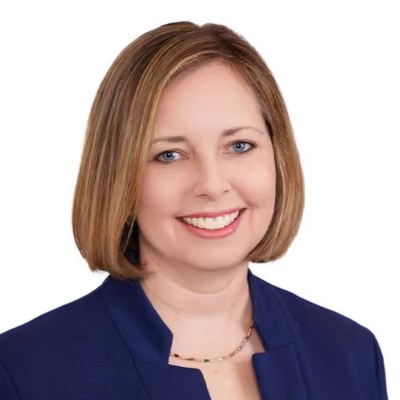
Courtney Noah
PhD
Dr. Courtney Noah is BioIVT's Vice President of Scientific Affairs. She leads a team that provides solutions for BioIVT’s clients and business partners. Dr. Noah received her PhD in Molecular and Cellular Biology from Stony Brook University, and her BS is in Food Science from Cornell University.

René Overmeer
Dr. Overmeer received his PhD in Biology from the Leiden University Medical Center on a molecular study of DNA damage repair. He subsequently moved to University Medical Center Utrecht to do his postdoc work studying Ras/Rap cancer signaling. During this period, he started working with adult stem cell Patient Derived Organoids and developed the first drug screens together with the group of Hans Clevers. In 2015, René moved to HUB Organoids to further develop organoids toward a reliable drug screening platform. In 2020, he became head of the newly formed Assay development and Automation group, and in 2023 he transitioned to the role of Principle Scientist to focus on the technical, biological and data analysis challenges involved in high-throughput organoid screening.

Paul Walker
PhD
Paul Walker is an accomplished scientific leader with over 20 years of experience spanning toxicology, data science, and innovation strategy. As VP, Head of Toxicology and Innovation Efficiency at Cyprotex, he drives the company’s scientific and innovation agenda, integrating in silico, in vitro, and AI enabled approaches to enhance decision making and reduce attrition in drug discovery. He leads a multidisciplinary organisation of more than 60 scientists across Toxicology, Permeability, and Transporter teams, with full accountability for scientific delivery, operational performance, and talent development. Paul is also the architect of the Panomics Tox platform, which combines toxicology, AI, data science, and automation to deliver high impact solutions, and he plays a leading role in shaping Evotec’s Global Safety Assessment and Strategy (GSAS) initiatives.
Sponsored by
BioIVT

HUB Organoids
Evotec
In Partnership with
Scientist.com
Scientist.com is the world’s largest and first platform built for the intricacies of scientific outsourcing.
We help pharmaceutical and biotechnology organizations discover, engage, manage, and scale relationships with the providers that support every stage of the pipeline—from discovery and preclinical research to clinical development, manufacturing, medical affairs, and commercialization. Through a centralized platform, organizations can access a global network of 6,000+ providers, streamline sourcing and procurement workflows, maintain compliance, manage supplier relationships, and leverage data-driven insights to make faster, more informed decisions.
Today, Scientist.com supports more than 130 life science organizations, including 24 of the world's top 30 pharmaceutical companies, helping teams reduce operational complexity, accelerate timelines, and bring innovations to patients faster. Our mission is to make it possible to cure all human disease by 2050.




.avif)