Webinar Summary
- Meaning and clinical importance of pulse wave velocity
- How to measure and interpret pulse wave velocity
- Considerations for internal- and external-validity
- Considerations for the measurement of pulse wave velocity of various study designs and populations
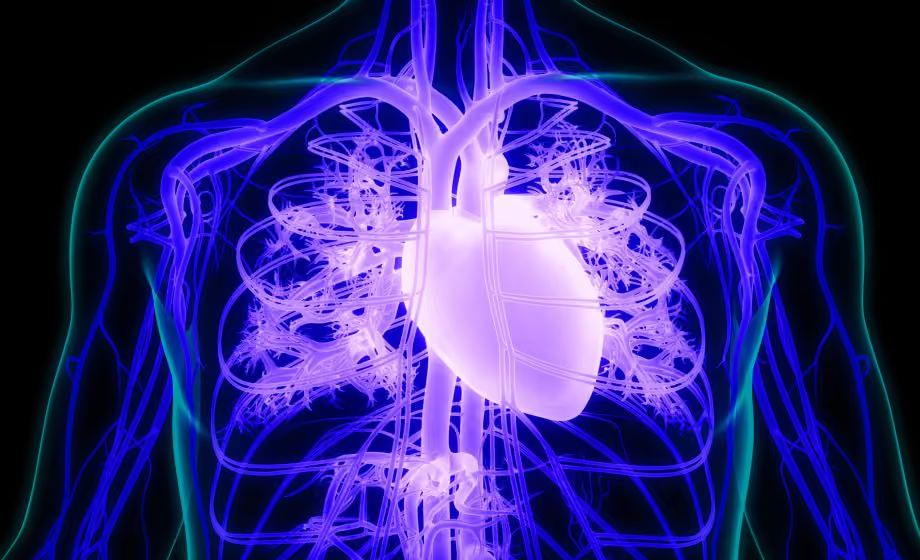
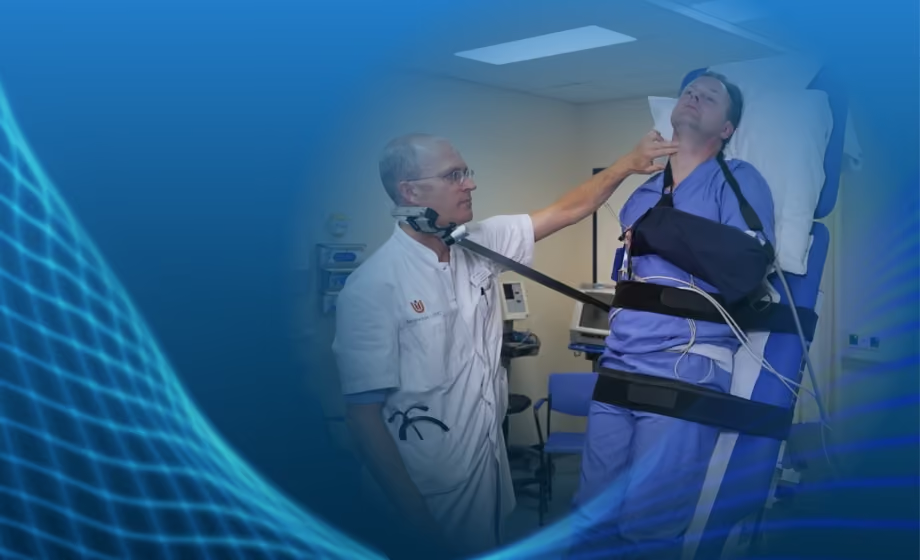
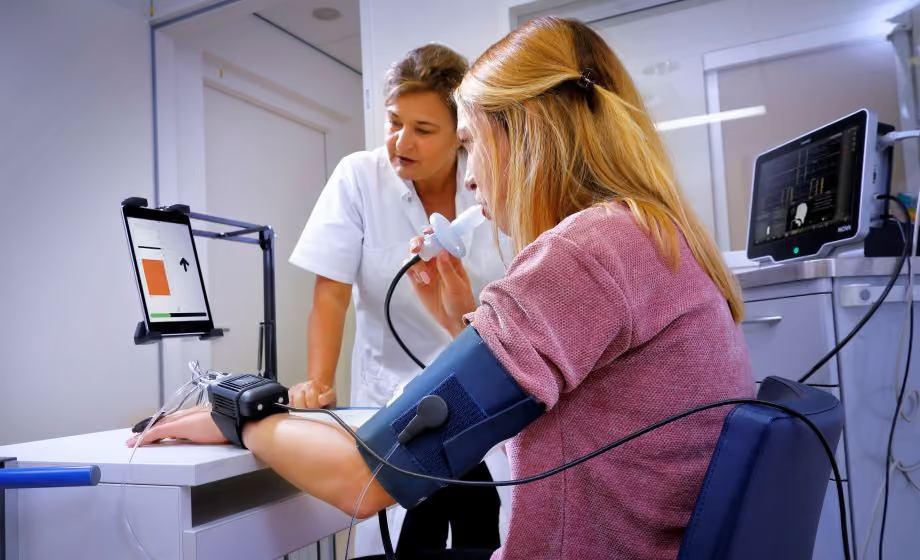
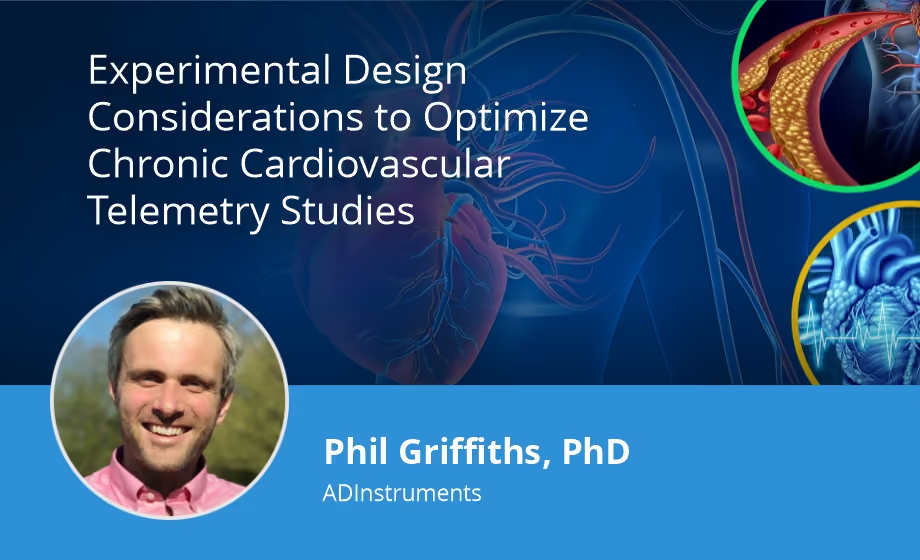
Arguably, the "gold-standard" method for noninvasive assessment of cardiovascular disease risk is pulse wave velocity. The PWV is widely used in both epidemiological and physiological studies to assess arterial stiffness, a construct dependent on the functional and structural characteristics of a vessel. PWV is calculated by measuring the transit time of the arterial waveform between two points of a measured distance. The most widely studied path is between the carotid and femoral arteries, which represents the aorto-illiac pathway. Traditionally, these measurements are made using tonometers, which are highly sensitive pressure transducers. However, alternative approaches to tonometry are available, and pathways other than the aorta can be measured. These alternative approaches may be better suited for use with certain populations or study designs. The focus of the presentation is to assist the audience in identifying the correct research tool for their particular research paradigm. Specifically, these experts outline the theoretical principles underlying PWV, as well as the importance of this measure to both epidemiological and physiological studies. Subsequently, they highlight some of the different approaches for measuring PWV, including technical considerations. This is followed by discussion pertaining to the identification of the appropriate PWV measure for the specific study design and populations of interest. This includes consideration of internal and external validity. They end the session by providing some tips to facilitate high-quality PWV assessments.
Featuring Insights from

Lee Stoner
PhD, MPH
Lee's lab investigates the interactions between lifestyle behaviors and cardiometabolic health. Specific inter-related interests include: (i) Interactions between lifestyle behaviors and cardiometabolic disease etiology across the lifespan, with a particular interest in sedentary behavior and young adults. (ii) The development and interpretation of methodologies for assessing cardiometabolic health. (iii) The translation of basic and applied science into public health outcomes.

Gabriel Zieff
MA
Gabe's broad research interests encompass the effects of lifestyle behaviors on cardiovascular health with an emphasis on assessing the cardiometabolic risk associated with psychological stress and sedentary behavior. When he's not in the lab, he also enjoys playing/coaching soccer, playing music, and consuming dark chocolate.
Sponsored by