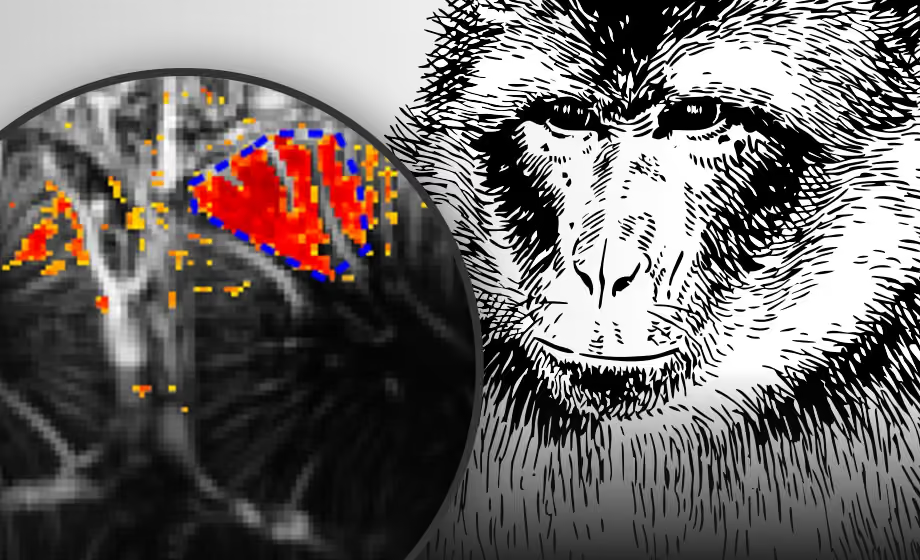
In this webinar, Professor Paul Marvar and Benjamin Turley present research linking behavioral and cardiovascular responses with cued fear learning and demonstrate how post-traumatic stress disorder (PTSD) can contribute to cardiovascular disease (CVD) risk.
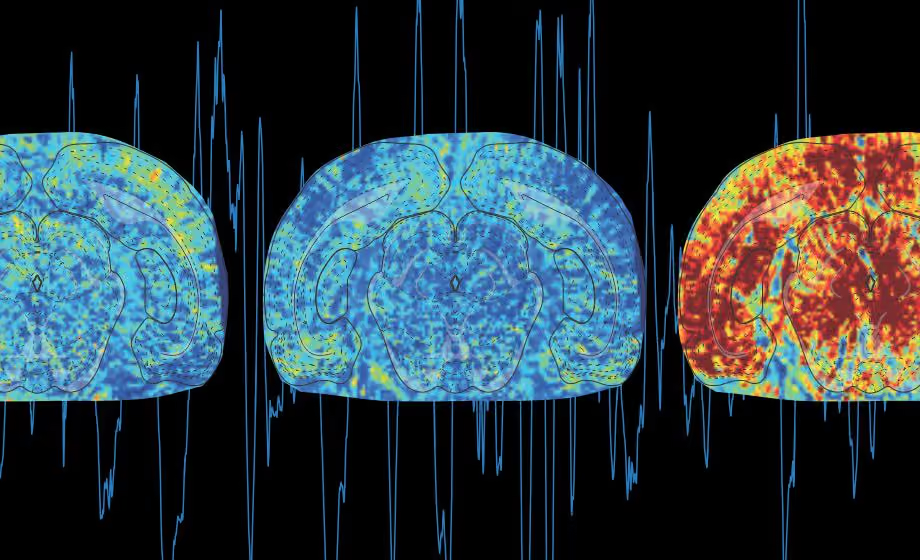
Professor Marvar's research interests include hypertension, autonomic nervous system dysregulation, and inflammation in relation to PTSD. This disorder is characterized by a persistent maladaptive reaction to exposure to psychological trauma such as a violent assault, a disaster, or military combat. The impaired ability to process fear and perceived threats in individuals with PTSD is a result of the overgeneralization of trauma-related stimuli and the reduced suppression of emotional and physiological responses to threat-associated stimuli. In individuals with PTSD, specific regions of the brain become impaired, including the visual cortex, the hippocampus, and the amygdala.
Psychological and behavioral symptoms of PTSD can include intrusive recollection of the traumatic event, avoidance behaviors, and negative mood alterations such as anxiety, depression, and anger. Physiological responses to a trauma may include increased blood pressure and heart rate, respiratory distress, shortness of breath, and sleep disturbances. Clinical evidence suggests a bidirectional link between PTSD and CVD, and understanding these connections can aid in the development of effective treatment options for both psychological and physiological PTSD symptoms.
"These circuits are critical [in] understanding … how some of the behavioral, physiological, and cardiovascular responses may go awry, such as increased reactivity to threat cues, blood pressure, and heart rate."
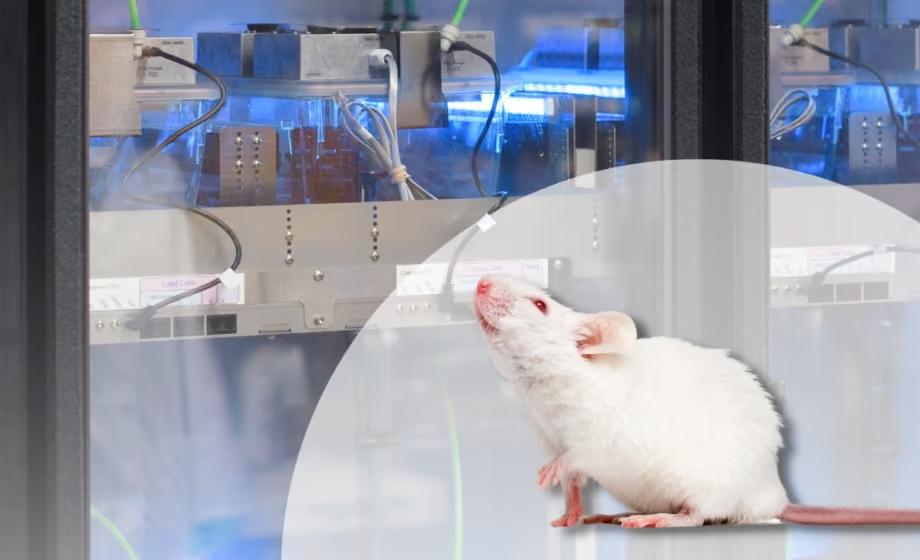
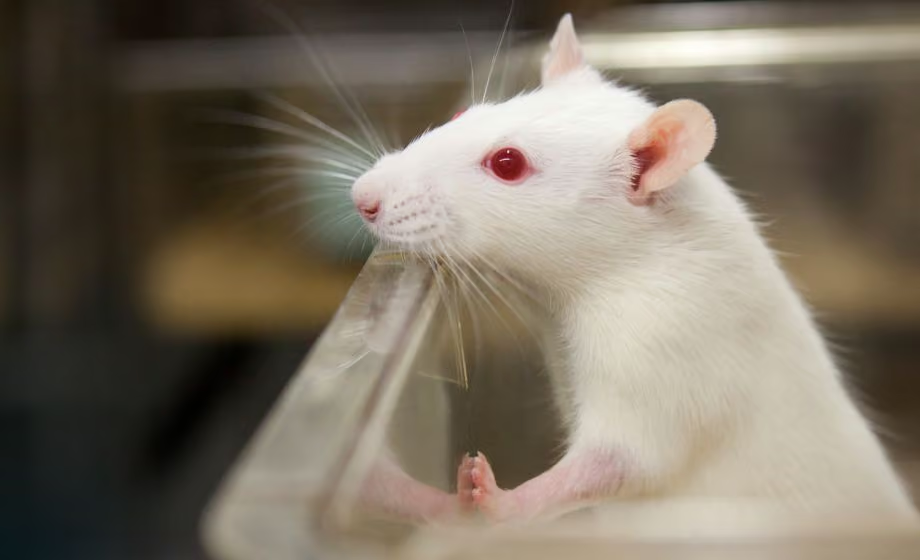
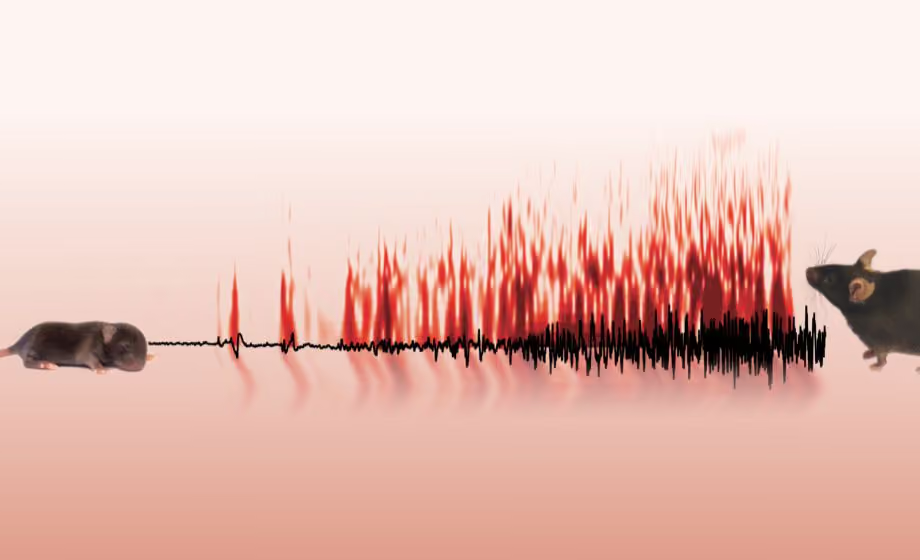
Professor Marvar highlights the need for mechanistic studies using animal models to understand the neurobiology of PTSD. Modelling fear responses in rodents and humans involves pairing conditioned stimuli with unconditioned stimuli to generate a fear response such as defensive behaviour, stress hormones, or respiratory distress following the introduction of a threat. Mice, for example, can be paired with an audible tone to create a fearful association, after which they can undergo extinction training through repeated presentations of the threat stimulus. Over time, the mice learn that the aversive stimulus is no longer a threat and their extinction learning increases. However, individuals with PTSD experience heightened freezing (i.e., cessation of body movements), so their extinction learning takes longer in comparison to individuals without PTSD.
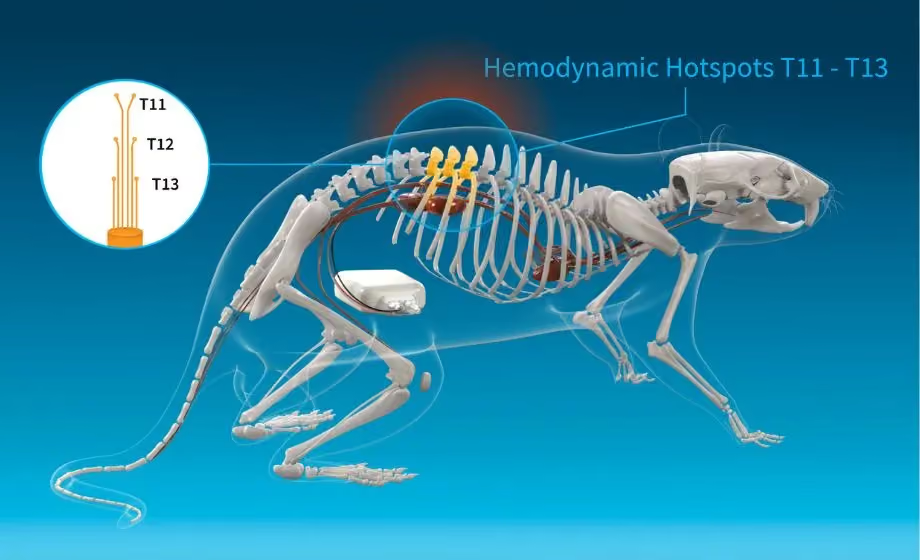
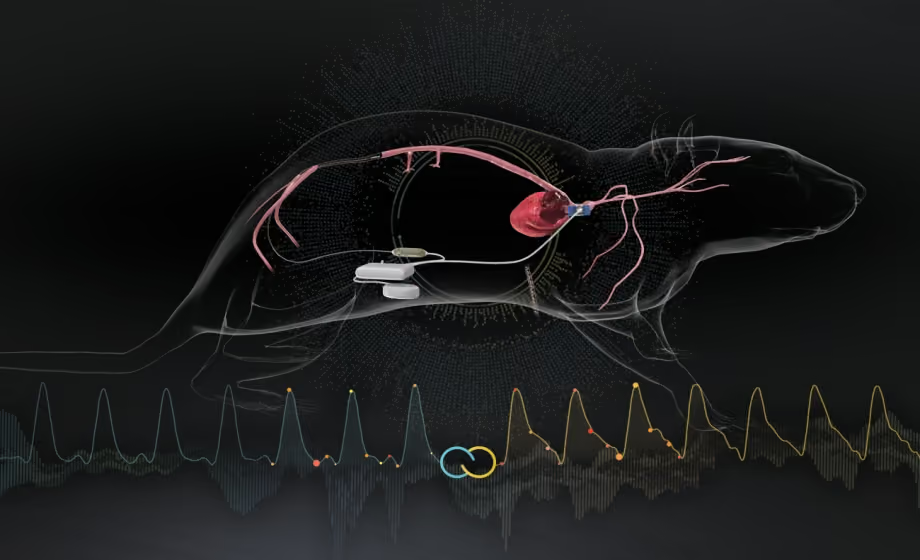
The Marvar group implanted mice with HDX-11 transmitters that can simultaneously monitor blood pressure and heart rate. Using this approach, the effects of extinction learning on the conditioned cardio-autonomic response were evaluated inside and outside of a home cage environment. In both cases, resting blood pressure and heart rate, as well as heart rate variability, were unaltered by fear conditioning and extinction training. Professor Marvar concludes that conditioned blood pressure responses may nevertheless serve as a novel index in the evaluation of extinction efficiency and may aid in understanding the mechanisms that drive exaggerated physiological responses in PTSD.
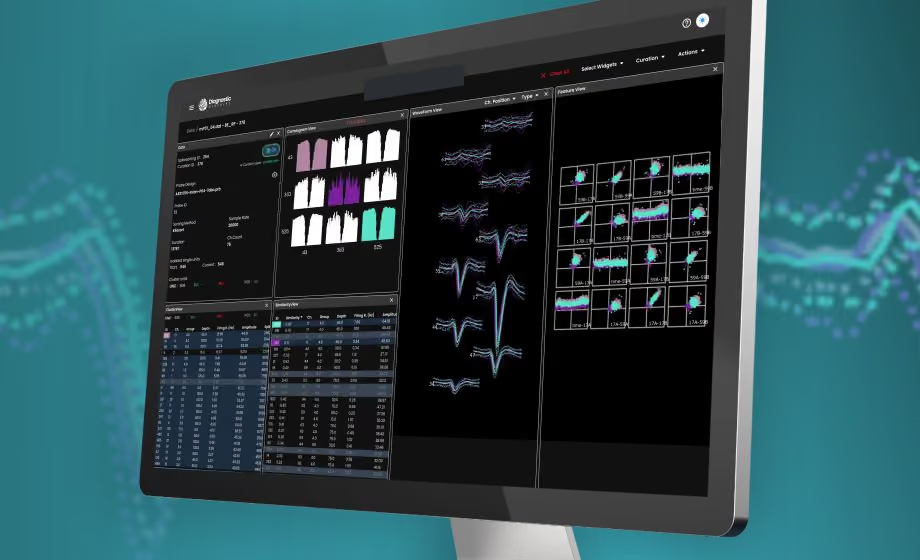
Environmental factors (e.g., foreign scents, noise, and cage setup) and physiological factors (e.g., circadian rhythms and routines) can confound cardiovascular responses as they can affect the physiological state of the mouse. The Marvar group employed Ponemah software to control the conditions during which cardiovascular response can be elicited, thereby avoiding or mitigating confounding factors. The software is not only able to record vital signs, but can also send telemetry information over transmission control protocol packets, and acts on signals in real time to dynamically adjust the conditioning schedule based on the animal's instantaneous cardiovascular state.
"The animal is not tested when it's in a period of abnormal activity."
Benjamin Turley concludes this webinar by highlighting the advantages of such an approach. For example, the experimenter does not need to be present to deliver the conditioned stimulus and audible tones, and tones can be given at several times of the day, which is difficult to achieve with a normal working schedule. The experiment can also be conducted in the animal's home cage, resulting in reduced stress. Furthermore, the proposed software is open source and can be customized to monitor many behavioral and physiological functions. The ultimate goal of this approach is to aid in further understanding mechanisms underlying enhanced cardiovascular and autonomic arousal in fear and anxiety disorders.
Webinar Highlights
- Clinical evidence for comorbidity of PTSD and CVD
- How impaired threat detection and fear circuitry results in heightened behavioral and physiological responses
- Integrative approaches for cardiovascular and behavioral response measurements
- Understanding mechanisms that drive exaggerated physiological responses in PTSD
- How to avoid testing an animal during a period of abnormal cardiovascular activity
Featuring Insights from

Paul Marvar
PhD
Dr. Marvar’s research is focused on understanding the link between stress and anxiety disorders (i.e. Posttraumatic Stress Disorder - PTSD) and increased cardiovascular disease (CVD) risk. The laboratory specializes in utilizing multi-disciplinary approaches that combines integrated physiological, molecular, analytical and behavioral neuroscience tools to examine neuroendocrine (i.e. renin angiotensin system), autonomic nervous system and inflammatory pathways in PTSD related CVD. The basic science pre- clinical research funding is complimented by translational clinical research funding focused on identifying new therapeutic targets and opportunities for treatment for PTSD and co-morbid CVD.

Benjamin Turley
Ben Turley is a Masters student at Georgetown University studying Systems Medicine. While at George Washington University, he conducted research relating to conditioned stimulus delivery in mice, specifically through use of physiological telemetry to augment existing behavioral approaches for quantifying fear response. There he developed software able to process cardiovascular telemetry signals in real-time and act on them according to parameter ranges. He now conducts epidemiological research using city-wide psychiatric data from mental health institutions, specifically targeting opioid-use disorder populations.
Sponsored by

Data Sciences International