A webinar focused on new technology and associated best-practices for recording quality metabolic data from human research participants.
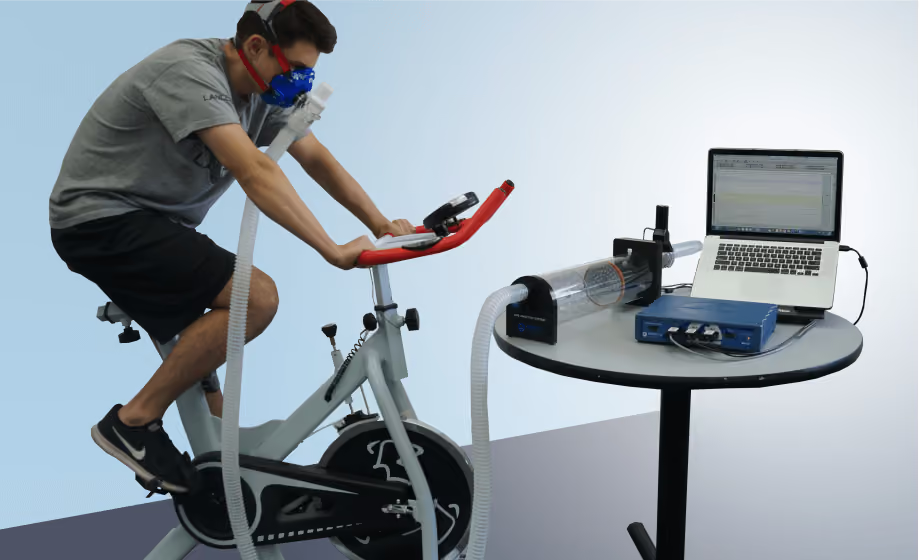
Obtaining accurate and reproducible metabolic data, such as oxygen consumption (VO2), carbon dioxide production (VCO2) and respiratory exchange ratio (RER), from research participants at rest and during exercise provides detailed insights regarding human response and physiology. These measurements are extremely important to many research disciplines including exercise physiology, sports science, biomedical engineering, psychophysiology, and various consumer neuroscience applications.
However, traditional methods of recording metabolic data in humans offer a myriad of challenges: most prominently, extensive and complex calibration processes, cumbersome operation and prohibitive costs. In contrast, BIOPAC's new Metabolic System is an accurate, compact, and affordable turn-key solution for both research and physiology education applications. In developing this system, BIOPAC has uncovered a new way to easily obtain great metabolic data.
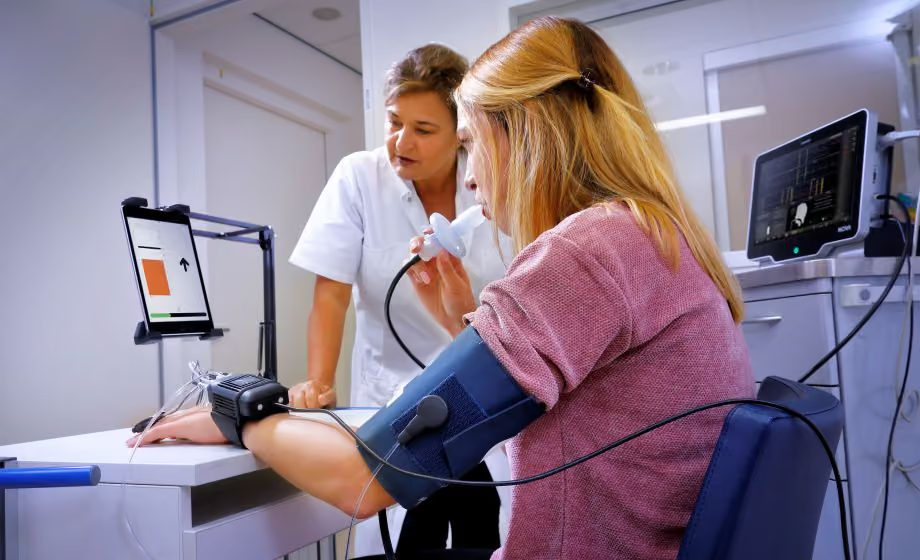
During this webinar, Frazer Findlay and William McMullen introduce a new gas analysis solution, titled GASSYS 3, and review fundamental principles for human metabolic studies. Specifically, they discuss basic principles on how to determine a participant's Metabolic Rate (energy expended), Oxygen Consumption (VO2), Carbon Dioxide production (VCO2), Respiratory Exchange Ratio (RER), and other useful metabolic data. In addition, they show correct equipment setup for measuring expired airflow, O2 and CO2 with simultaneous ECG recordings, all while minimizing EMG artifact. Finally, they demonstrate valuable automated software calculations to obtain VO2, VCO2, RER, Heart Rate from ECG and Respiration rate from airflow.
Featuring Insights from

William McMullen
Vice President and founding member of BIOPAC Systems, William obtained a BSE in Electronic Engineering from California Polytechnic State University, San Luis Obispo. Currently the Product Manager for BIOPAC’s Educational products, he has always had an interest in the circuits and signal processing required to record and analyze physiological signals. He had an epiphany after experiencing the first Macintosh computer and set about on a path to make physiological recording equipment as easy to use as possible. William developed the Biopac Student Lab with the goal of combining several recording systems into one, easy to use, system. He’s been involved with the development of several BIOPAC transducers and has worked with professors to develop curriculum for BSL lessons.

Frazer Findlay
Frazer Findlay is CEO of BIOPAC and has more than 25 years’ experience in life science data acquisition and analysis. Frazer is a well-regarded expert in the physiology monitoring industry and has facilitated workshops around the world. He is familiar with a variety of software, equipment, and laboratory protocols for a wide array of signals and measurements.
Sponsored by