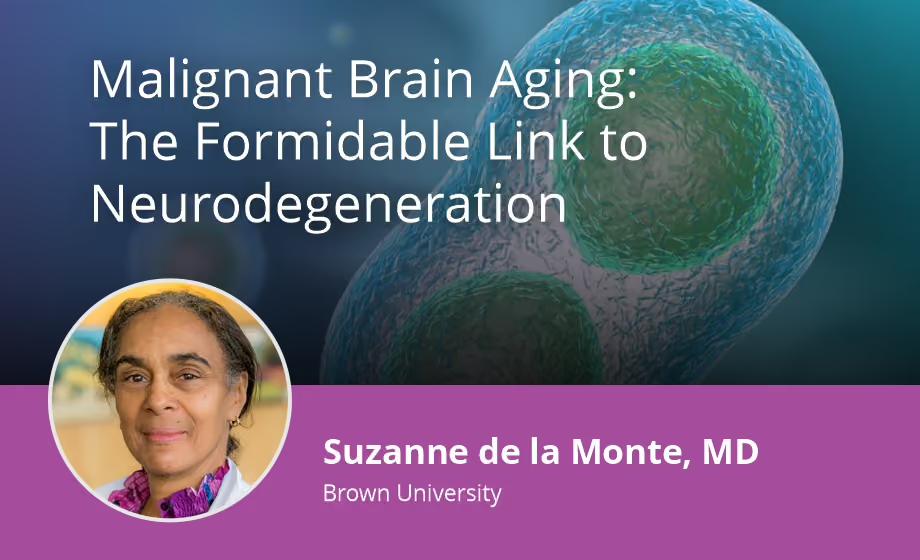
In this webinar, Dr. de la Monte shows how malignant aging and attendant neurodegeneration are likely mediated by fundamental defects in insulin's actions and aberrant cellular responses to insulin, mimicking the effects of diabetes mellitus.
Dr. de la Monte begins the webinar highlighting the different stages of brain development including the aging brain, describing how ventricle size increases but the brain shrinks. With this shrinkage, there are changes in many organ systems, resulting in weakness, osteoporosis, impaired reflexes, and more; the consequences of aging and degeneration are very evident in the brain.
"Aging is not so debilitating as it is a slow down of the system and a process that takes us away from being the most robust of creatures to one that has to rest more and can't accomplish as much in the same period of time."
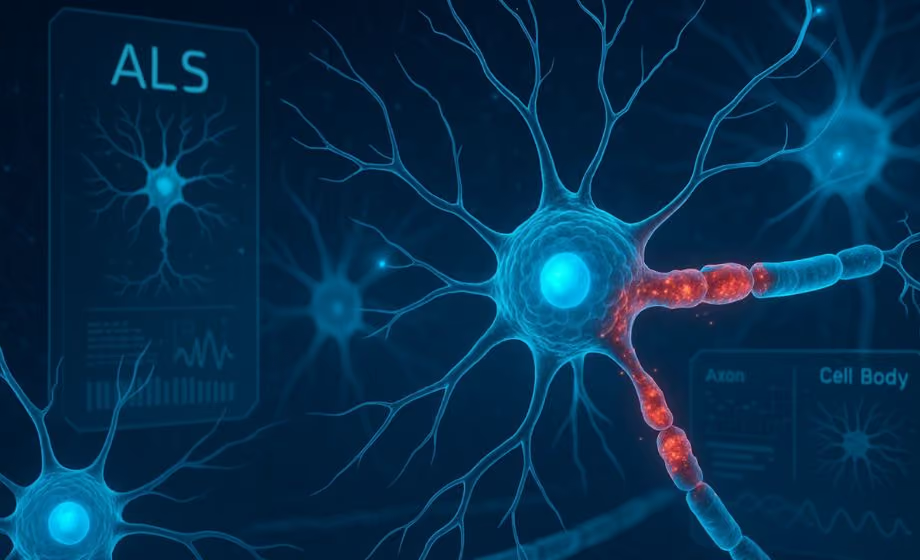
She continues that the aging process involves all cell types, and during malignant aging, brain homeostasis is lost; Dr. de la Monte highlights the cell types involved and their roles. Both neurons and oligodendrocytes are impacted by neurodegeneration, where they are damaged and do not recover. Astrocytes are critical cells for the brain, so when impaired, this can lead to neuroinflammation and Blood-Brain Barrier (BBB) disruption. She finishes this section with a note on microglia, responsible for neuroinflammatory responses, explaining inflammation is not the sole factor in neurodegeneration but is certainly involved.
Dr. de la Monte next reviews BBB perfusion, which is disrupted with aging, allowing entry of substances into the brain that are not typically found in the central nervous system.
"If you lose your astrocytes, your microglia, or the vascular integrity . . . any one of those can help to age the brain."
She then summarizes the basic drivers of aging: senescence, mitochondrial dysfunction, declining balance of functionally mature neurons, enhanced sensitivity to oxidative stress, neuroinflammation, and microvascular dysfunction. It is noted, however, that the aging brain is still functioning.
In the next section, Dr. de la Monte highlights how mortality rates due to Alzheimer's disease (AD) have climbed significantly in a study population. She points out that the death rate from diabetes in this population has increased almost in parallel with the Alzheimer's disease mortality rate since 1980.
"The hope is . . . we did something before that curve started going up and we can probably undo something to make it go down."
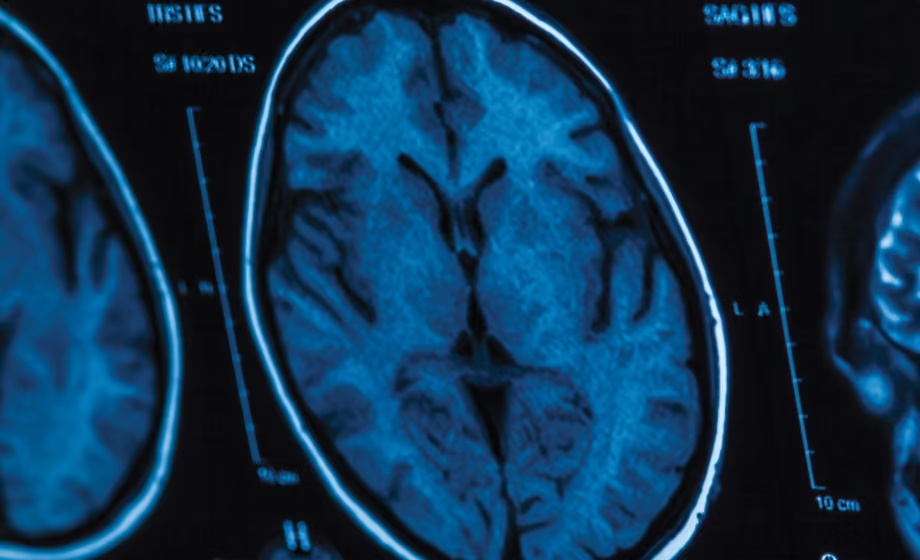
She then presents the classical view of AD brain neuropathology and describes the accompanying changes. Images of cortical and white matter atrophy are shown, including large gaps within the cortical ribbons and enlarged ventricles. Complete reliance on neuroimaging is ineffective as some damage remains undetectable; visualizing gliosis with staining techniques identifies abnormalities not seen with neuroimaging.
"AD is so much more than plaques and tangles . . ."
In the next part of the webinar, Dr. de la Monte focuses on metabolism of glucose, the main fuel of the brain; in AD, there is a very early deficit in the ability of the brain to use glucose. Insulin and IGF-1 are required for normal brain function, regulating survival and function of neurons and oligodendrocytes. She goes on to clarify that insulin is not only useful for glucose utilization and metabolism, but also regulates pathways involved in survival. In support of this, a study was shown that demonstrates inhibition of insulin and IGF-1 upstream signalling mediators increase with AD severity; this is described as both insulin deficiency and insulin resistance, leading to the proposed concept of a "Type 3" Diabetes.
Dr. de la Monte concludes this webinar with a review of lifestyle measures, such as exercise and diet, to reduce insulin resistance and improve cognition. She asks us to consider that positive outcomes are a consequence of the combined effects of cardiovascular, cerebrovascular, and metabolic changes on brain insulin responsiveness.
Webinar Highlights
- Understanding how the cellular components and mechanisms of aging affect the brain
- The role of dysregulated insulin-stimulated metabolism in the transition from aging to neurodegeneration
- Discussion of Alzheimer's disease as a form of diabetes mellitus
Featuring Insights from

Suzanne de la Monte
MD, MPH
Dr. Suzanne de la Monte is a physician scientist who directs basic and translational research in the laboratory. She also performs clinical service work in Neuropathology. This activity includes teaching residents and students. Her research efforts are mainly focused on understanding the role of insulin and insulin-like growth factor resistance in relation to neurodegeneration caused by Alzheimer's disease and chronic alcohol abuse.
In Partnership with

American Physiological Society
Founded in 1887, the American Physiological Society is a global leader in expanding knowledge related to biological function. We connect a multidisciplinary community of nearly 10,000 scientists and educators from around the world, driving collaboration and spotlighting scientific discoveries in physiology and related disciplines. Our members are advancing treatments and cures for everything from cancer and heart disease, to obesity and addiction. They are also deepening our insight into living organisms generally, helping us to better understand how things like climate change are affecting the world around us.