Webinar Summary
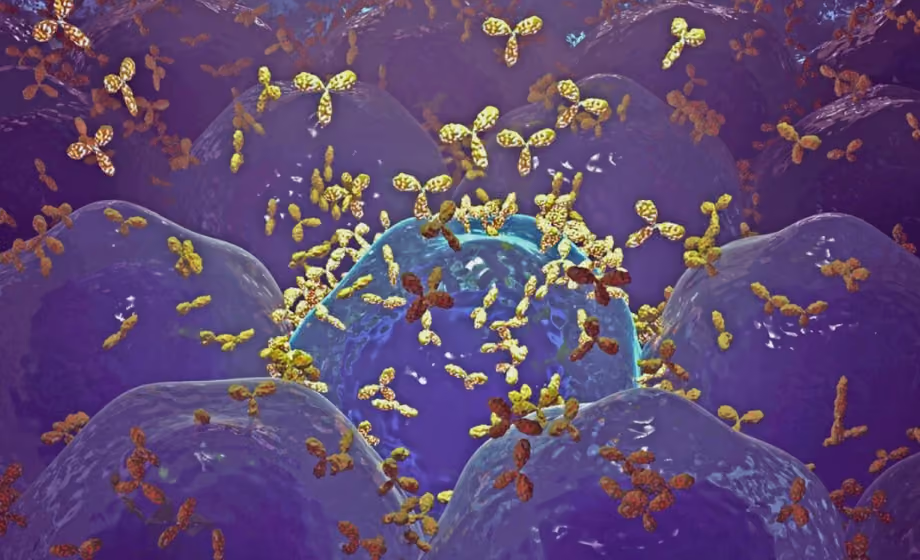
- Gain a conceptual understanding of benzodiazepine pharmacology and GABAA receptor modulation
- Become familiar with the main models used to investigate the behavioral effects of benzodiazepines in nonhuman primates
- Learn the dose- and topography-dependent EEG spectral power changes induced by benzodiazepine drugs across species
- Describe how benzodiazepine-induced EEG changes correlate with the different behavioral effects of these drugs
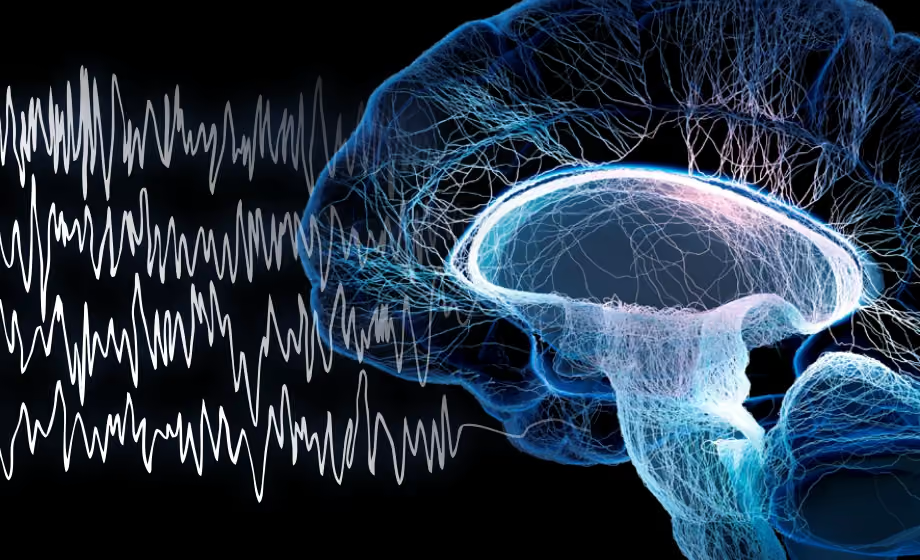
Benzodiazepines are known to induce electroencephalography (EEG) changes in rodents and humans that are associated with distinct behavioral effects and have been proposed as quantitative biomarkers for GABAA receptor modulation. Specifically, central EEG beta and occipital EEG delta activity have been associated with anxiolysis and sedation, respectively. The extent to which nonhuman primates show the same dose- and topography-dependent effects remained unknown. Critically, rhesus macaques have been shown recently to share GABAA receptor subtype distributions in the brain that, unlike rodent species, align with human findings.
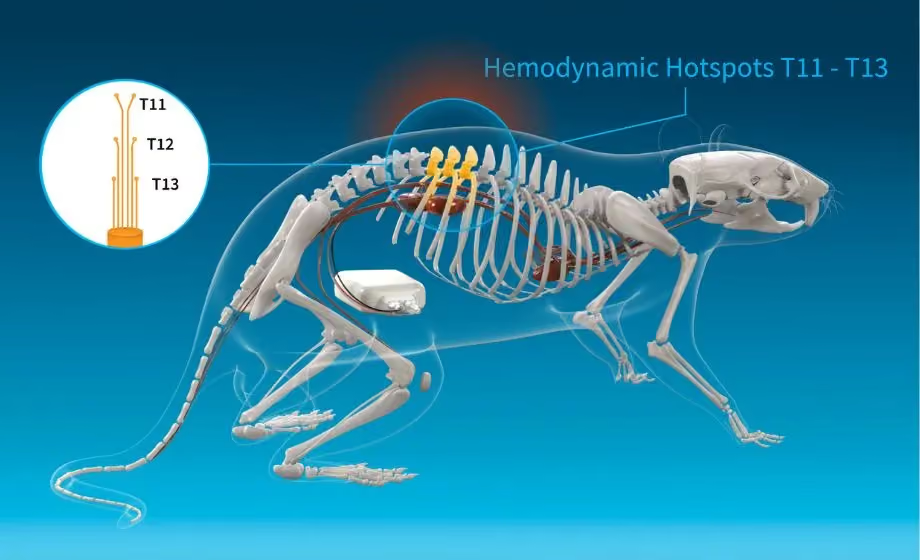
Lais Berro, PhD recently demonstrated that the benzodiazepine alprazolam induces dose- and topography-dependent EEG spectral power changes in rhesus monkeys. In this webinar, Dr. Berro reviews the main behavioral models used in her laboratory to investigate the anxiolytic, sedative and abuse-related effects of benzodiazepine drugs. She correlates her findings with recent data obtained using telemetry-based EEG recording, with the goal of promoting EEG evaluation in nonhuman primates as a valuable and translational model for studying benzodiazepine pharmacology.
Featuring Insights from

Lais Berro
PhD
Dr. Lais F. Berro has a Ph.D. Degree from Universidade Federal de São, Brazil. She completed her postdoctoral studies at the University of Mississippi Medical Center, where she is currently an Instructor. Her long term research interests involve the investigation of the mechanisms underlying the relationship between sleep and drug abuse.
Sponsored by

Data Sciences International




























.avif)