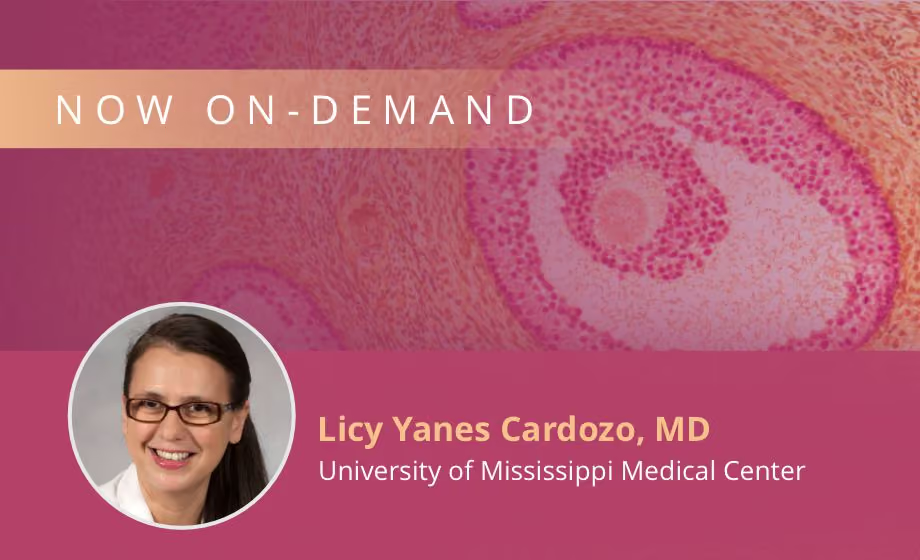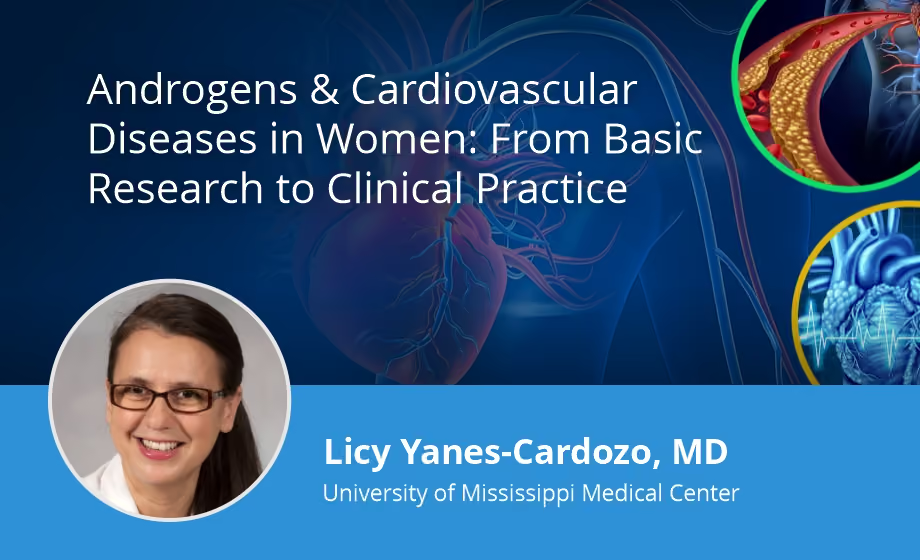
Join Dr. Licy Yanes-Cardozo as she expands on her research exploring the role of androgens on cardiovascular physiology in cis and transgender patients.
Dr. Yanes Cardozo begins this webinar by discussing the cardiometabolic complications caused by excess androgens. Hyperandrogenemia is one of the more notable features of polycystic ovary syndrome (PCOS), a condition that affects roughly 10-20% of all women. This condition often goes undiagnosed in a vast majority of women due to limited funding and treatment options. \
"[PCOS] is the most common endocrine disorder in reproductive-age women."
Polycystic ovary syndrome is often concurrent with cardiovascular disease, especially in young women with hyperandrogenemia. Dr. Yanes Cardozo shares a case study she encountered of a 30-year-old woman with PCOS who was looking to better manage her type II diabetes. This individual was also experiencing cardiovascular problems such as obesity and hypertension, and wanted to conceive soon. Although this patient had been on metformin, an insulin sensitizer, since puberty, it was no longer effective at managing her blood sugar. Additionally, she exhibited high testosterone levels, which appeared to underlie her cardiovascular problems, insulin resistance, and high blood pressure.
Dr. Yanes Cardozo recommended liraglutide to this patient, which is a glucagon-like peptide-1 receptor agonist (GLP-1RA) that is effective in treating insulin resistance in women with PCOS. To better understand why liraglutide effectively reduced this patient's A1C levels, Dr. Yanes-Cardozo and her laboratory examined and characterized PCOS in a mouse model. They found that PCOS, and the hyperandrogenemia associated with it, often modulated the responsiveness and effectiveness of pharmacological therapies for diabetes, and identified peroxisome proliferator-activated receptor gamma as a key contributor to the prevalence of cardiometabolic complications. 
"High levels of androgens underlie the obesity, the insulin resistance, and the increases in blood pressure in [patients with PCOS]."
Dr. Yanes Cardozo next discusses high risk populations for cardiovascular complications associated with PCOS and how they might vary by geographic region and ethnicity. One recent study reported that African American women exhibited higher blood pressure, hemoglobin A1C, and body mass index than Caucasian women from a similar geographic region. In a study published in 2020, black women from Alabama were found to have increased hirsutism and insulin resistance than black women from California. Dr. Yanes Cardozo attributes this differential experience of PCOS to a social determinant of health, as hyperandrogenemia and obesity will create a positive feedback loop if left untreated. 
In the last part of this webinar, Dr. Yanes Cardozo shares a second case study of a 41-year-old transgender man who was seeking gender reassignment therapy with testosterone. While the cardiovascular complications of gender reassignment therapy have not been fully characterized, the use of hormones significantly improves these patients' mental health. For instance, one study found that participants experienced significantly less anxiety and depression following gender reassignment therapy, while another study reported a significant improvement in quality of life post-therapy in 80% of participants. More recently, a study investigating the cardiovascular effects of hormone therapy found that transgender men (i.e., female-to-male) experienced increased systolic blood pressure, whereas transgender women (i.e., male-to-female) exhibited the opposite. Dr. Licy Yanes Cardozo next aims to investigate obesity and social determinants of health in transgender individuals to better understand how hormone therapy affects cardiovascular and mental health.
In summary, hyperandrogenemia and PCOS can present themselves with many varying symptoms, all of which require a unique treatment plan to best suit the patient's needs. Excess free testosterone tends to modulate the response and efficacy of therapeutic agents, indicating that a one-size-fits-all solution may not exist for these types of conditions.
Webinar Highlights
- Hyperandrogenemia as a key feature of PCOS
- High risk populations for cardiovascular complications from PCOS
- Cardiovascular effects of gender reassignment hormone therapy
Featuring Insights from

Licy Yanes Cardozo
MD
Licy L. Yanes Cardozo, MD, is a Professor in the Departments of Pharmacology and Medicine/Endocrinology at the University of Mississippi Medical Center (UMMC). She is a physician-scientist engaged in basic research and clinical research. Her research focuses on the role and mechanisms by which androgen excess mediates Cardiovascular Disease in women.
In Partnership with
American Physiological Society
Founded in 1887, the American Physiological Society is a global leader in expanding knowledge related to biological function. We connect a multidisciplinary community of nearly 10,000 scientists and educators from around the world, driving collaboration and spotlighting scientific discoveries in physiology and related disciplines. Our members are advancing treatments and cures for everything from cancer and heart disease, to obesity and addiction. They are also deepening our insight into living organisms generally, helping us to better understand how things like climate change are affecting the world around us.
European Council for Cardiovascular Research
The history of the European Council for Cardiovascular Research (ECCR) goes back more than 30 years when the ‘European Blood Pressure Group’ held its first meeting in March 1979 in Cambridge, UK. To date more than 30 international meetings have been held in various European locations. For more information about ECCR history click here.
The mission of ECCR is to promote prevention, diagnosis and treatment of disease and the preservation and protection of good health through experimental and clinical research in hypertension, cardiovascular and metabolic disease.
ECCR holds an Annual Meeting in October. The purpose of these scientific meetings is to provide a forum for active clinical and non-clinical researchers to discuss important aspects of their work, to advance and strengthen European research in the field of cardiovascular disease, high blood pressure and cardiometabolic disease. The meetings bring together both senior and junior scientists from the leading European groups in the field of cardiovascular research.
ECCR is a member of the Council for Basic Cardiovascular Science (CBCS) of the European Society of Cardiology (ESC), whose aims are to enhance the importance of basic science to clinical cardiology and act as a Europe wide forum for cardiovascular research societies, and a conduit for positive collaboration.