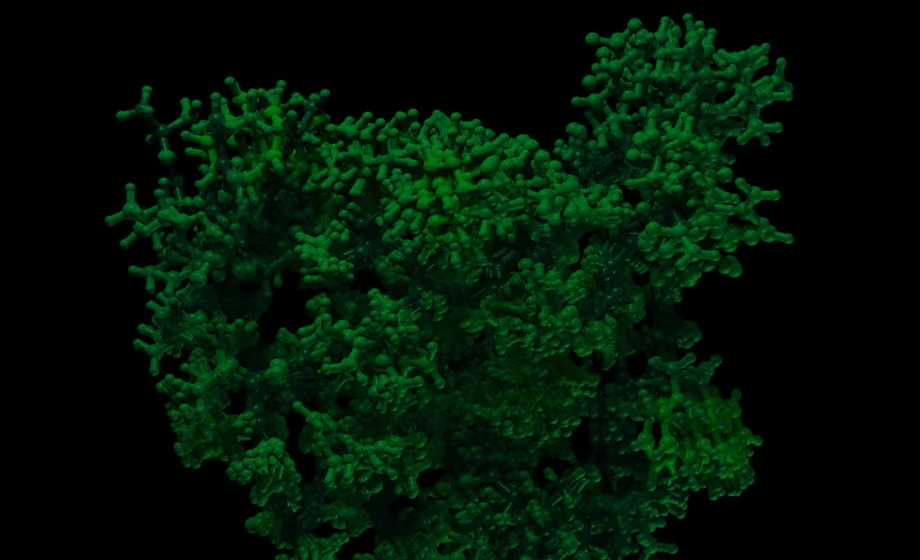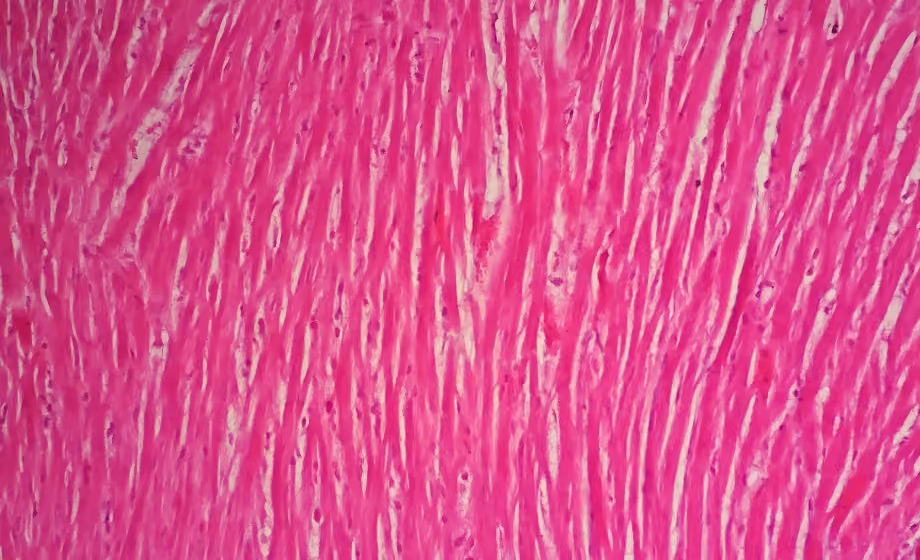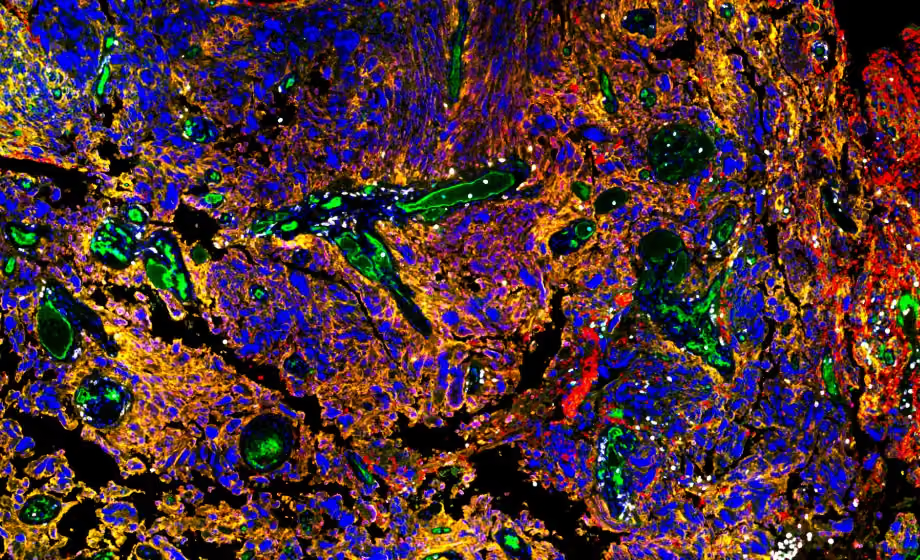
Key opinion leaders in cardiovascular physiology and bioengineering discuss best practices and challenges when modeling cardiomyopathies and skeletal muscle diseases using stem cells, engineered tissues and other novel platforms.
Presenters compare their individual research and its implications to improve disease modeling and acceleration of the drug development process. The presenters also speak about academic-industry partnerships, with a focus on improving relationships to streamline the research process.
Featuring Insights from
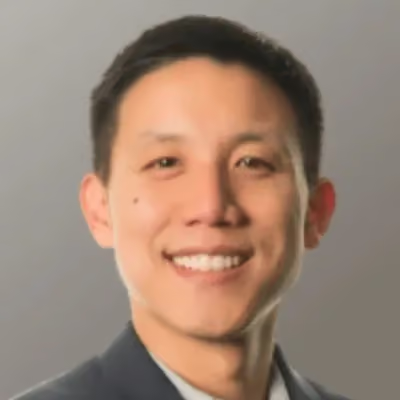
Darren Hwee
PhD
Darren Hwee, PhD, is the Senior Director of Pharmacology at Cytokinetics, Inc. a commercial-stage biopharmaceutical company focused on the discovery and development of novel therapeutics for the treatment of cardiac and skeletal muscle diseases based in South San Francisco, California. Darren received his BA in Integrative Biology from the University of California, Berkeley, and his PhD in Molecular, Cellular, and Integrative Physiology from the University of California, Davis.
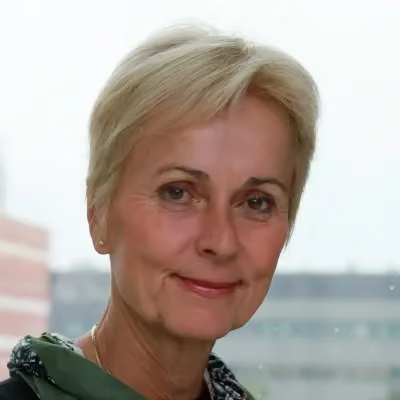
Christine Mummery
PhD
Christine Mummery, PhD, trained in biophysics at the University of London in the U.K., and is a professor of developmental biology at Leiden University Medical Centre in the Netherlands, where she heads the induced pluripotent stem-cell and organ-on-a-chip Hotel facility. Mummery is also a guest professor at the University of Twente in the Netherlands. Her research concerns modelling cardiovascular diseases, using stem cells from patients, developing organ-on-chip models for safety pharmacology and discovering disease and drug targets. Mummery leads a multimillion-euro Dutch Research Council grant for this purpose and holds European Research Council Advanced- and Proof-of-Concept grants. She co-founded the European Organ on Chip Society and the Netherlands Human Disease Modelling Technology organization. Mummery is a member of the Royal Netherlands Academy of Science and past president of the International Society of Stem Cell research.

Stuart Campbell
PhD
Stuart Campbell, PhD, is an associate professor of Biomedical Engineering & Cellular and Molecular Physiology at Yale University in New Haven, Connecticut. His research focuses on understanding the mechanisms that underlie genetic forms of heart disease. Campbell’s laboratory uses computational and experimental biomechanics approaches to improve quantitative understanding of these diseases and to evolve new therapies.
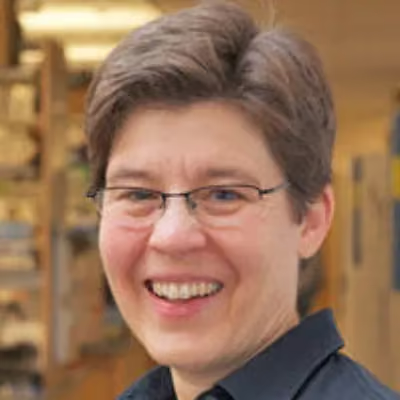
Jennifer Lewis
ScD
Jennifer Lewis, ScD, is the Hansjörg Wyss Professor of Biologically Inspired Engineering at the Harvard John A. Paulson School of Engineering and Applied Sciences, and a core faculty member at the Wyss Institute for Biologically Inspired Engineering, both in in Cambridge, Massachusetts. She has made pioneering contributions to the programmable assembly of functional, structural, and living matter. Lewis is a member of the National Academy of Sciences, National Academy of Engineering, National Academy of Inventors and the American Academy of Arts and Sciences. She has co-founded four startups and currently serves on multiple scientific advisory boards.
Sponsored by

Cytokinetics
In Partnership with
American Physiological Society
Founded in 1887, the American Physiological Society is a global leader in expanding knowledge related to biological function. We connect a multidisciplinary community of nearly 10,000 scientists and educators from around the world, driving collaboration and spotlighting scientific discoveries in physiology and related disciplines. Our members are advancing treatments and cures for everything from cancer and heart disease, to obesity and addiction. They are also deepening our insight into living organisms generally, helping us to better understand how things like climate change are affecting the world around us.

.avif)