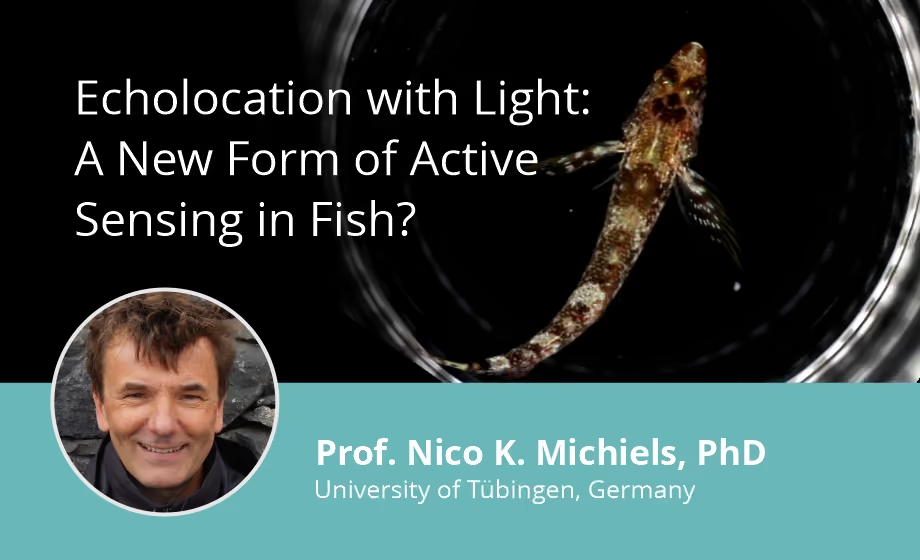
Prof. Dr. Nico K. Michiels discusses how weak light reflections in the iris can help cryptic prey and predator fish species actively photolocate one another over short distances.
The brightest part of many fish species is their iris. This effect can be caused by specular reflection, light focusing, and fluorescence. This prompts the question, why send out light from the iris? Radiating light close to and parallel to the organism's own gaze is the ideal configuration to generate and detect eyeshine in the pupils of other organisms (e.g., cat's eyes). This process is called "active photolocation".
Prof. Dr. Michiels' team uses visual modelling to test the presence and functionality of active photolocation. They collected data from the observer's ocular structures, spectral sensitivities and spatial vision abilities as well as the natural light field. They believe that the active detection is used by fish to detect otherwise highly cryptic organisms. Their model is a small (< 5cm), active, bottom-dwelling triplefin species called Tripterygion delaisi. This fish is both prey and predator; the team's latest results indicate that triplefins can detect their crustacean prey as well as their cryptic scorpionfish predators over meaningful distances using active photolocation.
Who Should Attend?
Vision scientists or researchers from Evolutionary Biology, Ecology or Neurobiologists with a focus on fish models (e.g. zebrafish).
Featuring Insights from

Nico K. Michiels
PhD
Prof. Nico Michiels was born and educated in Belgium. He did a PhD on the reproductive ecology of dragonflies, with a focus on copulation, genital morphology, and sperm competition, and continued as a postdoc in Hassel (Belgium) and at Brown University (USA).
Sponsored by