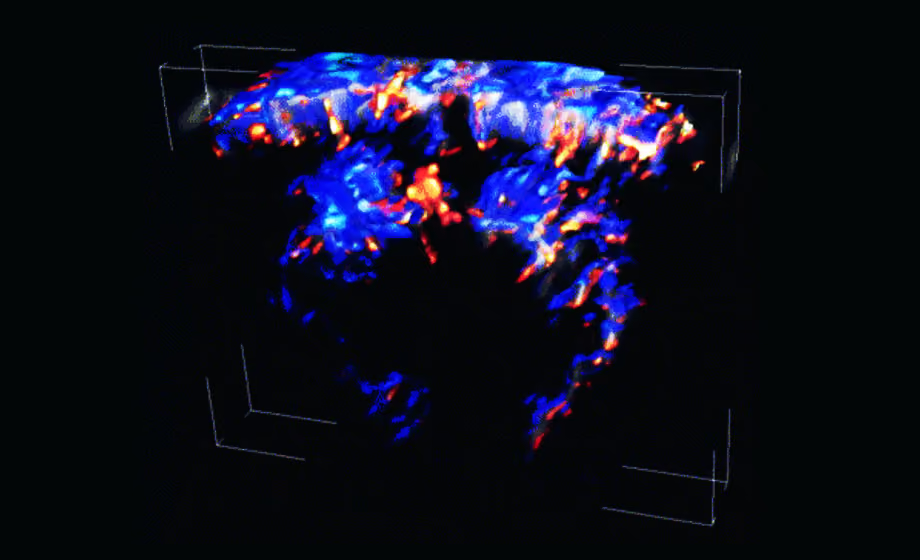
In this talk, we highlight epigenomics as a dynamic regulatory layer beyond genetics and demonstrate how minimally invasive liquid biopsies can provide multimodal biomarker readouts.
We first introduce our expanded portfolio, which now extends beyond cfDNA methylation to encompass chromatin and circulating nucleosome quantification, as well as comprehensive cfRNA profiling from liquid biopsy derived material. Building on this, we present real-world case studies demonstrating how cfDNA methylation can be leveraged for treatment response monitoring. We also illustrate how circulating nucleosomes and their histone PTMs can be used to assess epidrug effects and support the optimization of clinical trial decision-making. Finally, we show how comprehensive cfRNA-based transcriptomic profiling can be applied to cancer diagnostics.
Throughout, we emphasize the value of integrating multiple epigenomic readouts, combined with AI/ML analytics, to enhance mechanistic insight, improve biomarker performance for diagnostic applications including early detection, disease classification, and risk stratification, and ultimately accelerate translational research and drug development.
Featuring Insights from

Matteo Tosolini
PhD
Dr. Matteo Tosolini is a Biopharma Business Development Manager for EMEA at Hologic Diagenode with strong scientific backgroud in epigenetics and marketing. He earned his PhD in Stem Cell Epigenetics in Université Paris-Saclay. He then joined Diagenode as Research Scientist first and then moved into Marketing and Product Managment.

Jessica Apulei
PhD
Dr. Jessica Apulei is a Scientific Liaison Manager at Hologic Diagenode with strong expertise in epigenetics technologies and applications. She earned her PhD in Neurobiology and Epigenetics in Paris at the Collège de France and completed her postdoctoral research in Boston at Harvard University. Her work focuses on advancing cfDNA and epigenomic technologies to support biomarker discovery, translational research, and precision medicine.
Sponsored by
Hologic Diagenode
In Partnership with
Scientist.com
Scientist.com is the world’s largest and first platform built for the intricacies of scientific outsourcing.
We help pharmaceutical and biotechnology organizations discover, engage, manage, and scale relationships with the providers that support every stage of the pipeline—from discovery and preclinical research to clinical development, manufacturing, medical affairs, and commercialization. Through a centralized platform, organizations can access a global network of 6,000+ providers, streamline sourcing and procurement workflows, maintain compliance, manage supplier relationships, and leverage data-driven insights to make faster, more informed decisions.
Today, Scientist.com supports more than 130 life science organizations, including 24 of the world's top 30 pharmaceutical companies, helping teams reduce operational complexity, accelerate timelines, and bring innovations to patients faster. Our mission is to make it possible to cure all human disease by 2050.






.avif)