Join Dr. Wassim Basheer from Charles River Laboratories as he shares impactful data looking at stability of fresh and cryopreserved leukopaks.
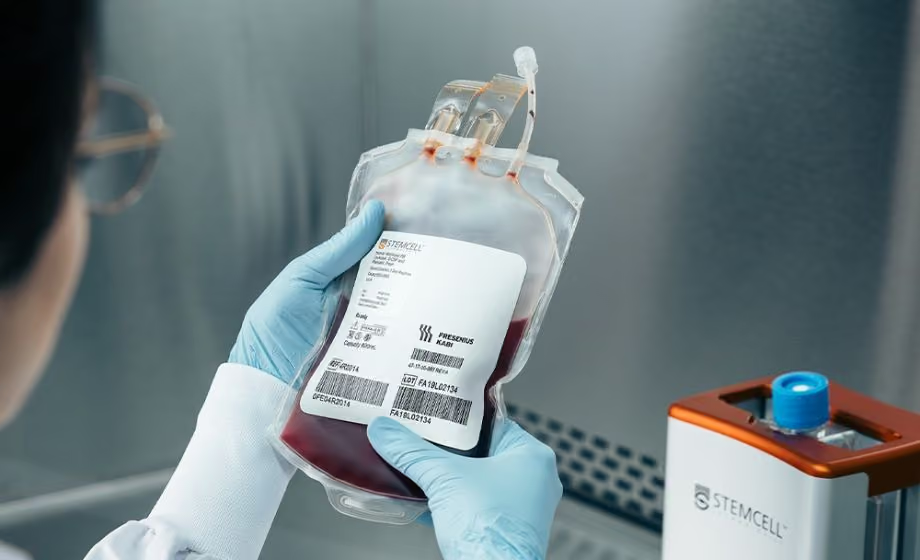
Immune cell viability is crucial for ensuring the success of basic research, cell-based assays, or for the development of effective cell therapies. Thus, there has been great interest in identifying ideal storage parameters for protecting leukopak cellular integrity from collection to transit and processing. Even though it can be challenging to determine which leukopak storage temperature is most suitable for your specific needs, emphasis should be placed on preserving consistency, flexibility, global accessibility, and simplified cold chain logistics.
Join us for a webinar with Dr. Wassim Basheer as he shares valuable findings from Charles River highlighting the effects of different leukopak storage temperatures on immune cell viability over time, so you can make an informed choice on which leukopak storage parameters best suit your project requirements.
Featuring Insights from

Wassim Basheer
PhD
Dr. Wassim Basheer is a senior product manager at Charles River-Cell Solutions, focusing on developing and optimizing the portfolio of human-derived biomaterials which are critical for accelerating advancements in cell therapy and drug development.
Sponsored by

Charles River Cell Solutions
In Partnership with

Scientist.com
Scientist.com is the world’s largest and first platform built for the intricacies of scientific outsourcing.
We help pharmaceutical and biotechnology organizations discover, engage, manage, and scale relationships with the providers that support every stage of the pipeline—from discovery and preclinical research to clinical development, manufacturing, medical affairs, and commercialization. Through a centralized platform, organizations can access a global network of 6,000+ providers, streamline sourcing and procurement workflows, maintain compliance, manage supplier relationships, and leverage data-driven insights to make faster, more informed decisions.
Today, Scientist.com supports more than 130 life science organizations, including 24 of the world's top 30 pharmaceutical companies, helping teams reduce operational complexity, accelerate timelines, and bring innovations to patients faster. Our mission is to make it possible to cure all human disease by 2050.




















.avif)