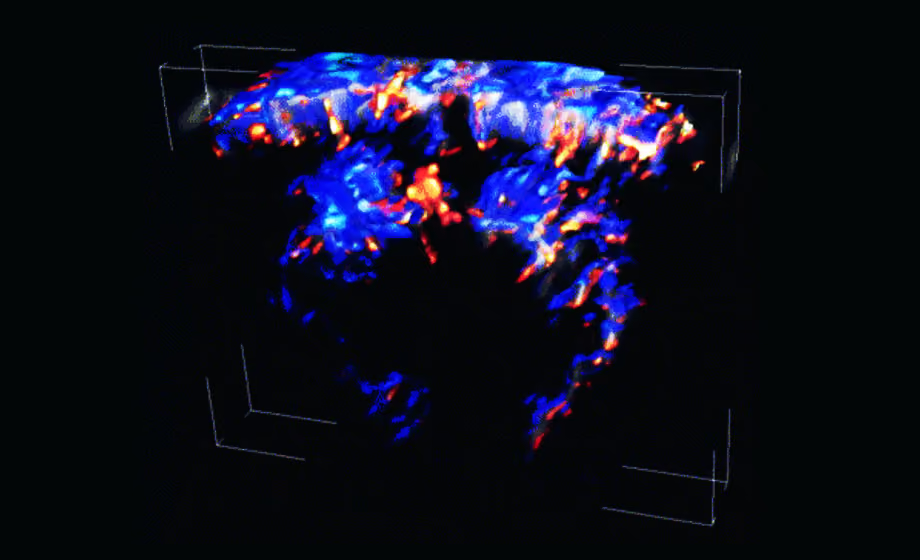
Webinar Summary
- Methodology of fUS and pharmaco-fUS experiments
- How fUS compares to other neuroimaging techniques: sensitivity, versatility and current challenges
- What is the feasibility of fUS in anaesthetized or awake animals, and how does it compare to other in vivo neuroimaging methods?
- What information does fUS provide to address neurobiological questions and to understand drugs' effects?
- How does pharmaco-fUS differ from other fUS experiments (resting state or sensory stimulation/task-based paradigms)?
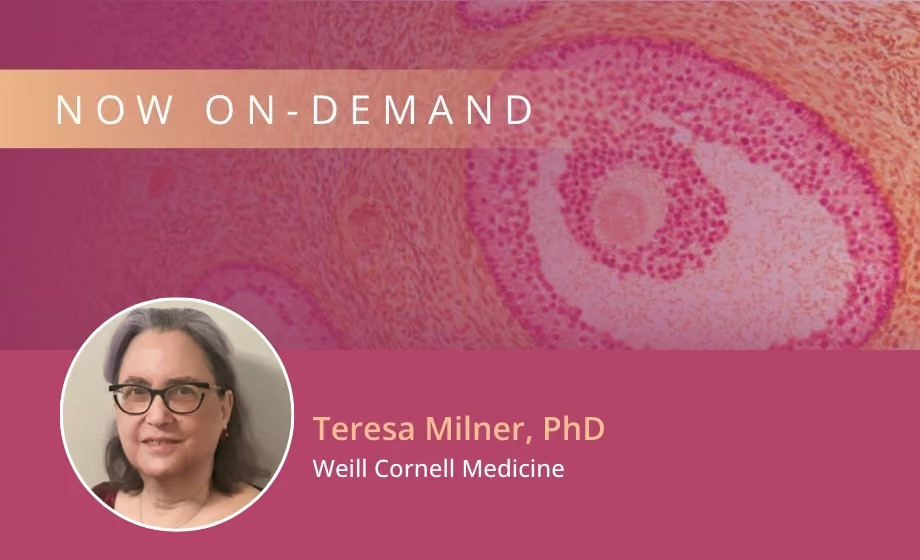
Sophie Pezet, PhD: Functional Ultrasound Imaging: a novel approach for the study of pain mechanisms
While acute pain is useful in alerting the body to noxious stimulation, chronic pain is always deleterious. Most chronic pain arises from abnormal neuronal plasticity due to a previous condition, such as peripheral inflammation (inflammatory pain) or a nerve lesion (neuropathic pain). Dr. Sophie Pezet illustrates the use of fUS to study the alterations of cerebral networks in two animal models of inflammatory pain. She also presents a recent study analyzing the vascularization of the spinal cord in rats, and re-evaluating a fundamental mechanism of acute pain and peripheral sensitization using neurovascular coupling in the spinal cord. These studies open the way for future pharmacological studies aiming at the development of new analgesic treatments.
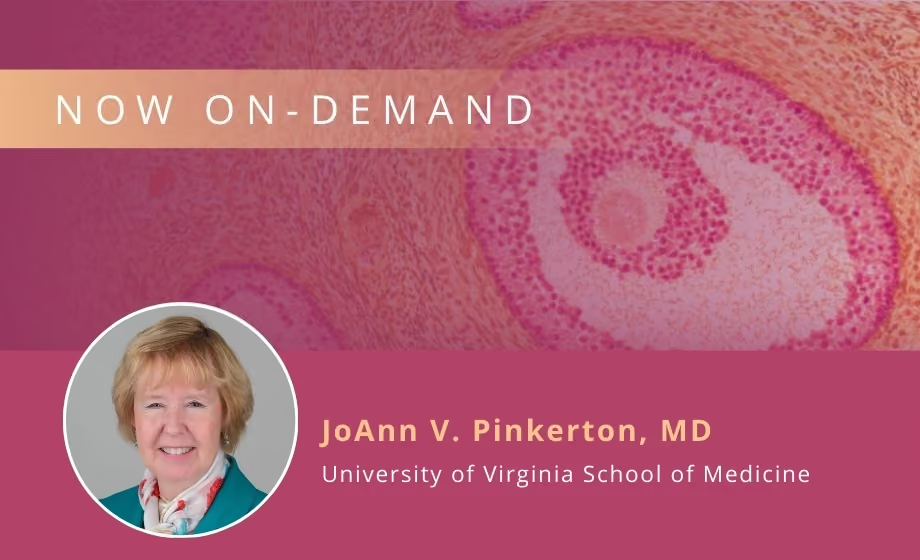
Benjamin Vidal, PharmD, PhD: Imaging acute effects of drugs in the brain using pharmaco-fUS in rodents
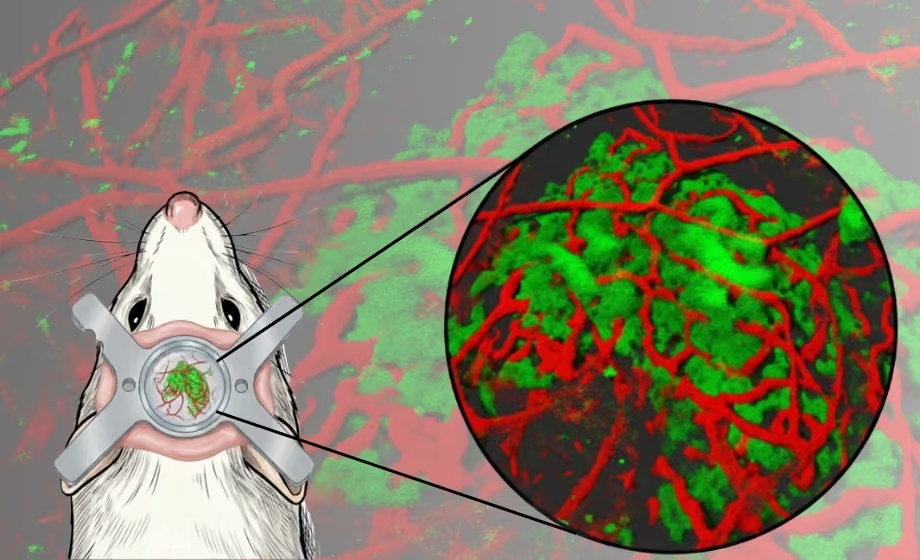
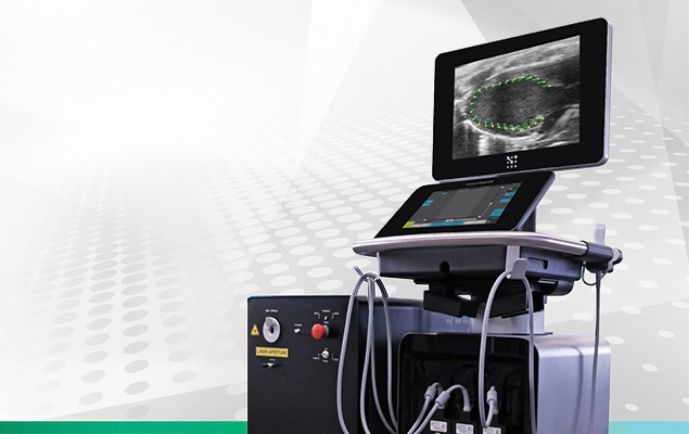
Functional ultrasound (fUS) is a new neuroimaging technique able to follow changes in cerebral blood volume without any contrast agent at high spatiotemporal resolution. In this webinar, Dr. Benjamin Vidal presents different pharmaco-fUS experiments measuring the acute hemodynamic effects of drugs as a way to understand their regional and temporal impact on brain activity. Dr. Vidal also shows how pharmaco-fUS enables the direct measurement of changes in cerebral blood volume or functional connectivity, providing access to rich pharmacological information thanks to different analysis strategies.
Featuring Insights from
Sophie Pezet
PhD
Sophie Pezet is a Neurobiologist, working on the cellular and molecular mechanisms underlying pain maintenance. She produced a significant contribution in the understanding of the role of some neurotrophic factors such as BDNF (Brain-Derived Neurotrophic Factor) in the spinal cord, in inflammatory and neuropathic pain. Her team is using molecular, behavioral and imaging approaches to improve our understanding of (physiological) acute pain, but also altered brain and spinal functions in chronic pain disorders.
Benjamin Vidal
PharmD, PhD
Benjamin Vidal is a research engineer for the biopharmaceutical company Theranexus, which is developing innovative drug candidates to be used in the treatment of CNS disorders. He is using in vivo neuroimaging techniques such as positron emission tomography, functional magnetic resonance imaging and functional ultrasound in order to study brain pharmacology and animal models of neurological diseases.
Sponsored by









.avif)