Webinar Summary
- Explore evidence regarding the risk of clonal hematopoiesis and AML/MDS following transplantation in sickle cell disease patients
- Learn about damage to the HSC pool in sickle cell patients and mice
- Discover products and resources to support your HSC workflows
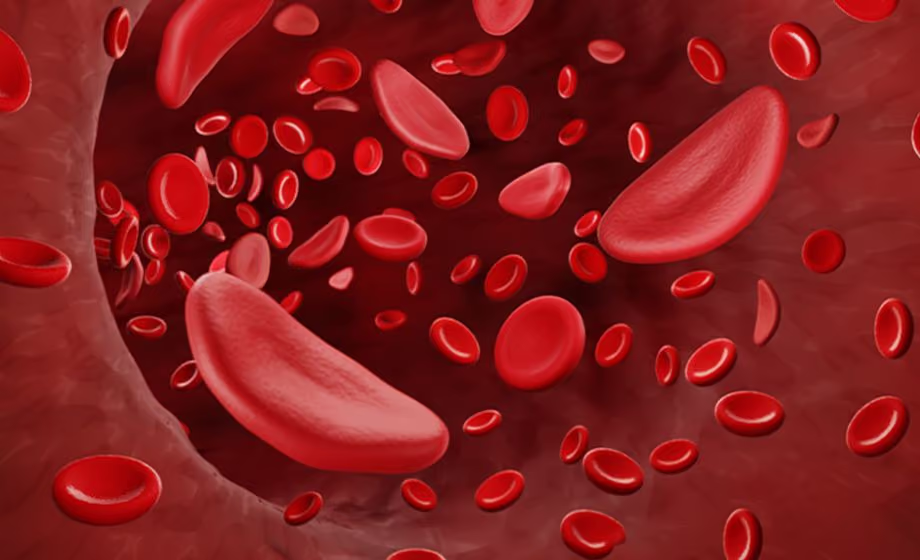
Chronic insults, such as inflammation and replicative stress, impair and exhaust blood-sustaining hematopoietic stem cells (HSCs), leading to dysfunction and selection for leukemia-associated mutations. Dr. McKinney-Freeman's laboratory is currently studying how sickle cell disease (SCD), an inherited hemolytic anemia with a large inflammatory component and increased hematopoietic demand, compromises the fidelity and function of hematopoietic stem cells (HSCs) in both mice and individuals with SCD. Mounting evidence indicates that SCD patients may experience enhanced rates of clonal hematopoiesis, as well as MDS and AML at baseline and following allogeneic HSC transplantation or autologous HSC gene therapy. Considering that these are the only curative therapies for SCD, it is important to better understand and prevent SCD-induced insults to HSCs and their microenvironment.
In this webinar, Dr. McKinney-Freeman from St. Jude Children's Research Hospital describes, in detail, what her laboratory has learned about how SCD affects HSCs.
Featuring Insights from

Shannon McKinney-Freeman
PhD
Dr. Shannon McKinney-Freeman works in the Department of Hematology at St. Jude, where she focuses on understanding the fundamental biology of blood-forming stem cells. She is passionate about creating an inclusive and exciting lab environment, characterized by collegiality and scientific excellence.
Sponsored by

STEMCELL Technologies Inc.
In Partnership with

Scientist.com
Scientist.com is the world’s largest and first platform built for the intricacies of scientific outsourcing.
We help pharmaceutical and biotechnology organizations discover, engage, manage, and scale relationships with the providers that support every stage of the pipeline—from discovery and preclinical research to clinical development, manufacturing, medical affairs, and commercialization. Through a centralized platform, organizations can access a global network of 6,000+ providers, streamline sourcing and procurement workflows, maintain compliance, manage supplier relationships, and leverage data-driven insights to make faster, more informed decisions.
Today, Scientist.com supports more than 130 life science organizations, including 24 of the world's top 30 pharmaceutical companies, helping teams reduce operational complexity, accelerate timelines, and bring innovations to patients faster. Our mission is to make it possible to cure all human disease by 2050.










.avif)