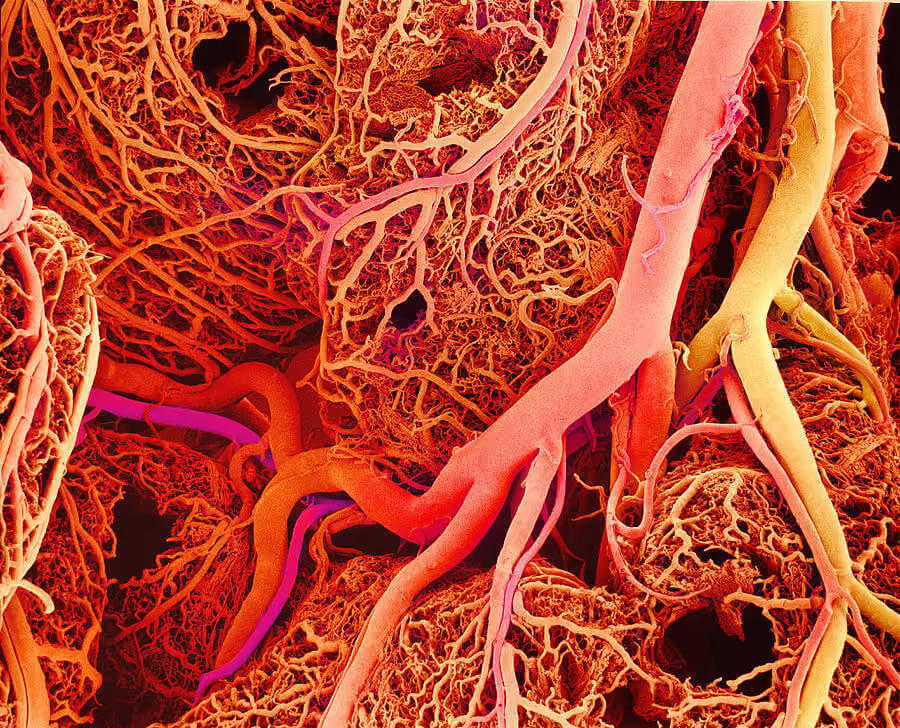
Scientists present groundbreaking research in models of Acute Kidney Injury (AKI). Methods used to gather these insights are made possible using the latest in fibre optic sensing technology to obtain dissolved oxygen and microvascular blood perfusion at the tissue level.
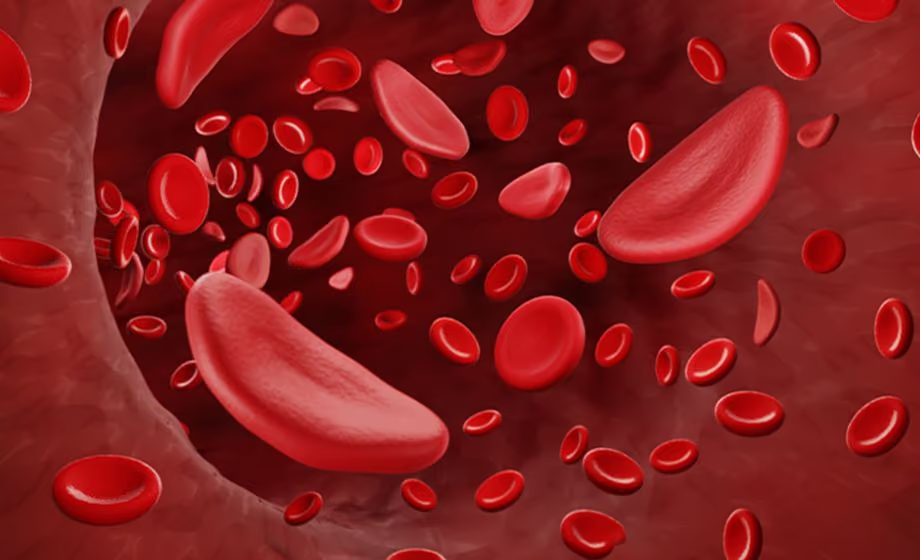
The survival of tissues and organs relies on an adequate supply of oxygen, nutrients and signal molecules delivered via microvascular blood perfusion. The measurement of microvascular perfusion provides critical information for research applications where blood supply has been disrupted. In addition, tissue oxygen tension (ptiO2) can be measured at the cellular level as a read-out of the balance between oxygen availability and metabolic oxygen consumption. Combining these measurements gives the researcher a very powerful and unique tool to answer questions in the areas of physiology, oncology, cerebral monitoring, ischemia/reperfusion, ophthalmology and many more.
During this webinar sponsored by Scintica Instrumentation, Professor Clive May and Dr. Yugeesh Lankadeva from the Florey Institute of Neuroscience and Mental Health in Melbourne discuss their research using Oxford Optronix OxyFlo and OxyLite tissue vitality monitoring systems to investigate the causes of acute renal failure in large animal models and the effects of resuscitation with vasopressor drugs on renal perfusion and oxygenation in sepsis.
Specifically, they discuss the development and validation of methodology to measure renal cortical and medullary tissue perfusion and oxygenation long-term in conscious animals and review selective changes in renal cortical and medullary tissue perfusion and oxygenation in response to alterations in total organ blood flow and administration of drugs.
In addition, Professor May and Dr. Lankadeva share data from their studies demonstrating changes in total renal blood flow, renal function and differential changes in renal perfusion and pO2 during resuscitation and in models of sepsis.
Featuring Insights from

Clive May
PhD
Professor Clive May is head of the Pre-clinical Critical Care Unit at the Florey Institute of Neuroscience and Mental Health. Using his expertise in cardiovascular, renal, and neuro-physiology he has created a sophisticated large animal operative and critical care unit. This unit creates and supports relevant pre-clinical models of critical illness and injury, including septic shock, heart failure, myocardial infarction and cardiopulmonary bypass.

Yugeesh Lankadeva
PhD
Yugeesh Lankadeva, Ph.D., is a National Heart Foundation Future Leader Research Fellow in the Pre-clinical Critical Care Unit at the Florey Institute of Neuroscience and Mental Health. His research focuses on the mechanisms underlying cardiovascular failure, acute kidney injury and immunosuppression in sepsis and the development of acute kidney injury following cardiac surgery on cardiopulmonary bypass. Dr. Lankadeva is particularly interested in the neural and hormonal control of the circulation, from reactivity of isolated blood vessels to integrated physiological studies in the conscious whole animal. He has demonstrated that selective renal hypoxia occurs very early in sepsis and that this may contribute to the development of kidney injury. In addition, his demonstration that urinary PO2 changes in parallel with renal medullary PO2, suggests that this may be used as a novel biomarker for early detection of the development of kidney injury and to continuously estimate renal medullary tissue PO2 during administration of therapies used in intensive care units. His goal is to understand the pathological changes that occur during sepsis and during cardiac surgery on cardiopulmonary bypass and, armed with this knowledge, to develop improved therapies to reduce the development of acute kidney injury and cardiovascular failure.
Sponsored by



















.avif)