In this webinar, Bonnie Lun, PhD, provides insights into the different applications of single-domain antibodies, and highlights their advantages over traditional antibodies.
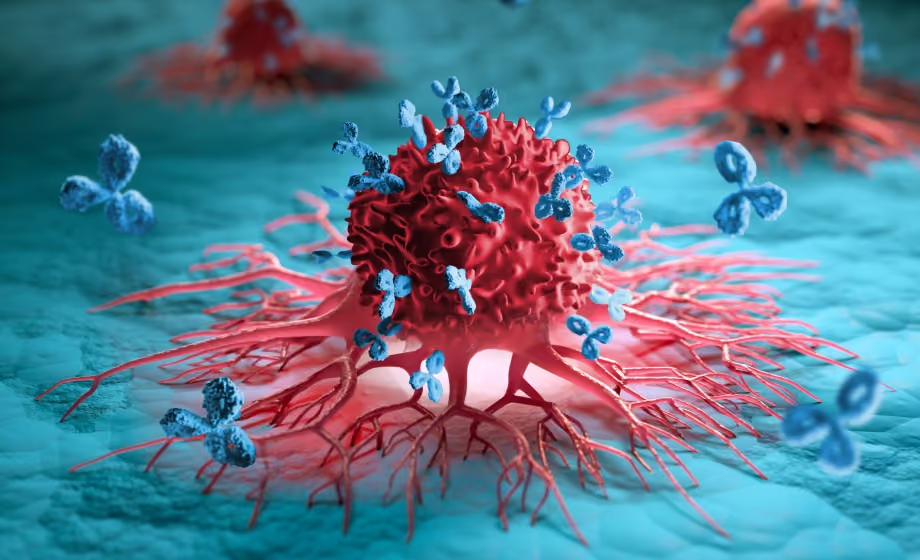
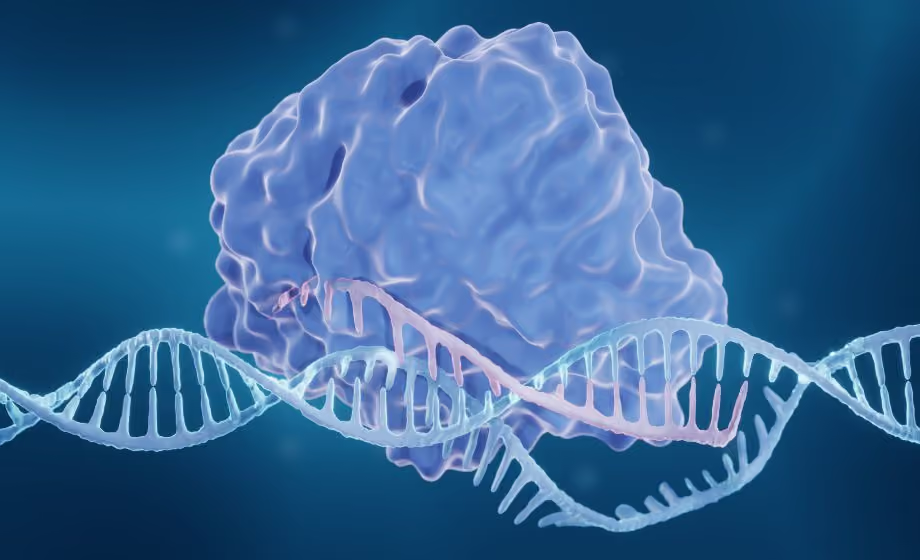
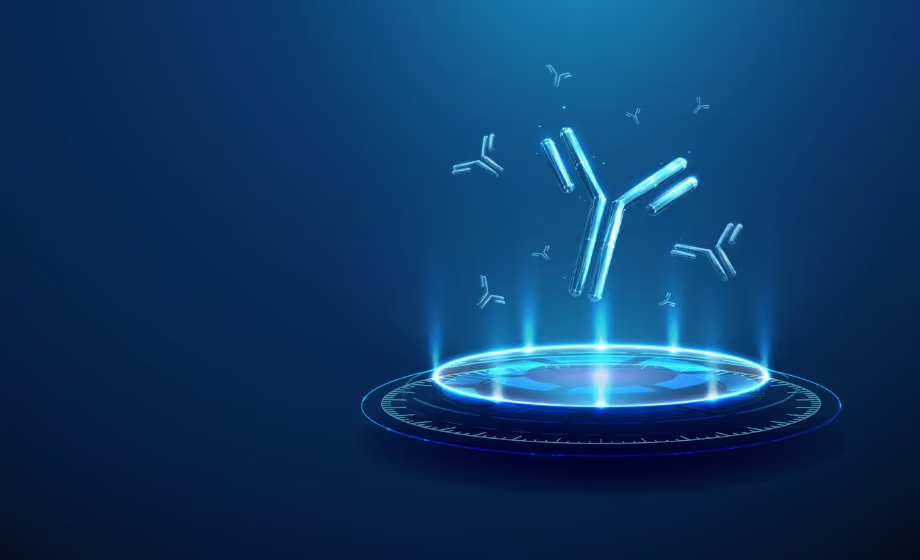
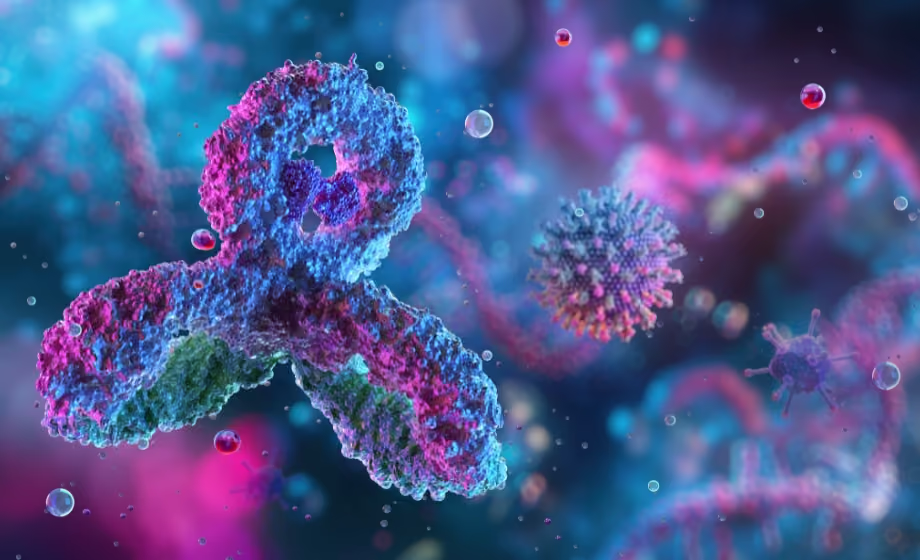
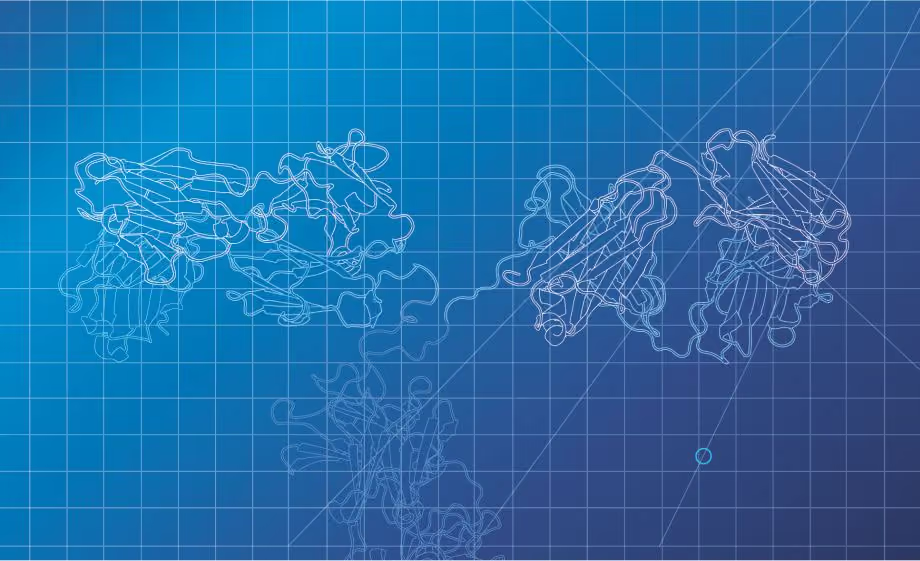
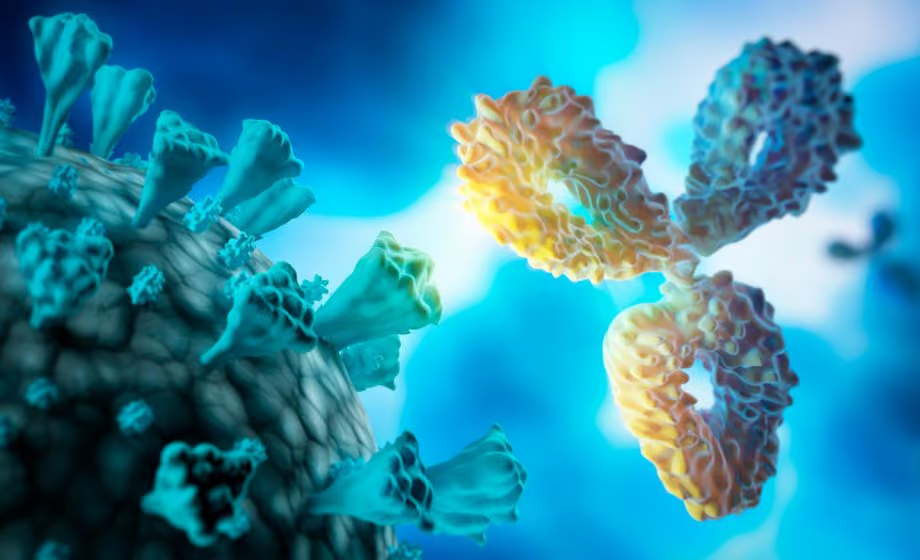
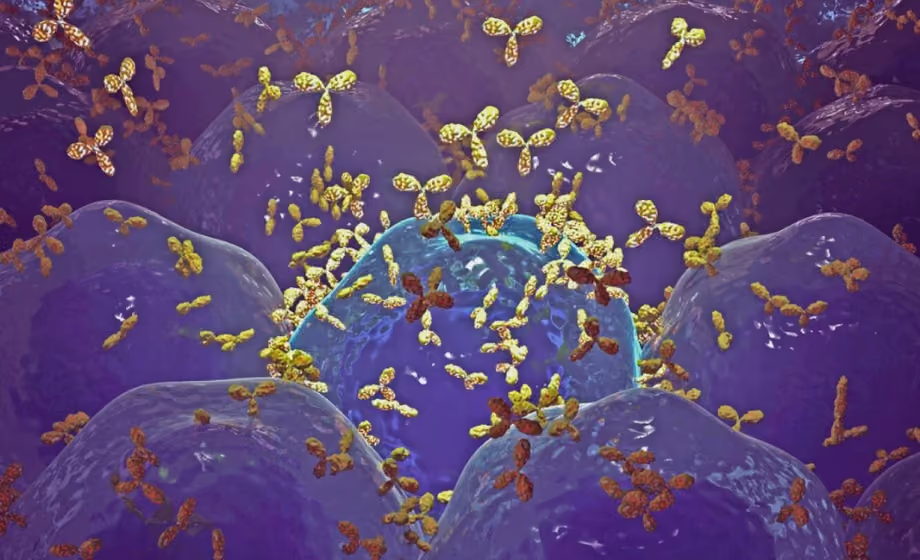
Dr. Lun begins this webinar by discussing the importance of antibodies in diagnostic and therapeutic research, as well as their limitations. Antibodies are immune proteins that recognize and bind to specific antigens and have a variety of roles and forms. While antibodies are widely used in many different research, diagnostic, and therapeutic settings, they also have several limitations. Their large size (i.e., 150 kDa) prevents them from penetrating tissues effectively and from accessing cryptic epitope sites. In addition, their unpredictable pharmacokinetics and high production costs make them less appealing compared to their smaller, more recently discovered counterparts: single-domain antibodies, which are often called single-domain antibodies (which is a registered trademark of Ablynx).
"Nanobodies have a lot of advantages over conventional antibodies due to their small size… They can penetrate tissues and extracellular matrices much easier, they're highly stable, can tolerate high temperatures and broad physiological pH, and can even tolerate strong chemical denaturants."
Single-domain antibodies are typically isolated from members of the camelid family (e.g., llamas, alpacas) since they produce antibodies lacking a light chain. Since they are much smaller than antibodies (i.e., 15 kDa), single-domain antibodies can enter tissues with greater ease. Moreover, single-domain antibodies can be expressed in both bacterial and mammalian systems, further demonstrating their value in research and therapeutic applications.
In addition to being robust and cost-effective, single-domain antibodies also have a variety of forms and functions. Fusing two single-domain antibodies together can enhance antigen avidity and association, and can even allow for two different antigens to be targeted together. Fluorophores or other chemical compounds can also be conjugated to a single-domain antibody for site-specific drug delivery; their extended longevity provides researchers with more time to achieve desired effects.
In the second portion of this webinar, Dr. Lun discusses the various products and services offered by Fortis Life Sciences, and shares the methodology behind their single-domain antibodies. Fortis Life Sciences is home to the largest camelid immunization facilities in the United States, with more than 400 llamas, alpacas, and other traditional lab animals. They offer a flexible single-domain antibody source library and can selectively immunize naive llamas and alpacas with an antigen of choice.
To create these single-domain antibodies, they first immunize an animal with the desired antigen, after which a 90-day process is followed to ensure adequate levels of antiserum. From this antiserum, a series of isolations are conducted to obtain a complementary DNA copy of the single-domain antibody region, which is then amplified to create a single-domain antibody sequence library. Following screening and biopanning, these sequences are recombinantly expressed to create a functional single-domain antibody. While the final product is typically the complete single-domain antibody, Fortis Life Sciences is very flexible in production options; for example, they can provide isolated peripheral blood mononuclear cells, RNA sequences, single-domain antibody libraries, positive clones, and small scale recombinant single-domain antibodies, depending on research interests. Fortis Life Sciences can also provide consultations on single-domain antibody characterization and sequencing, as well as additional pharmacokinetic data. In summary, single-domain antibodies are a promising new tool with a strong potential to improve immunological studies and therapies. Their small size, high stability, and strong binding affinity improve upon many of the limitations associated with conventional antibodies. Fortis Life Sciences' custom single-domain antibody discovery service is flexible and customizable to help researchers meet their project goals and needs.
Webinar Highlights
- Importance of antibodies in diagnostic and therapeutic research
- Comparison of traditional antibodies and single-domain antibodies
- How single-domain antibodies are created
- Applications of single-domain antibodies
- Overview of Fortis Life Sciences' single-domain antibody discovery service and products
Who Should Attend?
- Scientists working with antibodies in research and therapeutic development
- Professionals that are interested in learning more about single-domain antibodies
Featuring Insights from

Bonnie Lun
PhD
Bonnie received her doctorate from the George Washington University and completed her postdoc training at the NIH. She has over 10 years of experience in immunology research with extensive knowledge in experimental design, protocol optimization, and protein-based applications. She will present the potential nanobodies applications and provide an overview of the Fortis Life Sciences nanobodies discovery service.
Sponsored by
Fortis Life Sciences
In Partnership with
Scientist.com
Scientist.com is the world’s largest and first platform built for the intricacies of scientific outsourcing.
We help pharmaceutical and biotechnology organizations discover, engage, manage, and scale relationships with the providers that support every stage of the pipeline—from discovery and preclinical research to clinical development, manufacturing, medical affairs, and commercialization. Through a centralized platform, organizations can access a global network of 6,000+ providers, streamline sourcing and procurement workflows, maintain compliance, manage supplier relationships, and leverage data-driven insights to make faster, more informed decisions.
Today, Scientist.com supports more than 130 life science organizations, including 24 of the world's top 30 pharmaceutical companies, helping teams reduce operational complexity, accelerate timelines, and bring innovations to patients faster. Our mission is to make it possible to cure all human disease by 2050.






.avif)



.avif)